How Can We Help You?

Why Is Process Control and Automation Important?

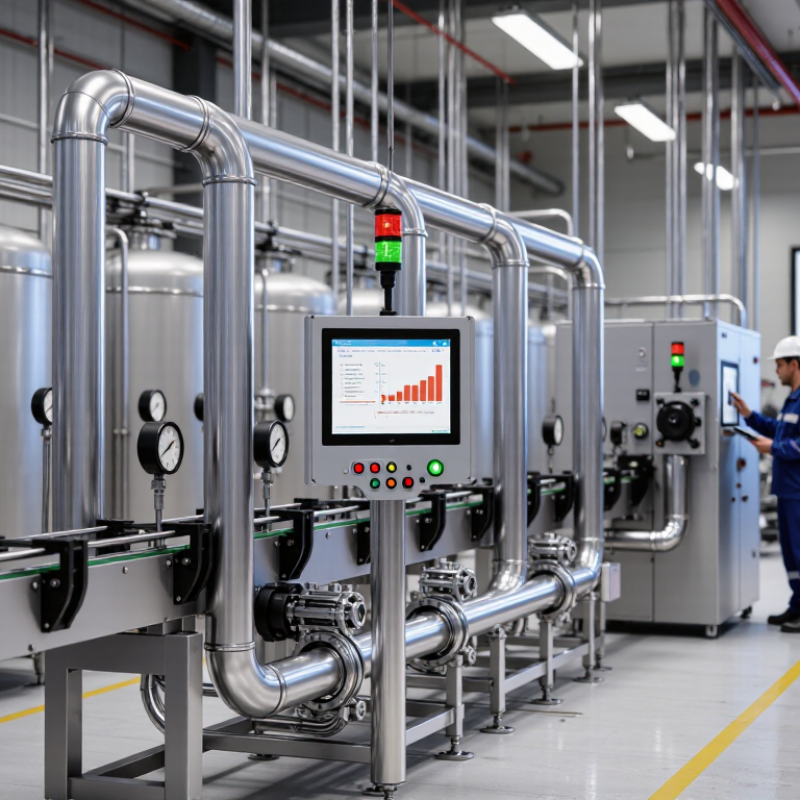
On a production line, a few degrees of temperature can change a batch. A delayed pump alarm can also turn a small deviation into hours of lost output. Process control and automation help teams monitor these conditions and respond with greater consistency. Sensors measure variables such as pressure, flow, and temperature. Controllers compare readings with set limits, then adjust valves, motors, or heating systems.

The value is practical. A food processor can track pasteurization temperatures, while a water treatment operator can monitor tank levels and pump rates. Clear records help technicians spot recurring problems and verify that equipment performs as expected. Automation can also reduce repetitive manual tasks, leaving people more time for inspection, troubleshooting, and decisions that require judgment. It is not a substitute for skilled operators.

Good results depend on sound design and upkeep. Sensors need calibration, alarms need sensible thresholds, and control logic needs testing before changes reach a live process. Otherwise, automation may repeat an error faster than a person could. That matters. Staff training and routine maintenance are just as important as the software.

There are limits, too. Older equipment may provide incomplete data, and unusual conditions can challenge even carefully designed systems. A dashboard can look reassuring while a sensor is drifting. Teams should review actual performance, investigate near misses, and revise procedures when evidence supports a change. Some assumptions will be wrong. That is a reason to test and learn, not to abandon automation. When people, equipment, and reliable data work together, process control and automation can improve consistency, safety, and resource use without promising perfection.
Why Is Process Control and Automation Important?

What Process Control and Automation Include

What Process Control and Automation Include

Process control is the real-time regulation of conditions such as temperature, pressure, flow, and product quality. Sensors measure what is happening; controllers compare readings with targets and adjust valves, motors, or heaters. A control loop might keep a mixing tank at 70°C while an operator watches trends on a human-machine interface. That is the practical core. Systems can include programmable controllers, distributed control systems, supervisory monitoring, alarms, and data historians. Automation adds programmed actions, such as moving materials, sequencing batches, or stopping equipment when a safety limit is reached. Not just robots.

The boundary is broader than the control room. Manufacturing execution systems can connect production schedules with machine status, while maintenance tools use equipment data to flag developing faults. The International Energy Agency’s 2023 Energy Efficiency report estimates that industry accounts for about 37% of global energy use, making reliable monitoring relevant to both output and energy performance. Deloitte and MAPI’s 2024 smart manufacturing survey found that 86% of respondents expect smart manufacturing to be a key competitiveness driver within five years. Those figures describe potential, not guaranteed results. A poorly tuned sensor can feed a dashboard convincing but wrong numbers; operators still need to check instruments, alarms, and process behavior. That part is often underestimated. Automation works best when people can understand its decisions and safely correct them.

How Control Systems and Automation Work Together

Control systems and automation work together like a careful operator and a fast response team. Sensors measure conditions such as tank level, pipe pressure, or oven temperature. A controller compares each reading with its setpoint, then signals valves, pumps, or heaters to adjust. Automation adds coordinated sequences: it can start a pump, confirm flow, and only then open a downstream valve. Small checks matter. Without them, a single bad reading can trigger a costly shutdown.

The scale of adoption is clear, though the numbers need context. The International Federation of Robotics reported 553,052 industrial robots installed worldwide in 2022. Robots are only one part of automation; they still depend on control systems for safe, repeatable operation. McKinsey Global Institute estimated that 49% of work activities could be automated with technologies available at the time of its 2017 analysis. That estimate describes technical potential, not guaranteed results. In a real plant, a dashboard may show stable pressure while a sticky valve slowly drifts. Operators still need to inspect equipment, challenge alarms, and review control logic. Automation can make a process faster. It cannot make a weak process design sound.

How They Improve Safety, Quality, and Consistency

Process control and automation support safety by making operating limits visible and repeatable. Sensors can flag rising pressure or a temperature drifting beyond its set range before an operator notices trouble. Interlocks can stop equipment when conditions become unsafe. This matters around hot pipes, moving conveyors, and pressurized tanks. Human judgment still matters. The U.S. Bureau of Labor Statistics reported 2.6 million nonfatal workplace injuries and illnesses in private industry in 2023 (2024 annual report). That figure spans industries, but it shows why prevention needs practical safeguards, not good intentions alone.

Quality depends on stable conditions. A control loop can keep a vessel’s temperature within range, while batch records show when pressure or timing changed. Automated checks can catch missing readings and out-of-range values earlier, limiting scrap and rework. Small deviations matter. Deloitte’s 2024 Smart Manufacturing Survey found that 86% of surveyed manufacturing executives expect smart manufacturing to be a primary driver of competitiveness over the next five years. That is an expectation, not proof that automation guarantees better products.

Consistency improves when shifts follow the same process settings and record their adjustments. Teams can compare batches and investigate whether a defect followed a sensor fault or a changeover. Yet automation can repeat a bad setting perfectly. Too many alarms can also distract operators; that trade-off deserves attention. Calibration, alarm review, and training remain essential. Sensors need to be tested, not merely trusted.

Why Is Process Control and Automation Important? - How They Improve Safety, Quality, and Consistency

Performance Dimension How Process Control and Automation Help Useful Measure Definition or Calculation
Worker safety Interlocks, guarding, alarms, and remote operation can reduce exposure to hazardous conditions and help prevent unsafe equipment states. Total Recordable Incident Rate (TRIR) Recordable work-related cases × 200,000 ÷ hours worked. The 200,000-hour factor represents 100 full-time workers working 40 hours per week for 50 weeks.
Hazard prevention Safety instrumented functions can detect specified hazardous conditions and initiate a defined safe response, such as stopping a process or isolating equipment. Safety-function test results Record each proof test as pass or fail, document detected failures, and track corrective actions. Test requirements should follow the safety design and applicable procedures.
Product quality Sensors and feedback control help keep critical variables—such as temperature, pressure, flow, or mixing time—within defined operating limits. First-pass yield Units that meet requirements without rework ÷ total units produced × 100%. Define the inspection and rework rules consistently.
Process capability Automatic adjustment and consistent setpoints can reduce variation when the process is stable and measurement systems are suitable. Cpk Cpk = min[(USL − mean) ÷ (3σ), (mean − LSL) ÷ (3σ)], where USL and LSL are specification limits and σ is the estimated within-process standard deviation.
Consistency between batches Recipe management, controlled sequences, and recorded setpoints help operators repeat approved process steps from batch to batch. Coefficient of variation (CV) Standard deviation ÷ mean × 100%. Calculate it for a defined characteristic across comparable batches; a lower value indicates less relative variation.
Process control Continuous monitoring can reveal deviations sooner and make process responses more repeatable than relying only on periodic manual checks. Time outside operating limits Total recorded time a monitored variable is beyond its approved operating range during a defined period. State the limits, sampling interval, and treatment of missing data.
Traceability Electronic records can link process conditions, alarms, operator actions, and product or batch identifiers for review and investigation. Record completeness Required records present and readable ÷ total required records × 100%. Specify which records and fields are mandatory.
Operational reliability Condition monitoring and alarm history can help maintenance teams identify recurring faults and plan corrective work. Unplanned downtime Time lost to unplanned production stoppages during a defined period. Use consistent rules for planned maintenance, changeovers, and partial-capacity operation.

Measurement note: These are standard ways to define and calculate operational indicators, not guaranteed improvement figures. Results depend on the process, equipment, measurement quality, and consistent data collection.

How They Increase Efficiency and Support Better Decisions

Process control and automation improve efficiency by keeping equipment near its intended operating range. Sensors track variables such as temperature, pressure, and flow. Controllers compare readings with setpoints and adjust valves or motors. This reduces repeated manual checks and helps limit avoidable variation. Small changes matter.

A filling line can slow when a tank level drops, then resume its target rate when supply stabilizes. Operators spend less time reacting to routine fluctuations and more time investigating unusual patterns. Historical trends can reveal recurring delays, energy spikes, or quality drift. That evidence supports better decisions about maintenance, staffing, and process settings. A clear alarm history is often more useful than a dashboard full of numbers.

Automation is not a substitute for judgment. Poorly chosen targets can make a stable process consistently produce the wrong result, and faulty sensors can mislead even a well-designed controller. Teams should verify instruments, review alarm limits, and compare system records with observations on the floor. It takes effort. No model captures every operating condition; unexpected material changes or cleaning needs may still require an experienced operator to pause and reassess. The best systems make those decisions easier to see, not automatic by default.

Where They Are Used and What Challenges They Present

Process control and automation are used wherever stable conditions matter: chemical processing, power generation, water treatment, food production, and vehicle manufacturing. Sensors track temperature, pressure, flow, or product dimensions; controllers adjust valves, pumps, and motors. The IEA’s Energy Technology Perspectives 2023 reports that industry accounts for about 37% of global energy use. Better control can reduce wasted heat, excess material, and unplanned downtime. Small changes matter. A pump running slightly too fast, shift after shift, can waste energy and wear out equipment.

The challenges are less tidy. Processes vary, sensors drift, and older machines may not communicate with newer control systems. One faulty reading can trigger a chain of unnecessary adjustments. Automation also changes the work people do. The World Economic Forum’s Future of Jobs Report 2023 estimates that 44% of workers’ skills will be disrupted within five years. That points to a practical need for training, not just new machinery. Operators must understand alarms, maintenance teams need access to reliable system data, and managers must plan for the transition.

Cybersecurity and safety demand equal attention. Connecting equipment can make remote monitoring easier, but it also creates more points that need protection. A control screen may look precise while hiding a poorly calibrated sensor or outdated procedure. Automation is not a cure-all. In some plants, gradual upgrades and careful testing are wiser than replacing everything at once. IEA and World Economic Forum figures describe broad trends; individual sites still need their own audits, operator feedback, and maintenance records to identify what will actually improve performance.