
Choosing the right automation and control solutions is rarely about buying the most advanced system. It is about matching technology to real operational needs. A packaging line may require precise motion control, while a water treatment facility may prioritize dependable monitoring and alarm management. The best decision begins with the process, not the product brochure.
A reliable evaluation examines compatibility, scalability, safety, maintenance, and total ownership costs. Check whether controllers communicate with existing equipment. Review sensor accuracy under heat, dust, or vibration. Ask how quickly technicians can replace a failed module. Also examine vendor training, technical support, cybersecurity practices, and relevant industry certifications. These details often matter more than an impressive interface.
Small tests reveal uncomfortable truths.
A pilot installation can expose network delays, confusing dashboards, or gaps in operator training before a full rollout. Feedback from electricians, engineers, and shift supervisors adds practical experience that specifications cannot provide. No solution is perfect. Teams may overlook maintenance effort when focusing on productivity gains. They may also underestimate integration time. A measured comparison, supported by documented performance data and clear risk controls, creates a stronger foundation for investment. This approach helps organizations select automation and control solutions that remain useful, understandable, and adaptable as production demands change.
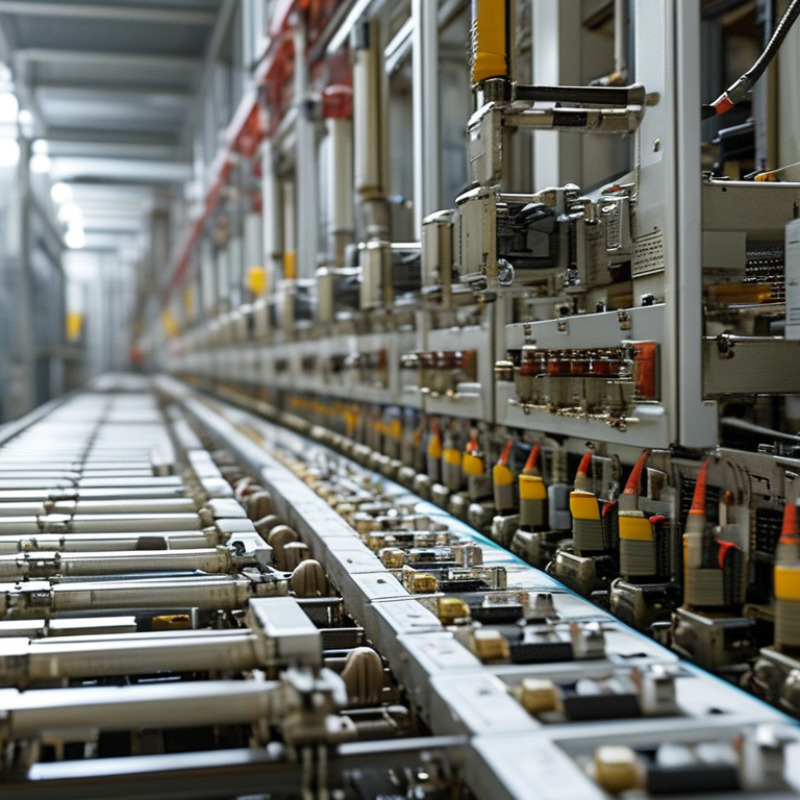
Choosing the best automation and control solution begins with clear goals. Before comparing equipment, document the work you need to improve. Define production volume, cycle time, accuracy, product variation, and operating hours. Include the physical environment, such as dust, heat, moisture, or limited floor space.
Your requirements should also cover safety, maintenance, training, and future expansion. Speak with operators and maintenance technicians. They often identify delays that performance reports miss. Observe a typical shift, including changeovers and unexpected stops. Then convert observations into measurable targets, such as reducing manual handling by 30% or improving repeatability within a defined tolerance.
Avoid vague goals. “Increase efficiency” needs a baseline, a timeframe, and a practical measurement method. In my experience, teams sometimes focus on faster machinery while overlooking cleaning access, spare parts, or staff confidence. That mistake can weaken a sound technical design. It is also worth questioning every assumption. A process that appears stable may depend on one experienced operator.
Tips: List must-have and preferred features separately. Record current cycle times. Test critical functions with realistic materials. Ask how faults will be diagnosed. Review data ownership, system compatibility, and cybersecurity requirements with qualified specialists. Keep a written decision record. It may reveal gaps later.

Choosing an automation system begins with compatibility, not features. Check voltage ranges, communication protocols, cycle times, and environmental ratings. A controller may perform well in a laboratory yet fail beside heat, dust, or vibration.
The World Economic Forum’s Future of Jobs Report 2023 found that 73% of organizations planned to adopt process and task automation. That scale makes integration discipline essential. Map every data path, from sensors to supervisory software. Confirm whether older equipment can exchange reliable data through standard interfaces. Test failure states, too. A silent data gap can stop production before anyone notices.
Scalability needs measurable limits. Estimate future devices, users, production lines, and data volume. Leave capacity for change. The International Society of Automation’s ISA-95 framework separates enterprise and control activities, helping teams define responsibilities across systems. This reduces duplicated logic and unclear ownership. However, standards do not remove every problem. Poor naming conventions still create confusion.
A practical pilot should connect one real machine, one operator screen, and one reporting workflow. Measure response time, data accuracy, maintenance effort, and recovery after disconnection. I have seen technically elegant projects underperform because operators were consulted too late. That mistake remains common. Compatibility is not only technical; it includes people, procedures, and training. A scalable system should expand without forcing a complete redesign. It should also explain its failures clearly.
How to Choose the Best Automation and Control Solutions?
Compare Control Features, Performance, and User Accessibility
Choosing an automation solution starts with the control features, not the product brochure. Look for adjustable control loops, clear alarms, data logging, and manual override options. These tools help operators respond when conditions change unexpectedly. A practical system should also support role-based access and record important adjustments. This improves accountability during maintenance and troubleshooting.
Performance must be measured in real operating conditions. Check response time, measurement accuracy, uptime, and communication stability. A fast system is not always better if its readings are unreliable. Test it with fluctuating temperatures, pressure changes, or uneven production loads. During one site review, a control platform performed well in normal conditions but reacted slowly during sudden load changes. That result changed the final selection.
User accessibility often decides whether a system succeeds. Operators need readable screens, logical menus, and useful information at a glance. Large status indicators help during busy shifts. Simple navigation reduces training time and prevents avoidable mistakes. Accessibility should include language options, keyboard support, and clear contrast where appropriate. Do not assume every user has the same technical background. That assumption can be costly. I also recommend observing real operators during testing, because designers may overlook small frustrations. A confusing confirmation window seems minor, but repeated daily, it affects confidence and performance. Reliable support, documented updates, and practical training complete the evaluation.
Comparison of control features, performance, and user accessibility using a 1–5 evaluation scale.
Higher scores indicate stronger capability. Evaluate real-time response, diagnostics, interoperability, safety integration, configuration effort, and operator accessibility against the requirements of your application.
Choosing automation and control solutions requires more than comparing features. Safety must be tested against real operating conditions, including hot surfaces, emergency stops, access points, and human error. The International Labour Organization reports about 2.78 million work-related deaths annually. That figure makes safety validation a management duty, not a checklist exercise. Ask for documented risk assessments, functional safety evidence, and clear fault-response procedures.
Reliability depends on design, maintenance, and recovery speed. Uptime Institute’s 2024 Global Data Center Survey found that 54% of respondents reported their most recent outage cost more than $100,000. Industrial losses may differ, but the warning remains relevant. Review failure data, spare-part availability, diagnostic visibility, and backup procedures. The U.S. Department of Energy notes that strong operations and maintenance practices can deliver energy savings of 5% to 20%. Predictive maintenance may help, yet poor sensor placement can create false alarms. That risk is easy to underestimate.
Maintenance teams also need practical vendor support. Measure response times, training quality, documentation, remote assistance, and local technical coverage. The support promise should be tested before purchase. Request a sample troubleshooting session. Ask who answers at 2 a.m. A solution can be technically impressive but difficult to maintain. That is an uncomfortable possibility. Evaluate lifecycle costs over ten years, not only the initial quotation. Industry reports provide useful benchmarks, but plant-specific evidence should carry greater weight. Test the system under realistic loads, document weak points, and leave room for revision.
| Automation and Control Solution | Typical Application | Safety Evaluation | Reliability and Availability | Maintenance Requirements | Diagnostic Capability | Integration Flexibility | Vendor Support Requirements | Best-Fit Selection Profile |
|---|---|---|---|---|---|---|---|---|
| PLC-Based Control System | Discrete manufacturing, packaging, machine control, material handling, and utility skids |
3/5 Suitable for standard control; safety functions normally require a separate safety-rated architecture. |
4/5 Solid availability when supported by industrial hardware, spare parts, and appropriate backup procedures. |
3/5 Requires periodic program backups, firmware management, I/O checks, and replacement planning. |
4/5 Typically provides I/O status, alarm handling, event logs, and online troubleshooting tools. |
4/5 Common industrial communication options support connection to HMIs, drives, robots, and databases. |
3/5 Ensure access to trained integrators, replacement hardware, software licenses, and technical documentation. |
Best for modular, fast-cycle control where equipment scope is clearly defined and local engineering skills are available. |
| Distributed Control System | Continuous and batch process plants with many control loops, operator stations, and extensive process history |
4/5 Strong process alarm management and system-level control capabilities; critical protective functions may still need an independent safety system. |
5/5 Redundant controllers, networks, servers, and operator stations are commonly available for high-availability applications. |
3/5 Planned maintenance is essential for servers, networks, controllers, databases, and cybersecurity controls. |
5/5 Extensive alarm, trend, sequence-of-events, asset, and process-performance diagnostics are typically available. |
4/5 Suitable for plant-wide integration, although architecture and configuration governance are important. |
5/5 Requires long-term lifecycle planning, structured training, emergency support, and certified service capability. |
Best for large process operations where availability, centralized visibility, and lifecycle management outweigh initial complexity. |
| SCADA and RTU Architecture | Remote assets, water networks, energy distribution, pipelines, substations, and geographically dispersed facilities |
3/5 Safety depends heavily on local protective devices, communications design, access control, and operating procedures. |
4/5 Store-and-forward functions, redundant communications, and local control can maintain operation during network outages. |
3/5 Field devices, batteries, communication links, antennas, and remote enclosures require scheduled inspection. |
4/5 Supports remote alarms, communication-status monitoring, trends, event records, and equipment health information. |
5/5 Well suited to mixed equipment and multiple communication media when protocols and data ownership are controlled. |
4/5 Support should include remote diagnostics, secure access procedures, communications expertise, and clear escalation paths. |
Best for geographically distributed operations where remote visibility and resilient communications are priorities. |
| Safety Instrumented System | Independent risk-reduction functions for hazardous processes, emergency shutdowns, and critical process protection |
5/5 Designed specifically for functional safety and should be selected through hazard analysis and a required safety integrity level. |
5/5 Redundant and fault-diagnostic architectures can support high integrity when correctly engineered and proof-tested. |
3/5 Proof testing, bypass management, sensor calibration, documentation, and competency control are mandatory activities. |
5/5 Fault detection, diagnostics, trip records, bypass status, and proof-test data are central to safe operation. |
3/5 Independence from basic process control is often required, which can limit direct integration and data sharing. |
5/5 Requires functional-safety expertise, lifecycle documentation, proof-test support, and controlled change management. |
Best when a formal hazard assessment identifies the need for independent, verifiable risk-reduction functions. |
| Motion and Robotic Control System | High-speed assembly, machining, packaging, warehouse automation, and coordinated multi-axis equipment |
3/5 Safe motion, guarding, emergency stop, and access-control functions must be engineered for the complete machine. |
4/5 Performance is strong when motors, drives, controllers, mechanical systems, and environmental conditions are matched correctly. |
3/5 Requires lubrication, alignment, cable inspection, drive cooling checks, calibration, and replacement of wear components. |
4/5 Drive status, following error, temperature, overload, position, and cycle-performance data are commonly available. |
3/5 Integration is effective within compatible motion ecosystems but may require specialist engineering for mixed systems. |
3/5 Confirm access to motion specialists, application engineers, spare drives, programming tools, and on-site commissioning. |
Best for applications where throughput, positioning accuracy, synchronization, and repeatability are primary requirements. |
| Edge and Industrial IoT Monitoring | Condition monitoring, energy management, predictive maintenance, production analytics, and brownfield asset visibility |
2/5 Monitoring platforms should not replace properly engineered protective or emergency shutdown functions. |
3/5 Reliability depends on sensor quality, power availability, network resilience, data storage, and platform architecture. |
4/5 Sensors and gateways require battery, calibration, connectivity, firmware, and data-quality management. |
5/5 Strong for asset health indicators, energy trends, anomaly detection, remote dashboards, and maintenance alerts. |
5/5 Can connect legacy equipment through gateways, provided data security, interoperability, and ownership are addressed. |
3/5 Confirm cybersecurity updates, data retention, platform continuity, analytics support, and export capability. |
Best for improving visibility and maintenance decisions without replacing the core control system. |
Scoring guide: 1 = limited suitability, 3 = application-dependent, 5 = strong suitability. Ratings represent typical industry characteristics and should be validated through a site-specific risk assessment, lifecycle review, cybersecurity assessment, and support agreement.
Choosing an automation solution should begin with value, not the lowest quotation. A cheaper controller may require custom integration, extra sensors, or longer commissioning. Those costs often appear later. Numbers matter. Build a five-year total cost model covering hardware, software, engineering, training, energy, maintenance, and downtime. Include operator hours saved and quality losses avoided. International Federation of Robotics data reports 541,302 industrial robots were installed globally in 2023, showing strong investment in automation. Yet adoption alone does not prove value.
A practical analysis should connect each expense to a measurable operating result. For example, reducing a packaging line’s changeover by 20 minutes per shift can create meaningful annual capacity. Record the baseline before selecting equipment. Then test the expected gain under normal production, not ideal conditions. The International Society of Automation emphasizes lifecycle thinking, including integration, operation, maintenance, and system retirement. Ignoring these stages can distort payback calculations.
The first estimate may be wrong. That is normal. Recheck assumptions with production, maintenance, and finance teams. Compare payback period, net present value, risk exposure, and scalability. A solution with a higher initial cost may deliver better value if it reduces unplanned stops and supports future expansion. However, complexity can erase those gains when staff lack training. Leave a clear contingency for integration delays, cybersecurity controls, and spare parts. A spreadsheet cannot capture every factory reality. It can still expose weak assumptions before money is committed.