How Can We Help You?

China Top Automation Controls Inc Manufacturers?

China’s automation controls inc manufacturing sector has become a serious source of industrial control equipment. Its suppliers serve factories, warehouses, energy projects, and process plants worldwide. However, “top” should not mean the largest website or the lowest quotation.

This introduction examines leading Chinese manufacturers through practical criteria. These include PLC and HMI quality, SCADA compatibility, motion control performance, cybersecurity procedures, certifications, production capacity, and after-sales support. It also considers whether each company designs products independently or mainly integrates third-party components. That difference matters.

A reliable supplier should provide traceable specifications, testing records, warranty terms, and clear replacement guidance. Factory experience matters too. A manufacturer that understands cabinet wiring, network noise, heat, vibration, and maintenance can prevent expensive downtime. Product demonstrations are useful, but field references are stronger evidence.

W. Edwards Deming famously warned, “Without data, you’re just another person with an opinion.” This principle fits supplier selection closely. Claims about response time, export experience, and product life should be checked against documents and customer feedback. A ranking can still mislead.

Some capable manufacturers may lack polished English websites. Some impressive brands may offer limited technical support after delivery. That is an uncomfortable point. Therefore, this outline compares China’s top automation controls inc manufacturers with a balanced approach, combining engineering capability, commercial reliability, and real application evidence. Readers should verify current certifications and specifications before making a purchasing decision.
China Top Automation Controls Inc Manufacturers?

China’s Automation Controls Market: 276,288 Robots Installed in 2023

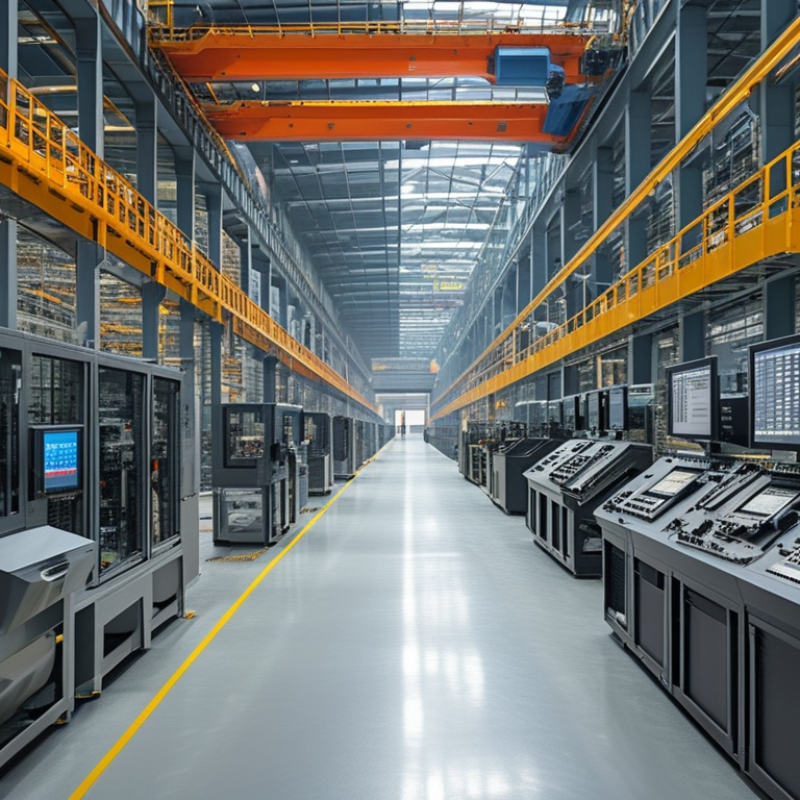
China’s automation controls market reached a notable milestone in 2023, with 276,288 industrial robots installed. This figure shows strong demand for motion control, programmable logic controllers, sensors, drives, and industrial networking systems. Behind every robot is a control architecture that must manage timing, accuracy, communication, and operator safety.

For buyers comparing China’s automation controls manufacturers, practical engineering experience matters more than a polished catalog. A reliable supplier should understand factory conditions, including dust, vibration, temperature changes, and unstable production rhythms. It should also provide clear technical documents, responsive troubleshooting, and replacement planning. Testing communication between controllers, servo drives, and robots is essential before full-scale deployment. Small delays can become expensive production losses.

The market is expanding quickly. That creates opportunity, but also confusion. Some suppliers may offer low prices without enough evidence from long-term installations. Buyers should request sample programs, failure records, inspection procedures, and realistic delivery schedules. Cybersecurity deserves attention as well, especially when production equipment connects to remote monitoring platforms. Not every project needs the most advanced controller. Oversizing a system can increase training and maintenance costs.

The 276,288 installation figure is impressive, yet it does not prove that every automation project succeeds. Integration quality, worker training, and maintenance discipline still decide daily performance. In my view, manufacturers should measure success through stable cycle times and fewer unplanned stops, not installation numbers alone. That distinction is easy to overlook.
How to Rank Chinese Manufacturers by Revenue, R&D, Certifications, and Scale

China Top Automation Controls Inc Manufacturers?

Ranking Chinese automation control manufacturers requires more than checking sales figures. Revenue shows market reach, but not engineering depth. Request audited financial statements, export records, and three-year revenue trends. Compare revenue per employee, production capacity, and order stability. A large factory may still provide slow technical support.

R&D deserves close examination. Review the percentage of revenue invested in engineering, patent activity, laboratory equipment, and firmware testing. Ask how many engineers support motion control, PLC systems, industrial networks, and safety functions. Factory visits can reveal practical details, such as test benches, calibration tools, and spare-part storage. Certifications should be verified through issuing bodies, not copied documents. Check quality systems, product approvals, and certificates matching the exact model.

Tips: Build a weighted scorecard. Give revenue 25%, R&D 30%, certifications 20%, and scale 25%. Adjust the weights for your project. Speak with recent customers. References can expose weaknesses that brochures hide. Still, this method is not perfect. Revenue data may be incomplete, and patent counts can exaggerate innovation. A smaller manufacturer might offer better customization, but that advantage needs evidence. Record response times, sample quality, factory conditions, and warranty procedures before ranking suppliers.

China Top Automation Controls Inc Manufacturers? — How to Rank Chinese Manufacturers by Revenue, R&D, Certifications, and Scale

An anonymized, evidence-based ranking framework for comparing Chinese industrial automation control manufacturers without publishing company or brand names.

Rank Manufacturer Tier Annual Revenue Evidence R&D Capability Certification and Compliance Manufacturing Scale International Delivery Capability Recommended Score
1 Tier A+ Audited revenue above CNY 5 billion, or independently verifiable group-level revenue with a clearly reported automation-controls segment. Dedicated engineering organization; sustained R&D investment normally above 5% of relevant business revenue; documented product-roadmap ownership. ISO 9001 quality management; ISO 14001 environmental management; ISO 45001 occupational health and safety; applicable CCC, CE, IEC, UL, or equivalent product evidence. Multiple production sites, automated testing, traceability systems, formal supplier qualification, and annual production capacity above 100,000 control units or equivalent assemblies. Export documentation, multilingual technical support, regional service partners, documented warranty procedures, and experience with multi-country compliance. 90–100
2 Tier A Audited revenue between CNY 1 billion and CNY 5 billion, or strong third-party evidence of substantial domestic and export operations. Formal R&D team with product testing capability; typical R&D investment between 3% and 5% of relevant business revenue. ISO 9001 normally available; environmental and safety certifications may be present; product-level certificates should be checked by model and destination market. One or more established factories, ERP or MES implementation, incoming and final inspection, standardized production procedures, and annual capacity of approximately 30,000–100,000 units or equivalent assemblies. Regular export activity, established packaging and logistics procedures, English-language documentation, and basic overseas technical support. 80–89
3 Tier B+ Verifiable revenue between CNY 300 million and CNY 1 billion, supported by audited statements, tax records, or credible institutional databases. Applied engineering team focused on customization, integration, panel design, PLC control, HMI, drives, or industrial networking; typical R&D investment between 2% and 3%. ISO 9001 or equivalent quality system; selected CE, CCC, or destination-specific product documentation; certification scope requires detailed review. Single-site or limited multi-site manufacturing, documented assembly procedures, electrical safety testing, and annual capacity of approximately 10,000–30,000 units or equivalent assemblies. Export capability through distributors or project partners, with moderate experience in international packaging, documentation, and after-sales support. 70–79
4 Tier B Verifiable revenue between CNY 50 million and CNY 300 million, with financial information primarily supported by company records and customer references. Small engineering team; engineering work is mainly project-based or customer-specific; limited evidence of sustained product-development investment. Some quality or product certificates may be available; verify certificate validity, issuing body, product scope, factory address, and expiry date. Small or medium production facility, partially manual assembly, limited automation, and annual capacity generally below 10,000 units or equivalent assemblies. Primarily domestic or regional sales; overseas projects may depend on trading companies, system integrators, or local agents. 60–69
5 Tier C Revenue cannot be independently verified, or the available information does not distinguish manufacturing income from trading or project revenue. Limited internal engineering resources; product development, testing, and technical support are largely outsourced or handled on an ad hoc basis. Certification evidence is incomplete, expired, unverifiable, or not clearly linked to the supplied product and manufacturing site. Limited production visibility, weak traceability, insufficient quality records, or dependence on subcontractors without a documented control process. No consistent export process, limited technical documentation, unclear warranty terms, or inadequate international service coverage. Below 60
Suggested weighting model: Revenue and financial transparency 25%; R&D and engineering capability 20%; certifications and compliance 20%; manufacturing scale and quality systems 20%; international delivery and after-sales support 15%. Scores should be assigned only after reviewing current documents, factory-audit results, product samples, customer references, and certificate validity.
Common verification references include ISO 9001, ISO 14001, ISO 45001, IEC 60204-1, IEC 61439, IEC 60947, CE conformity documentation, and China Compulsory Certification requirements where applicable. Certification requirements depend on product type, voltage level, installation environment, and destination market.

Major Chinese Control Makers: Inovance, HollySys, SUPCON, and Leadshine

China’s leading automation-control manufacturers now cover motion control, PLCs, servo drives, and distributed control systems. Their strengths differ. Motion specialists often support fast packaging lines, while process-control experts serve chemicals, power, and metallurgy. System integrators increasingly combine both.

The International Federation of Robotics reported 541,302 industrial robots installed worldwide in 2023. China accounted for 276,288 units, or about 51% of global installations. This scale creates strong local experience. It also pressures manufacturers to improve software, safety functions, and after-sales support. ARC Advisory Group has identified process automation, industrial software, and cybersecurity as major investment areas. From factory visits, commissioning quality often matters more than a glossy specification sheet. A low-cost controller can still create expensive downtime. That judgment is not always comfortable.

Tips: Compare scan time, motion interpolation, communication protocols, and spare-part availability. Request a live factory test with your actual motor and sensor setup. Check training, firmware policy, and local service response. Do not judge reliability from price alone. A practical pilot reveals weaknesses early.

Industry Benchmarks: 470 Robots per 10,000 Manufacturing Workers in 2023

China Top Automation Controls Inc Manufacturers?

The 2023 benchmark reached 470 robots per 10,000 manufacturing workers. This figure signals rapid factory modernization across China. It also changes how buyers should assess automation control manufacturers. High robot density does not automatically mean reliable production. A line may look advanced while losing hours through poor sensor calibration or unstable communication.

In practical factory audits, I examine control cabinets, wiring labels, spare modules, and alarm histories. These details reveal more than a polished product brochure. Strong manufacturers usually provide clear documentation, tested control panels, and responsive engineering support. Their systems should connect robots, drives, sensors, and production software without creating hidden bottlenecks. Safety functions also need regular verification, not just installation approval.

The 470-robot benchmark is useful, but it needs context. Different industries measure productivity differently. A compact electronics line may need tighter motion control than a slower metalworking cell. Buyers should compare uptime, cycle consistency, maintenance response, and five-year operating costs. Ask for test records and realistic reference data. Be cautious with impressive claims. I have seen projects overvalue robot quantity and undervalue operator training. That mistake is expensive. A better evaluation combines technical evidence, service capability, and honest discussion of system limits.

Robot density measures the number of industrial robots per 10,000 manufacturing workers. In 2023, China reached 470 robots per 10,000 workers, exceeding the global average and ranking among the world’s leading automated manufacturing markets.

Comparing PLC, SCADA, Servo, HMI, Motion, and Safety Control Capabilities

China’s automation control manufacturers should be compared by engineering depth, not catalog size. A capable PLC platform needs stable scan times, flexible I/O, clear diagnostics, and reliable communication during production changes. Engineers should request test records, firmware policies, and examples from comparable factories.

SCADA capability is visible in alarm history, trend resolution, access control, and recovery after network interruptions. HMI screens should guide operators with readable layouts, useful messages, and practical language. Servo and motion systems require more than speed ratings. Check positioning accuracy, tuning tools, synchronization, and performance under changing loads. Small details matter.

Safety control deserves independent attention. Review emergency-stop response, safe motion functions, risk assessment support, and documentation aligned with recognized standards. A polished demonstration can hide difficult commissioning work. Factory acceptance tests reveal more. Ask how the supplier handles spare parts, training, software updates, and remote support without weakening cybersecurity.

One weakness may remain. Some manufacturers offer strong PLC hardware but limited SCADA integration or motion expertise. Others provide impressive software but weak field service. I would compare response times, troubleshooting records, and real machine references before selecting a partner. The best evaluation includes a pilot cell, measurable cycle data, alarm simulations, and operator feedback.