China Top 10 Automation Controls Suppliers?
China’s automation controls market has expanded from basic relay replacement to connected systems, motion control, industrial networking, and intelligent manufacturing. This guide examines ten leading suppliers serving factories, system integrators, machine builders, and international buyers. The selection considers product depth, engineering capability, manufacturing experience, certifications, customer support, export reach, and documented project performance.
Dick Morley, widely recognized as the father of the programmable logic controller, said, “A PLC is a computer designed to be used by electricians.” His observation remains practical today. A supplier must offer more than impressive specifications. Its controllers should be reliable on a noisy factory floor, understandable during maintenance, and compatible with real production conditions.
This comparison focuses on automation controls portfolios, including PLCs, HMIs, servo systems, variable-frequency drives, safety products, and industrial communication platforms. It also considers software usability, spare-parts availability, technical training, and integration support. These details often decide whether a project starts smoothly or suffers costly downtime.
No ranking can fit every application. A supplier strong in process control may not suit high-speed packaging equipment. A lower-cost system may also require more engineering effort. That trade-off deserves careful review. Some public supplier information is incomplete, and regional service quality can vary between cities. Therefore, buyers should verify current certifications, firmware support, lead times, cybersecurity practices, and local references before signing contracts.
The following list is a practical starting point, not an absolute verdict. It is designed to help readers compare China’s prominent automation controls suppliers with clearer expectations, measurable criteria, and a realistic view of industrial procurement.
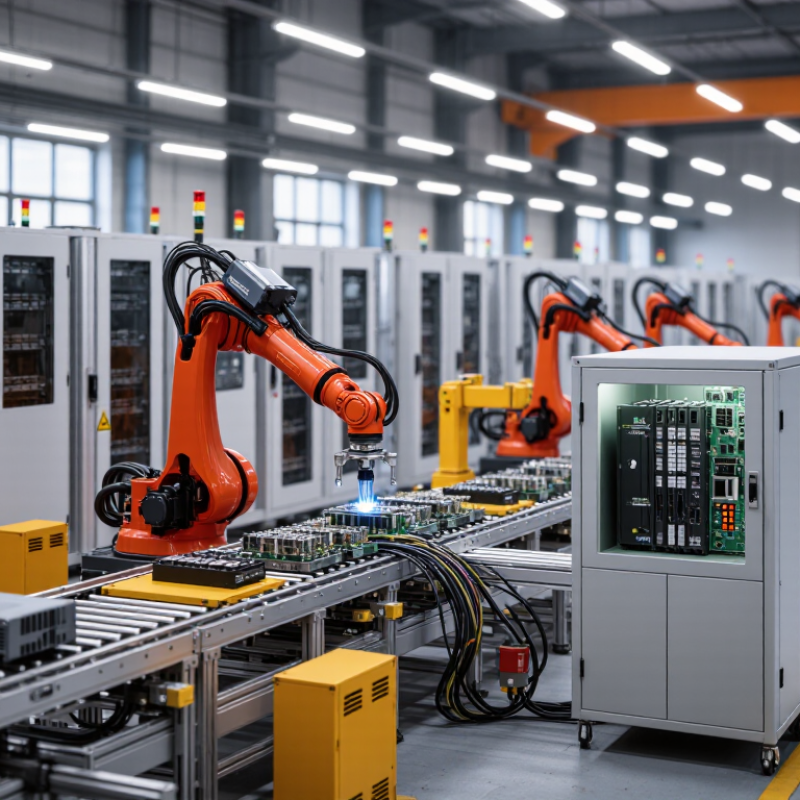
Automation controls suppliers in China are companies that design, manufacture, integrate, or distribute equipment for industrial control systems. Their products may include programmable controllers, control panels, sensors, variable-frequency drives, industrial computers, and human-machine interfaces. Some suppliers produce standard components, while others build customized systems for factories, warehouses, water treatment facilities, and energy projects.
A capable supplier should understand both hardware and production conditions. During a factory visit, engineers may inspect wiring quality, cabinet labeling, terminal tightening, and software testing records. These details matter when a control panel operates beside heat, dust, vibration, or moisture. Reliable suppliers usually provide electrical drawings, communication protocols, test reports, and installation guidance. Compliance with applicable safety and electromagnetic standards also deserves careful checking.
Price alone can mislead. A lower quotation may exclude programming, spare parts, remote support, or commissioning travel. That becomes expensive later. In practical sourcing, buyers should request a sample configuration and ask how faults are diagnosed. Response time matters. So does documentation.
Not every supplier performs equally well. Some provide excellent hardware but weak technical translation. Others promise customization too quickly and revise the design later. This is where careful review helps. Compare production experience, testing procedures, technician qualifications, delivery records, and after-sales arrangements before selecting among China’s automation controls suppliers.
How to Evaluate China’s Top Automation Controls Suppliers
Evaluating China’s leading automation controls suppliers requires more than comparing prices. A reliable assessment begins with documented engineering experience, product specifications, and customer references from similar industries. Ask for evidence. Request sample wiring diagrams, communication protocols, testing records, and failure-rate data. A supplier should explain how its controllers perform in dusty workshops, high temperatures, and unstable electrical conditions.
Visit the production site when possible. Observe component storage, calibration equipment, quality checkpoints, and final inspection procedures. A clean factory is useful, but it does not prove technical capability. Review traceability records for circuit boards and critical components. Confirm whether engineers can support commissioning remotely and on site. Response time matters during a production stoppage. Test it before signing.
Strong suppliers also provide clear manuals, firmware procedures, spare-parts planning, and cybersecurity controls. Check compliance documents for the destination market, not just general certificates. Ask who owns the control logic and whether source files can be maintained locally. Contract terms should define acceptance tests, warranty limits, training, and replacement timelines. No supplier is flawless. I have seen polished demonstrations hide weak documentation and slow troubleshooting. A small pilot project can reveal more than a long presentation. Measure installation hours, alarm accuracy, network stability, and operator learning time. Leave room for uncomfortable findings. They often prevent expensive surprises.
A practical weighted framework for evaluating automation controls suppliers in China. The percentages represent recommended decision weights rather than company-specific scores, helping buyers compare suppliers objectively without relying only on price.
The framework prioritizes technical capability, product quality, integration support, and lifecycle service. Buyers can adjust the weights according to application complexity, compliance requirements, delivery risk, and total cost of ownership.
China’s automation controls sector includes many capable suppliers, but rankings should follow evidence rather than advertising. These ten profiles represent leading supplier types, selected through product depth, certification records, project experience, and service coverage. Profile one focuses on PLC platforms for packaging lines. Profile two develops variable-frequency drives for pumps and conveyors. Profile three provides motion controllers for precise positioning. Profile four specializes in industrial networking and remote diagnostics. Profile five supplies operator panels with clear alarm displays.
The remaining profiles cover process controllers, safety modules, machine-vision interfaces, robotic integration, and industrial software. In factory visits, practical details often matter more than impressive catalogs. A supplier’s cabinet wiring, spare-parts policy, and response time can reveal its real capability.
Profile six may offer strong temperature control, while profile seven supports machine safety systems. Profile eight integrates vision inspection. Profile nine builds robotic cells. Profile ten connects production data with maintenance tools. No supplier is perfect; some smaller firms respond faster but lack international support.
Tips: Request a live demonstration using your material, cycle time, and fault conditions. Check firmware update procedures, training records, and replacement lead times. Ask for references from factories with similar workloads. Also review cybersecurity controls, documentation quality, and local engineering support. A low purchase price can become expensive when commissioning takes weeks.upplier reliability is proven on the factory floor.
China’s top automation control suppliers compete across PLCs, industrial PCs, motion controllers, servo drives, sensors, and SCADA software. These products coordinate motors, conveyors, robots, and safety systems on busy production lines. According to the International Federation of Robotics’ World Robotics 2024 report, China installed 276,288 industrial robots in 2023, representing 51% of global installations. That scale creates strong demand for precise control, faster communication, and easier maintenance.
Key technologies include EtherCAT and other industrial Ethernet networks, edge monitoring, machine vision, digital twins, and predictive maintenance. Suppliers serve automotive, electronics, batteries, logistics, food processing, pharmaceuticals, water treatment, and renewable-energy equipment. Semiconductor factories need clean, highly stable control. Food plants often value washdown-ready hardware and traceable data. These requirements differ sharply. A single ranking can therefore be misleading, because technical fit matters more than sales volume. Some product claims also sound impressive, while field-service evidence remains limited.
Tips: Check protocol compatibility, response time, cybersecurity updates, spare-part availability, and local engineers. Request a reference project in your industry. Compare five-year operating costs, not only purchase prices. The 2024 ARC Advisory Group market studies continue to emphasize connected control, industrial software, and lifecycle services as major automation priorities. Yet integration quality still decides performance. A cheaper controller may create expensive downtime when documentation is weak or technicians need unusual training.
| Rank | Anonymous Supplier Profile | Key Products | Core Control Technologies | Communication and Integration | Typical Industries Served | Common Engineering Strengths | Typical Compliance Requirements |
|---|---|---|---|---|---|---|---|
| 1 | Large Industrial Control Platform Supplier | PLC systems HMI panels Remote I/O Industrial software | Programmable logic control, motion control, PID regulation, alarm management, and supervisory control. | Ethernet, Modbus TCP/RTU, OPC UA, CAN-based networks, and common industrial fieldbus systems. | Factory automation, packaging, material handling, water treatment, and general machinery. | Integrated hardware and software portfolios, local engineering support, and scalable control architectures. | CE, RoHS, electromagnetic compatibility, electrical safety, and applicable machinery standards. |
| 2 | Motion and Servo Automation Supplier | Servo drives Servo motors Motion controllers Inverters | Multi-axis synchronization, electronic camming, position control, speed control, and torque control. | EtherCAT, CANopen, pulse and direction, PROFINET, Modbus, and real-time Ethernet architectures. | Robotics, CNC equipment, semiconductor machinery, printing, textiles, and electronic assembly. | High-speed interpolation, compact drive packages, tuning software, and coordinated multi-axis motion. | CE, EMC, functional safety where applicable, RoHS, and regional electrical certification requirements. |
| 3 | Low-Voltage Electrical and Motor Control Supplier | Contactors Circuit breakers Motor starters Control cabinets | Motor protection, overload protection, power switching, distribution control, and electrical interlocking. | Modbus communication modules, Ethernet gateways, digital I/O, and cabinet-level monitoring interfaces. | Building systems, HVAC, pumps, compressors, infrastructure, and industrial production lines. | Broad electrical ratings, modular panel design, protection coordination, and cost-effective integration. | IEC 60947 series, IEC 61439 for assemblies, CE, RoHS, and local electrical installation rules. |
| 4 | Process Automation and Instrumentation Supplier | Process controllers Transmitters Control valves SCADA systems | Continuous process control, cascade loops, ratio control, batch control, and condition monitoring. | 4–20 mA, HART, Modbus, PROFIBUS, OPC UA, and distributed control system interfaces. | Water and wastewater, chemicals, food processing, pharmaceuticals, energy, and utilities. | Measurement accuracy, process stability, remote diagnostics, and integration with plant-wide monitoring systems. | IEC instrumentation practices, hazardous-area requirements where applicable, CE, EMC, and process-sector rules. |
| 5 | Industrial Networking and Edge Connectivity Supplier | Industrial switches Gateways Wireless devices Edge computers | Industrial Ethernet management, protocol conversion, edge data acquisition, network redundancy, and cybersecurity functions. | Ethernet/IP, PROFINET, Modbus TCP, OPC UA, MQTT, TSN-ready architectures, and cellular connectivity. | Smart factories, logistics, energy monitoring, transportation, machine building, and remote assets. | Ruggedized hardware, real-time data collection, network diagnostics, and IT/OT connectivity. | IEC 62443-related cybersecurity practices, EMC, environmental testing, CE, and telecom approvals where required. |
| 6 | Robotics and Machine Automation Supplier | Industrial robots Robot controllers Safety systems Vision interfaces | Robot kinematics, coordinated motion, machine sequencing, collision monitoring, and safety-rated control. | EtherCAT, PROFINET, Ethernet/IP, digital I/O, safety networks, and robot-to-PLC interfaces. | Automotive components, welding, palletizing, assembly, electronics, warehousing, and inspection. | Application-specific cells, repeatability, rapid cycle times, offline programming, and integrated safety functions. | ISO 10218, ISO/TS 15066 where applicable, machinery safety requirements, CE, and functional safety standards. |
| 7 | Renewable Energy and Power Conversion Supplier | Power converters Energy controllers Battery management Monitoring platforms | Grid-tied conversion, maximum power point tracking, battery control, power quality management, and energy dispatch. | Modbus TCP/RTU, IEC-based utility interfaces, CAN, Ethernet, remote monitoring, and cloud gateways. | Solar power, energy storage, charging infrastructure, microgrids, and industrial energy management. | High-efficiency conversion, thermal management, remote diagnostics, and renewable asset integration. | Grid-connection codes, IEC power-conversion standards, EMC, electrical safety, CE, and local utility approvals. |
| 8 | Building and HVAC Automation Supplier | Building controllers Room controllers Sensors Energy management software | Temperature and humidity control, scheduling, demand control ventilation, occupancy management, and energy optimization. | BACnet, Modbus, KNX, DALI, Lon-compatible systems, Ethernet, and wireless sensor networks. | Commercial buildings, hospitals, airports, hotels, campuses, data centers, and public facilities. | Open-protocol integration, energy savings, centralized supervision, and scalable building management systems. | Building electrical codes, HVAC standards, BACnet compliance where applicable, EMC, CE, and energy regulations. |
| 9 | Factory Digitalization and MES Integration Supplier | MES software SCADA platforms Industrial PCs Data historians | Production tracking, OEE analysis, recipe management, traceability, predictive analytics, and industrial data modeling. | OPC UA, MQTT, SQL databases, REST APIs, Modbus, Ethernet/IP, and PLC data connectors. | Discrete manufacturing, electronics, automotive, food and beverage, pharmaceuticals, and warehouse operations. | Interoperability, real-time dashboards, production traceability, data security, and gradual legacy-system migration. | IEC 62443 security practices, data protection requirements, electronic-record controls where applicable, and CE. |
| 10 | Specialized Sensor and Condition Monitoring Supplier | Proximity sensors Photoelectric sensors Vibration monitors Safety sensors | Presence detection, dimensional measurement, vibration analysis, predictive maintenance, and machine safety sensing. | Discrete I/O, IO-Link, Modbus, industrial Ethernet, wireless monitoring, and cloud-connected gateways. | Machine tools, packaging, conveyors, automotive production, logistics, metals, and process equipment. | Fast response, robust sensing, high repeatability, easy commissioning, and compatibility with major control platforms. | IEC 60947-5-2, IEC 61508 or ISO 13849 for safety-related products where applicable, CE, EMC, and RoHS. |
When comparing China’s top automation control suppliers, do not rank them by catalog size alone. Start with your process, production volume, and risk tolerance. A supplier should understand your control architecture, not just sell individual components. Ask for evidence from similar projects, including wiring drawings, factory acceptance tests, and commissioning records. Specific proof matters.
Check engineering depth across PLCs, HMIs, motion systems, sensors, and safety controls. Then examine response times. Can an engineer diagnose a failed input module at 2 a.m.? Review spare-parts policies, firmware management, training, and remote support. Request a sample control panel or a supervised demonstration. Numbers can mislead. A low initial quote may exclude programming, testing, travel, or replacement parts.
Reliability also depends on documentation and traceability. Confirm material records, inspection procedures, software version control, and applicable electrical certifications. Discuss cybersecurity controls before connecting equipment to a factory network. Compare total ownership cost over five years, not only purchase price. On real production lines, unclear drawings often create longer delays than hardware faults. I once underestimated operator training during a supplier review; the system worked, but adoption was slow. That mistake changed my evaluation checklist. Leave room for trial orders, measurable service-level targets, and a written escalation path. A confident supplier should accept practical scrutiny.