
How Can We Help You?

How to Choose Electrical Controls for Your Business?

Choosing electrical controls is not just a component decision. It affects energy use, uptime, operator safety, and future maintenance. The right choice depends on what your equipment must do—and how it behaves during a busy shift, a fault, or a production change.

The scale is significant. The International Energy Agency estimates that industry accounts for about 37% of global final energy consumption. In the United States, the Department of Energy reports that motor-driven systems use roughly 54% of manufacturing electricity. These figures do not mean a control upgrade will deliver the same savings at every site. They do show why matching drives, sensors, protection, and control logic to the actual process deserves careful attention. Small mismatches matter.

A useful assessment starts at the machine. Note motor ratings, load variation, start frequency, ambient heat, dust, washdown needs, and the consequences of a stop. Check whether existing panels have space and whether operators can read alarms without guessing. Then compare options for compatibility, diagnostics, maintainability, and expansion—not purchase price alone. A low-cost controller can become expensive when a simple fault takes hours to trace. Still, specifications never tell the whole story; site conditions can surprise even experienced teams. This guide explains how to weigh those practical details and choose electrical controls that fit your business today, while leaving room for sensible growth.

How to Choose Electrical Controls for Your Business?

Define the Business Processes and Control Requirements

Before choosing electrical controls, describe the work your business needs them to perform. Map each process from start to finish, including normal operation, changeovers, cleaning, and shutdown. A small packaging line, for example, may need a conveyor to pause when a guard opens and restart only after an operator resets it. Write down what should happen, who initiates each step, and what the equipment must do if a sensor stops responding.

Turn that map into clear control requirements. List the motors, sensors, valves, and operator stations involved, along with their operating ranges and expected response times. Note whether staff need local manual control, remote monitoring, or both. Record the plant conditions too: washdown, dust, vibration, heat, and limited panel space can all affect enclosure and component choices. Safety-related functions should be assessed by qualified professionals, not treated as ordinary convenience features.

Walk through unusual situations with the people who run and maintain the equipment. What happens during a power interruption? Can a technician identify a fault from the panel without guessing? These questions often expose missing requirements. A process diagram may look complete and still overlook a brief handoff between shifts. That is worth revisiting. Keep the requirements specific enough that suppliers can respond consistently, but allow room for practical feedback from those closest to the work.
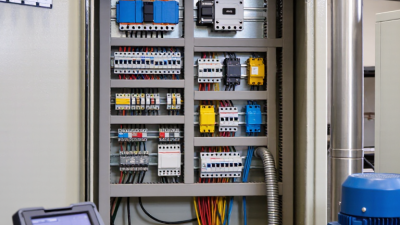
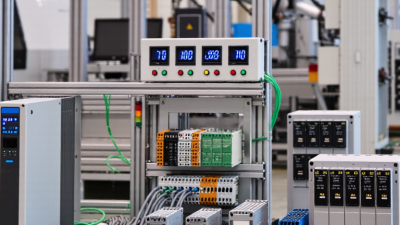
Assess Electrical Loads, Operating Conditions, and Expansion Needs

Choosing electrical controls starts with a clear picture of the loads they must manage. List each motor, heater, pump, and lighting circuit, including voltage, phase, and full-load current. Record starting current too; motors may draw several times their running current briefly. A panel sized only for normal demand can trip when several machines start together. Small detail, big consequence.

Operating conditions shape component choices as much as amperage does. Note ambient temperature, dust, moisture, vibration, washdown, and enclosure location. A cabinet beside a hot process line needs different thermal planning from one in a clean, climate-controlled room. Check duty cycles, switching frequency, and whether operators need local controls, alarms, or remote status. Keep the drawings current.

Consider likely changes, such as added equipment, longer shifts, or a new production line. Leave practical space for spare circuits and terminals, but avoid oversizing without a clear reason. Expansion capacity should reflect realistic plans, not hopeful guesses. Estimates can be fuzzy. Review demand records and future projects with a qualified electrical professional before finalizing ratings, protection, and wiring. Ask how the system will be isolated and maintained; crowded floors can make an otherwise sound control layout awkward to service.

How to Choose Electrical Controls for Your Business? — Assess Electrical Loads, Operating Conditions, and Expansion Needs

Load or Application Example Electrical Load Control Options to Evaluate Operating Conditions to Check Expansion and Selection Considerations Key Information to Confirm
Ventilation fan motor Three-phase, 400 V, 5.5 kW motor; example full-load current approximately 11 A Motor starter for fixed-speed operation; variable-frequency drive (VFD) if airflow or speed needs to vary Starting frequency, dust, ambient temperature, ventilation, and whether the motor is exposed to moisture Check whether future airflow increases may require a larger motor or additional fan; allow suitable panel space for planned additions Motor nameplate current, starting method, required speed range, enclosure rating, and applicable electrical code
Process water pump Three-phase, 400 V, 15 kW motor; example full-load current approximately 29 A Direct-on-line or soft starter where appropriate; VFD for variable flow or pressure control Liquid temperature, washdown exposure, pump duty cycle, pressure requirements, and risk of frequent starts Consider additional pump capacity, standby equipment, and spare control inputs if the process may expand Motor nameplate data, pump operating range, protection requirements, supply capacity, and drive compatibility
Electric process heater Single-phase, 230 V, 6 kW resistive load; example current approximately 26 A Contactor for simple on/off control; appropriately rated solid-state switching for frequent cycling or temperature control Heater surface temperature, switching frequency, ventilation, enclosure temperature, and nearby combustible materials Account for any additional heating zones and their combined demand when checking feeder and panel capacity Heater voltage and current, control method, switching duty, overcurrent protection, and required temperature limits
Conveyor drive Three-phase, 400 V, 7.5 kW motor; example full-load current approximately 15 A Motor starter for one-direction operation; reversing starter or VFD where reversing or adjustable speed is required Load inertia, starts per hour, stopping time, dust, vibration, and emergency-stop requirements Provide space and control provisions for planned conveyor sections, sensors, and safety devices Motor nameplate current, direction and speed requirements, mechanical load, braking needs, and safety-system design
PLC, sensors, and solenoid valves Example 24 V DC control circuit with a 2 A estimated load; verify actual device ratings and combined demand Power supply with correctly rated branch protection; PLC I/O and interposing relays where required by device ratings Electrical noise, cable length, humidity, temperature, and separation from motor and power wiring Identify spare I/O points, power-supply headroom, terminal space, and network capacity for planned devices Device current draw, I/O type, isolation needs, communication protocol, and required control voltage
Outdoor or washdown equipment Load-dependent; use the connected equipment nameplates and site measurements to establish actual demand Select control components and an enclosure suited to the location; add suitable environmental protection as needed Water exposure, corrosion, direct sunlight, temperature extremes, condensation, and installation location Check that enclosure space and thermal capacity remain adequate if more devices are added Site conditions, required enclosure protection, component temperature limits, and local installation rules
Panel-level capacity and future growth Calculate connected load and expected demand using actual equipment data; do not rely on motor kW alone Coordinate protective devices, control gear, power supplies, and panel design with the system’s supply and fault level Available supply voltage, ambient temperature, short-circuit conditions, duty cycle, and installation environment Define a project-specific allowance for spare panel space, terminals, I/O, and electrical capacity; verify it against the expansion plan Load schedule, diversity assumptions, prospective fault current, protective-device coordination, and applicable local codes

Note: Current figures are illustrative estimates, not equipment ratings. Confirm actual values from equipment nameplates and manufacturer data, and have protective-device selection, fault-current ratings, and installation details verified by a qualified electrical professional under applicable local codes.

Compare Control Types, Automation Features, and System Compatibility

How to Choose Electrical Controls for Your Business?

Compare Control Types, Automation Features, and System Compatibility

Choosing electrical controls starts with the job, not the feature list. A relay-based panel can suit simple, fixed sequences. A programmable logic controller offers more flexibility for changing processes, while a distributed control system can coordinate larger operations. Match the control type to the number of inputs and outputs, response time, safety needs, and who will maintain it. A panel beside a dusty conveyor faces different conditions than one in a clean control room. Small details matter.

Automation features should solve a real operating problem. Remote monitoring can help teams spot temperature or cycle-time changes, but only if alarms are clear and someone responds.

Deloitte’s 2023 Smart Manufacturing survey found that 86% of manufacturing executives saw smart factory solutions as a competitiveness driver within five years. That signals strong interest, not guaranteed savings.

Check whether controls can exchange data with existing sensors, drives, and supervisory software. Confirm communication protocols, available spare capacity, cybersecurity responsibilities, and support for future upgrades. Compatibility is often overlooked. A system may work in a test room yet fail to fit an older machine’s wiring, timing, or maintenance routines. Ask an integrator to verify these details against drawings and site conditions before purchase.

The drawings may be imperfect, too. A careful walk-through can reveal what paperwork misses.

Verify Safety Standards, Certifications, and Installation Requirements

How to Choose Electrical Controls for Your Business?

A control panel may look suitable on paper, yet fail in a warm, dusty production room. Check that its safety certification applies to the exact model and intended use, not just a similar product family. Confirm the voltage, current, short-circuit rating, and enclosure protection match your equipment and site conditions. Details matter.

Read the certification record and installation instructions before purchase. Verify the issuing organization and check for limitations, such as required fuses or specific enclosure types. A certificate does not mean every configuration is safe. Paperwork is not proof. If a rating or document is unclear, ask the supplier or a qualified electrical professional to clarify it in writing.

Installation requirements can change the choice. Check clearances, operating temperature, ventilation, cable-entry points, grounding, and wire sizes against the manufacturer’s instructions and applicable local requirements. A compact panel might save floor space but leave too little room for heat to escape or maintenance access. That trade-off is easy to miss. Have a qualified installer review the actual site, wiring plan, and control ratings before work begins; a checklist helps, but it cannot anticipate every awkward condition.

How to Choose Electrical Controls for Your Business?

Verify safety standards, certifications, and installation requirements—including the enclosure’s protection against solids and water.

How to read it: In an IP code, the first digit (0–6) describes protection against access to hazardous parts and ingress of solid objects; the second digit (0–9) describes protection against water. These are code ranges, not directly comparable performance scores. Choose a rating suited to the installation environment, and verify the complete rating, applicable local standards, product certification, and installation instructions in the manufacturer’s documentation.

Evaluate Supplier Support, Maintenance Needs, and Total Cost of Ownership

Supplier support matters most when a production line stops at an inconvenient hour. Ask how quickly technical staff respond, whether they can troubleshoot remotely, and what information they need before a service visit. Clear wiring diagrams, configuration files, and commissioning records can save hours later. Ask who maintains these documents when your system changes.

Maintenance needs should match the conditions on your floor. Dust, heat, vibration, and frequent washdowns can affect control components and access. Check whether technicians can reach terminals and replace common parts without dismantling nearby equipment. Confirm recommended inspection intervals and the availability of replacement components. Keep a realistic spare-parts list. Too many spares tie up cash; too few can prolong downtime.

Compare total cost of ownership, not just the purchase quote. Include installation, operator training, energy use, scheduled maintenance, software support, and likely replacement costs. A lower-priced control system may require more specialist service or longer shutdowns. Request a written estimate of ongoing costs and clarify what support is included. Estimates are imperfect; actual costs depend on how your team uses and maintains the equipment. Review those assumptions against your operating schedule before choosing.