
An Iron Square Pipe is a hollow, four-sided metal section used where strength, alignment, and practical fabrication matter. Although many suppliers use “iron” as a common trade term, most modern products are actually steel square tubes. That distinction affects weight, weldability, corrosion resistance, and structural performance.
In construction, an Iron Square Pipe can support frames, railings, gates, handrails, partitions, and light structural assemblies. Its flat faces simplify drilling, cutting, welding, and fastening. A square profile also resists twisting better than some open sections. It can form the clean outline of a greenhouse, a steel table, or a warehouse platform.
But shape alone does not guarantee safety. Wall thickness, grade, length, connection design, and applied load must match the intended use. Outdoor installations may require galvanizing, paint, or another suitable protective coating. Moisture trapped inside the tube can also create hidden corrosion. That detail is easy to miss.
Structural engineer Fazlur Rahman Khan offered a useful principle: “A building should be a blending of the best of technology and the best of human values.” His words remind us that material selection should serve people, not only appearance or cost. An Iron Square Pipe may look simple, yet its performance depends on accurate measurement and responsible installation.
This introduction has a limitation. Product names and specifications vary by region and supplier. Readers should verify material certificates, dimensions, and local engineering requirements before selecting a pipe for load-bearing work. The following guide examines common applications, practical benefits, and the situations where another steel section may be more appropriate.
What Is an Iron Square Pipe Used For?
Definition and Key Features of Iron Square Pipe
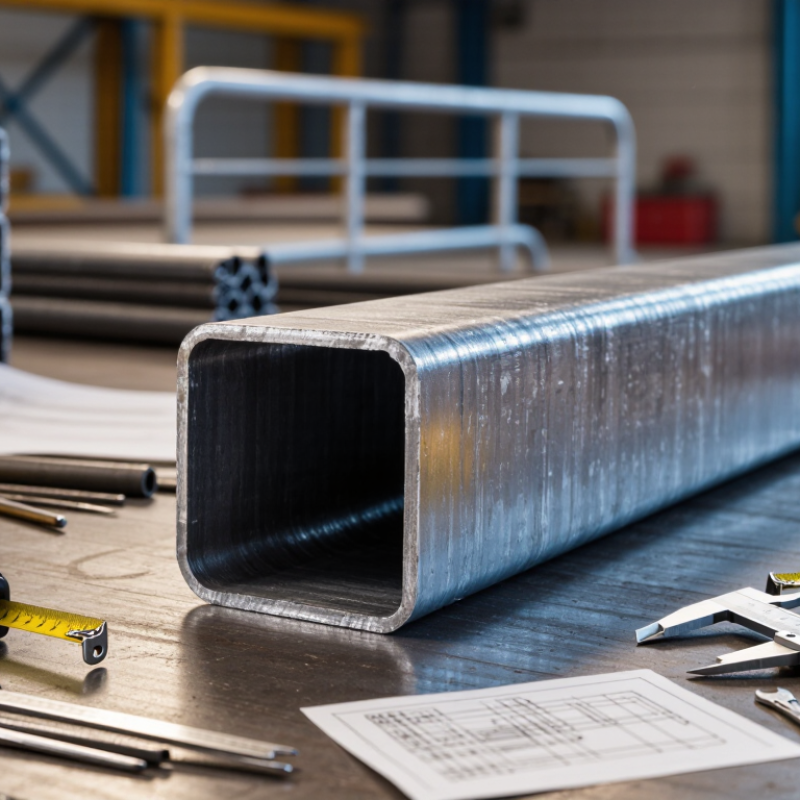
An iron square pipe is a hollow metal section with four equal sides and a consistent square profile. In construction, the term usually refers to mild steel rather than pure iron. This distinction matters because steel provides better strength, weldability, and practical durability. Its hollow center reduces weight while retaining useful resistance against bending and twisting. Common sizes range from small framing sections to heavy structural tubes, with wall thickness selected according to the expected load.
Iron square pipe is used for gates, handrails, machine frames, shelving, furniture supports, and light structural assemblies. Fabricators value its straight edges because they simplify measuring, cutting, and joining. A clean surface also supports accurate welding. However, untreated steel can rust quickly in damp air, especially around cut ends and welds. Protective paint, galvanizing, or another suitable coating helps slow corrosion. Load calculations remain essential; a thick-looking pipe is not automatically safe.
Tips: Measure the outside dimensions and wall thickness before ordering. Check for straightness, visible dents, uneven welds, and surface scale. Store sections above wet floors. Seal exposed ends after cutting. Use proper ventilation and protective equipment during welding or grinding. A small mistake matters. I would also confirm the pipe’s grade and intended load with a qualified professional, because supplier descriptions can be incomplete.
| Data Dimension | Information | Practical Significance |
|---|---|---|
| Definition | An iron square pipe is a hollow structural section with a square cross-section and four generally flat sides. In commercial construction, the term commonly refers to square hollow sections made from carbon steel or mild steel rather than pure iron. | Its hollow shape provides useful strength and stiffness while using less material than a solid bar of similar outside dimensions. |
| Common Manufacturing Process | Many square pipes are produced by forming steel strip or sheet into a round tube and then shaping it into a square profile. The longitudinal seam is typically welded, followed by sizing and cutting to length. | Manufacturing affects dimensional accuracy, weld quality, surface condition, and suitability for structural or fabrication work. |
| Typical Cross-Section | Square outside profiles are available in many sizes, with wall thickness selected according to load, span, connection method, and fabrication requirements. | A square profile offers similar bending resistance about its two principal axes, making it useful when loads may act in different directions. |
| Primary Structural Function | It can serve as a column, post, brace, frame member, support, rail, or other load-carrying component when the selected section is properly designed. | Designers can use it for compression, bending, or combined loading, subject to engineering calculations and applicable building codes. |
| Construction Uses | Typical applications include light structural frames, partitions, gates, handrails, guardrails, roof-support components, equipment stands, and temporary supports. | Its straight geometry simplifies layout, alignment, cutting, welding, and connection to plates or brackets. |
| Furniture and Interior Fabrication | Square pipe is frequently used for table frames, shelving supports, chairs, bed frames, display structures, and decorative metalwork. | The regular profile creates clean visual lines and provides a stable base for welded, bolted, or mechanically fastened assemblies. |
| Industrial and Equipment Applications | It may be used for machine guards, conveyor supports, workbenches, storage racks, agricultural frames, carts, and protective enclosures. | Its combination of rigidity, availability, and fabrication flexibility supports customized industrial assemblies. |
| Load-Bearing Capability | Capacity depends on outside dimensions, wall thickness, steel grade, unsupported length, end restraint, connection details, loading direction, and installation quality. | Outside dimensions alone are not enough to determine safe capacity; structural members should be checked for yielding, buckling, deflection, and connection strength. |
| Strength-to-Weight Benefit | The closed hollow section places material away from the center of the profile, which can improve bending efficiency compared with some solid sections of similar weight. | This can reduce material use and make components easier to handle, while still providing useful stiffness. |
| Fabrication Features | It can generally be cut, drilled, welded, bolted, punched, and finished with suitable tools and procedures. Corners may be radiused rather than perfectly sharp. | Fabricators can create frames and assemblies with relatively few components and straightforward joints. |
| Surface Finishes | Common finishes include untreated mill finish, painted or powder-coated surfaces, and zinc-based protective coatings. The appropriate finish depends on exposure and maintenance needs. | Protective coatings help reduce corrosion, especially in humid, outdoor, or chemically aggressive environments. |
| Corrosion Considerations | Unprotected carbon steel can rust when exposed to moisture, oxygen, salts, or corrosive chemicals. Cut edges, welds, and damaged coating areas require particular attention. | Designers should specify corrosion protection, drainage, inspection, and maintenance where long service life is required. |
| Connection Methods | Typical connections include fillet welds, bolted end plates, gusset plates, brackets, clamps, and internally reinforced or sleeved joints. | Connection design is essential because the joint may govern the strength, stability, and durability of the complete assembly. |
| Advantages | Key advantages include a balanced square profile, good rigidity, efficient use of material, simple fabrication, clean appearance, and broad availability in structural steel markets. | These characteristics make it suitable for both functional structures and visible architectural or furniture applications. |
| Limitations | Potential limitations include internal corrosion that may be difficult to inspect, local buckling in thin walls, distortion during welding, and reduced performance if improperly supported or connected. | Proper wall thickness, detailing, welding practice, drainage, and inspection are needed to avoid premature failure. |
| Selection Criteria | Selection should consider required strength and stiffness, outside size, wall thickness, steel grade, member length, loading, environmental exposure, connection type, fabrication method, and applicable standards. | A qualified engineer or fabricator should verify the section for the intended service conditions rather than selecting it by appearance alone. |
| Best-Suited Environments | It is well suited to indoor construction, workshops, furniture production, general fabrication, and protected outdoor structures when an appropriate finish is applied. | For marine, coastal, buried, or highly corrosive service, additional material and coating requirements may be necessary. |
Note: Actual dimensions, material grades, tolerances, and allowable loads vary by specification and local design code. Structural applications should be verified by a qualified professional.