
China’s manufacturing sector relies on dependable control technologies to keep production stable, safe, and measurable. Manufacturing process control systems can include PLCs, distributed control systems, SCADA software, sensors, and operator interfaces. Chinese suppliers vary widely in product focus, engineering capacity, and support coverage. Some concentrate on automation hardware, while others provide integrated systems for specific industries.
Choosing a supplier takes more than comparing prices or product catalogs. Buyers should check technical documentation, system compatibility, commissioning support, spare-parts availability, and relevant project experience. Ask how the proposed system handles plant-floor communication, alarms, data recording, and future expansion. Details matter. A polished brochure cannot show how quickly a team responds when a line stops at midnight.
This overview considers leading Chinese suppliers through practical criteria rather than treating any ranking as definitive. Public information can be uneven, and product names do not always reveal the depth of engineering support behind them. That limitation deserves attention. Readers should verify certifications, references, and service commitments directly with each company before making a decision. With careful comparison, manufacturers can identify suppliers suited to their process requirements, operating conditions, and long-term maintenance plans.
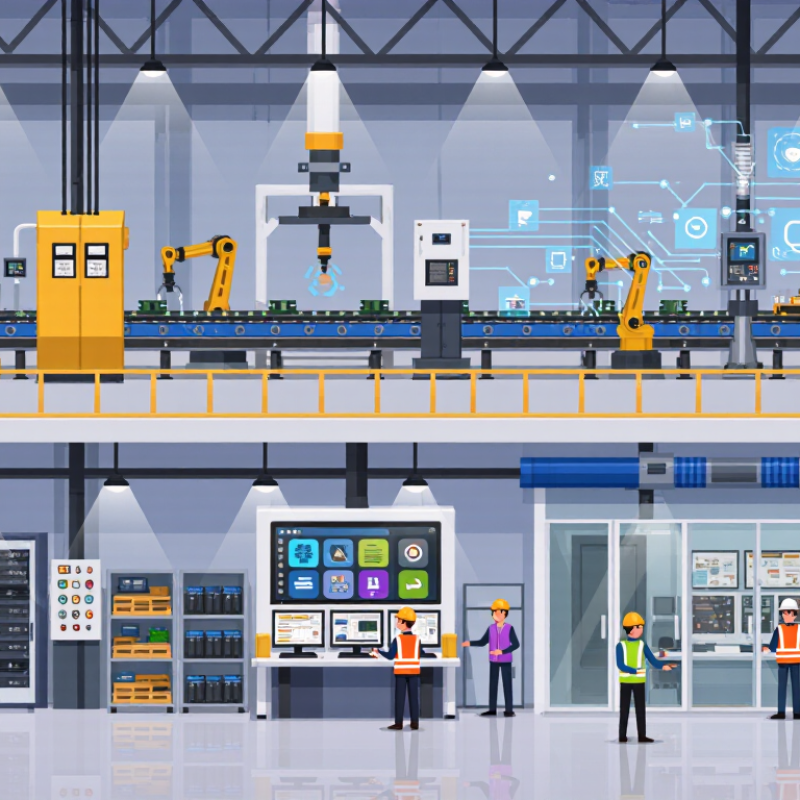
In manufacturing, process control systems keep production conditions within defined limits. Sensors measure temperature, pressure, flow, and vibration. Controllers compare those readings with target values, then adjust valves, motors, or heaters. On a filling line, for example, a small pressure change can affect every container. A control loop catches the shift before it becomes a larger batch problem. Sometimes it does not.
These systems also connect operators with equipment. A screen may show a rising reactor temperature, while an alarm signals that cooling flow has dropped. Supervisors can investigate, pause a step, or change a setpoint. Historical trends help teams spot recurring faults and verify whether a process adjustment worked. But alarms are only useful when people understand them; too many alerts can hide the important one.
The value extends beyond product consistency. The International Energy Agency’s Tracking Clean Energy Progress 2023 report estimates that industry accounts for about 37% of global energy use and roughly one-quarter of energy-related CO2 emissions. Better control can reduce avoidable heating, compressed-air losses, and off-spec production, though results depend on equipment and operating practice. A sensor may drift. A model may miss a real-world change. Regular calibration and human review still matter.
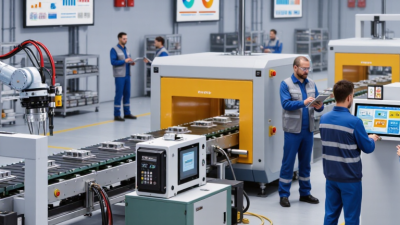
China’s process-control supplier landscape is not a single ladder. It is a network of equipment makers, automation specialists, engineering contractors, and regional service teams. Some suppliers build controllers, transmitters, or analytical instruments. Others combine these components into systems for factories, utilities, and process plants. The map is not always tidy.
Large projects often rely on system integrators to connect field devices, control software, operator stations, and plant networks. Their work may include design, installation, testing, and commissioning. Smaller specialists tend to focus on a narrower task, such as flow measurement or temperature control. This can mean deeper product knowledge, but less capacity for broad project support. A supplier’s role matters as much as its product range.
Regional coverage also shapes the market. Local service teams can respond quickly when a sensor drifts or a control loop behaves strangely. Yet service quality varies, even within one supplier’s network. Buyers should check comparable project references, calibration procedures, spare-part access, and the training offered to operators. Ask who will handle integration and who remains responsible after commissioning. A polished proposal is not proof of dependable field support. Paperwork can look complete, while a handover still leaves practical gaps.
Leading Chinese process-control suppliers commonly combine programmable logic controllers, distributed control systems, and remote I/O modules. These systems collect signals from pressure transmitters, flow meters, temperature probes, and valve positioners. A control cabinet may bring dozens of signals together, while an operator screen shows alarms and trends in real time.
Sensors are only part of the offer. Supervisory control and data acquisition software, industrial Ethernet, and edge gateways help move information between equipment and production teams. Some platforms support open communication standards, making integration with existing machinery easier. Others provide recipe management, batch records, or energy dashboards. Data matters. Still, protocol compatibility should be tested on the actual line, not assumed from a product sheet.
More advanced packages may include historian databases, condition monitoring, and analytics that flag unusual vibration or temperature changes. Safety interlocks and alarm logic also deserve careful review during commissioning. Experienced teams typically verify I/O point by point and document calibration results before handover. Not every installation is perfectly integrated; older equipment can create awkward gaps. That is worth admitting. Clear drawings, factory acceptance tests, and practical maintenance training help users assess those gaps and keep control systems dependable.
Process control technologies support different layers of industrial operations, from physical processes and instrumentation to manufacturing operations and business planning.
How to read this chart: Bar values show the ISA-95 level identifiers, not supplier counts, market shares, or performance scores. Level 0 represents the physical process; Levels 1–2 cover sensing, manipulation, monitoring, and control; Level 3 covers manufacturing operations management; and Level 4 covers business planning and logistics. ISA-95 is also published as IEC 62264.
China’s process-control suppliers serve a broad mix of industries, from petrochemicals and power generation to food processing, water treatment, and steelmaking. In a chemical plant, control loops regulate reactor temperature, pressure, and feed rates; in a food factory, they help keep pasteurization times and filling volumes consistent. The National Bureau of Statistics of China reported that manufacturing value added grew 5.0% in 2023. That scale supports demand for monitoring and automation across many production lines, though requirements differ sharply between sectors.
Electric vehicles and batteries are another important area. The International Energy Agency’s Global EV Outlook 2024 reports that China accounted for more than 60% of global electric-car sales in 2023. Battery production relies on tightly managed coating, drying, and temperature conditions, where small variations can affect yield. Process controls also support electronics, cement, and pharmaceutical manufacturing, but a system suited to one plant may not transfer neatly to another. Integration with older equipment remains a practical challenge. It is easy to overlook. Buyers should assess sensor accuracy, maintenance access, and operator training alongside headline performance claims.
| Industry | Typical Processes | Common Control System Applications | Key Requirements |
|---|---|---|---|
| Oil and gas | Pumping, compression, separation, storage, and pipeline transport | Distributed monitoring and control of pressure, flow, temperature, and equipment status | Process safety, alarm management, reliable communications, and hazardous-area compatibility where required |
| Chemical and petrochemical | Batch and continuous reactions, distillation, blending, and utilities | Loop control, recipe or batch sequencing, interlocks, and plant-wide supervisory monitoring | Accurate measurement, repeatable control, safety functions, and integration with plant information systems |
| Power generation | Boiler, turbine, generator, emissions, and balance-of-plant operations | Unit monitoring, sequence control, equipment protection interfaces, and alarm handling | High availability, coordinated control, clear operator displays, and dependable event records |
| Water and wastewater | Intake, filtration, disinfection, pumping, treatment, and distribution | Remote station monitoring, pump control, level and flow control, and supervisory data collection | Remote connectivity, dependable operation, energy-conscious control, and data logging |
| Metals and mining | Crushing, grinding, flotation, smelting, rolling, and material handling | Motor and drive coordination, process sequencing, production monitoring, and utility control | Robust field equipment, reliable plant communications, equipment-status visibility, and maintainability |
| Pharmaceuticals and life sciences | Batch production, mixing, fermentation, clean utilities, and environmental monitoring | Batch control, equipment monitoring, recipe execution, and electronic production records | Traceability, controlled access, validated procedures, and records suited to applicable regulations |
| Food and beverage | Ingredient handling, mixing, cooking, filling, packaging, and cleaning cycles | Process and batch control, line sequencing, temperature monitoring, and production data collection | Repeatable recipes, hygienic equipment integration, production traceability, and efficient changeovers |
| Cement and building materials | Raw-material preparation, kiln operation, grinding, and bulk-material handling | Kiln and mill monitoring, process sequencing, drive control, and energy-use tracking | Stable operation under heavy-duty conditions, process visibility, and coordination of distributed equipment |
| Pulp, paper, and textiles | Continuous web processing, stock preparation, coating, dyeing, and finishing | Tension and speed coordination, recipe control, process measurement, and line monitoring | Consistent product quality, synchronized equipment, fast fault detection, and production reporting |
Note: Applications and requirements are representative examples. Actual system scope depends on the facility, process design, applicable standards, and project specifications.
China Top Manufacturing Process Control Systems Suppliers?
Selecting a Chinese supplier requires more than comparing prices and product catalogs. Start with your process requirements: control accuracy, response time, operating temperature, and integration with existing equipment. Ask for technical documents, wiring diagrams, and a clear list of included components. Specific answers are useful. Vague promises are not.
Evaluate the supplier’s quality practices and engineering support. Request sample inspection records, calibration procedures, and references from projects with similar operating conditions. If possible, arrange a factory audit or a live system demonstration. Watch how staff handle a fault simulation or explain a failed test. This can reveal more than a polished presentation. One limitation: a short visit cannot prove long-term reliability, so check service arrangements and spare-part availability too.
Tips: Put acceptance criteria in writing before ordering. Confirm who handles installation, training, and software updates. Ask how quickly replacement parts can be shipped, and whether troubleshooting is available across time zones. Keep the first project scope manageable. A supplier may look strong on paper, yet communication can still falter when specifications change. Test that early with a detailed technical question.