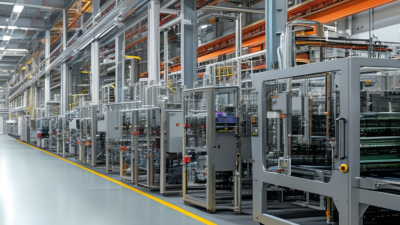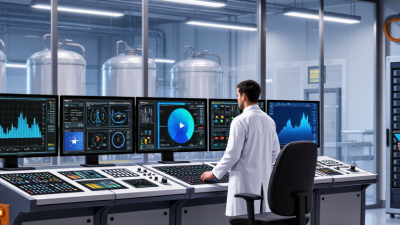
In 2026, process control manufacturing is moving from isolated automation toward connected, adaptive production systems. Plants are combining sensors, industrial AI, edge computing, and digital twins. These tools can reveal temperature drift, valve wear, and energy waste before failures interrupt production. A small vibration alert may prevent hours of unplanned downtime.
The strongest trend is not automation alone. It is better decision-making across the plant. Engineers can compare live process data with historical operating conditions. Operators can then adjust pressure, flow, or batch timing with clearer evidence. Yet reliable results depend on clean data, well-calibrated instruments, and practical human oversight. Technology cannot repair a poorly designed control loop.
Cybersecurity and interoperability will also shape investment decisions. Modern facilities need secure architectures that connect legacy equipment with newer platforms. They must protect operational data without blocking necessary maintenance access. Energy efficiency is becoming equally important. Smarter control strategies can reduce steam losses, compressed-air waste, and unnecessary equipment cycling. The savings may appear modest at first.
That assumption can fail.
Some manufacturers may adopt expensive systems before defining measurable goals. Others may underestimate training, integration, or maintenance requirements. A careful 2026 strategy should therefore examine proven plant experience, supplier transparency, lifecycle costs, and regulatory expectations. The most valuable trends will not simply look impressive in a demonstration. They will operate consistently on a noisy factory floor, support skilled workers, and produce traceable improvements. This overview explores the developments most likely to influence resilient, efficient, and trustworthy manufacturing operations.
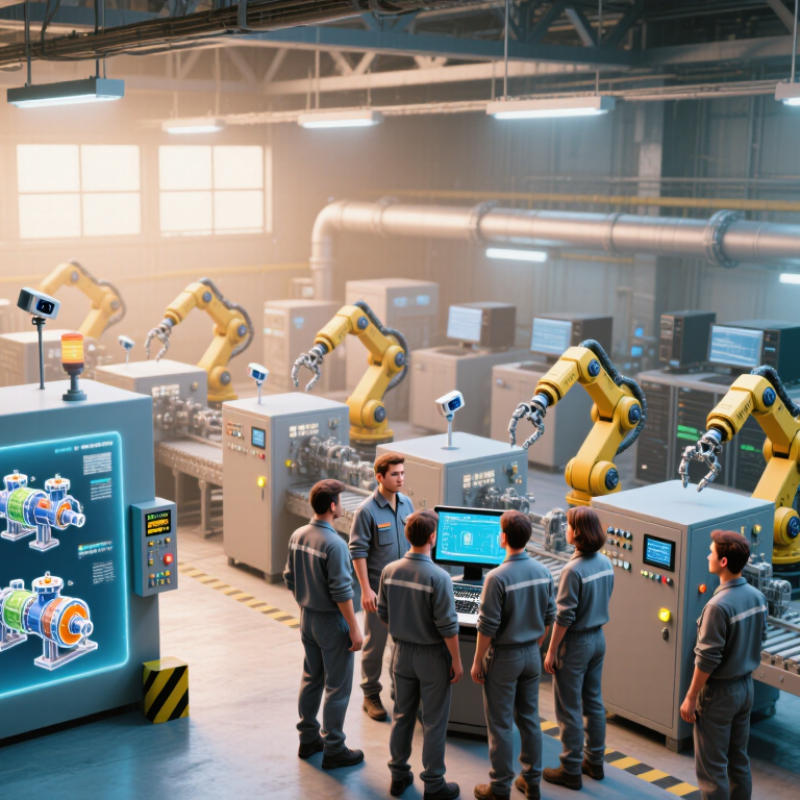
Process control manufacturing is the disciplined use of sensors, controllers, software, and equipment to keep production stable. It regulates temperature, pressure, flow, speed, and material quality across industrial operations. A sensor may detect a two-degree temperature rise inside a mixing vessel. The control system can then adjust heating or cooling within seconds. This precision protects workers, reduces material waste, and supports consistent output. Its scope reaches chemical processing, food production, energy systems, water treatment, and advanced assembly lines.
In 2026, manufacturers are connecting process data with edge analytics, predictive maintenance, and digital twins. These tools help engineers identify vibration changes before a pump fails. They also allow teams to test operating changes without interrupting live production. Cybersecurity is becoming part of process control, not an optional technology layer. Access permissions, network separation, and audit records now matter beside machine accuracy. Human experience still matters. Automation can react quickly, but it may misunderstand unusual conditions or incomplete data. Data can mislead. A practical team checks alarms against equipment history, operator observations, and physical inspections. This approach creates more reliable decisions, although it requires training, careful documentation, and regular system review.
| Trend for 2026 | Definition and Scope | Primary Manufacturing Layer | Typical Data or Control Metric | Industrial Role | 2026 Business Impact | Relevant Technical Basis |
|---|---|---|---|---|---|---|
| Edge and Hybrid Process Control | Combines local control execution with centralized or cloud-based analytics while keeping time-critical control functions near the equipment. | Field, controller, supervisory control, and operations-management layers. | Local control-loop response commonly ranges from milliseconds to seconds, depending on the process and controller design; non-critical analytics can tolerate higher latency. | Maintains production continuity during network disruption and reduces unnecessary data movement. | Lower control latency, improved resilience, and more scalable plant data processing. | Distributed control architectures, industrial networking, and ISA-95 automation hierarchy. |
| AI-Assisted Advanced Process Control | Uses machine learning, soft sensors, optimization, and anomaly detection to support—rather than automatically replace—validated control strategies. | Supervisory control, production optimization, quality management, and maintenance planning. | Prediction error, false-alarm rate, constraint violations, throughput, yield, and process variability. | Improves consistency and decision support while preserving human approval for safety-critical actions. | Faster root-cause analysis, improved quality control, and better use of process data. | Validated models, explainability, data-quality management, and human-in-the-loop governance. |
| Digital Twins for Process and Asset Optimization | Virtual representations of equipment, production lines, or complete processes that are updated with operational data for simulation and optimization. | Engineering, operations, maintenance, and production-planning layers. | Model accuracy, synchronization delay, simulated throughput, energy intensity, and predicted failure probability. | Tests process changes virtually before they affect live production. | Reduced commissioning risk, improved changeover planning, and more informed maintenance decisions. | Dynamic simulation, historian data, engineering models, and lifecycle asset information. |
| OT Cybersecurity and Zero-Trust Segmentation | Protects industrial control systems through network segmentation, identity management, secure remote access, monitoring, and risk-based incident response. | All levels, from field devices and controllers to supervisory and enterprise systems. | Asset inventory completeness, patch exposure, mean time to detect, privileged-access events, and network-zone violations. | Reduces the likelihood that a compromised information-technology system can disrupt operational technology. | Greater operational resilience and stronger compliance readiness for connected plants. | IEC 62443, NIST Cybersecurity Framework, secure-by-design principles, and defense-in-depth architecture. |
| Energy-Efficient and Low-Carbon Control | Integrates energy consumption, emissions, utilities, and production constraints into process-control and scheduling decisions. | Control, utilities, production management, and enterprise sustainability reporting. | kWh per unit of output, fuel intensity, water intensity, tCO₂e per unit, peak demand, and recovery efficiency. | Balances production targets with energy cost, resource consumption, and emissions objectives. | Lower operating cost, improved resource efficiency, and more reliable environmental reporting. | Energy-management systems, greenhouse-gas accounting, utility metering, and emissions-monitoring practices. |
| Predictive and Prescriptive Maintenance | Uses equipment condition data to identify degradation, estimate remaining useful life, and recommend maintenance actions. | Field devices, asset management, maintenance management, and production planning. | Vibration, temperature, pressure, motor current, alarm frequency, remaining useful life, and unplanned downtime. | Moves maintenance from fixed intervals toward condition-based and risk-based work scheduling. | Fewer unexpected shutdowns, better spare-parts planning, and improved asset availability. | Condition monitoring, reliability-centered maintenance, failure-mode analysis, and asset-management systems. |
| Interoperable Industrial Data Spaces | Connects sensors, controllers, production systems, quality systems, and enterprise applications through structured and contextualized data. | Field and control levels through manufacturing operations and enterprise integration. | Data completeness, timestamp accuracy, semantic consistency, transfer latency, and number of manual data transformations. | Creates a consistent information flow from physical assets to business decisions. | Less manual reconciliation, faster reporting, and easier integration of new equipment. | ISA-95 models, OPC UA information modeling, time-series historians, and common data governance. |
| Modular, Flexible, and Reconfigurable Production | Designs control systems and production assets so that recipes, equipment modules, and product variants can be changed with limited engineering effort. | Basic control, batch management, manufacturing operations, and production scheduling. | Changeover time, recipe deployment time, equipment utilization, batch cycle time, and first-pass yield. | Supports shorter product lifecycles, customized production, and faster response to demand changes. | Greater production agility and lower engineering effort for new product configurations. | Modular automation, electronic batch records, recipe management, and standardized equipment interfaces. |
| Human-Centered Operations and Workforce Augmentation | Combines operator expertise with contextual alarms, guided procedures, mobile interfaces, simulation training, and decision-support tools. | Supervisory control, operations management, maintenance, and training systems. | Alarm rate, standing alarms, response time, procedure deviation, training completion, and mean time to restore. | Improves situational awareness and preserves critical knowledge as the industrial workforce changes. | Fewer avoidable operating errors, faster onboarding, and more consistent responses to abnormal conditions. | Alarm-management practices, competency management, operator training simulation, and ergonomic human-machine interfaces. |
| Safety, Quality, and Traceability by Design | Integrates functional safety, quality inspection, electronic records, and material genealogy into the production-control lifecycle. | Safety systems, basic control, quality management, and manufacturing operations. | Defect rate, batch genealogy completeness, safety-instrumented demand rate, audit exceptions, and corrective-action closure time. | Protects people and equipment while providing verifiable evidence of process and product conformity. | Improved compliance, faster investigations, stronger product consistency, and reduced recall exposure. | IEC 61508, sector-specific functional-safety practices, quality-management systems, and electronic batch records. |
Note: Metric ranges and indicators are representative planning references. Actual values depend on process dynamics, safety requirements, equipment design, regulatory obligations, and site-specific operating conditions.