How Can We Help You?

Top Dual Torch Pipeline Welding Machine for Global Buyers?

Choosing the Top Dual Torch Pipeline Welding Machine requires more than comparing torch counts or catalogue prices. Global buyers need equipment that performs steadily across long pipe sections, changing steel grades, and demanding site conditions. A Dual Torch Pipeline Welding Machine can improve productivity by welding two sides in a coordinated sequence. However, speed alone does not prove value.

John C. Lippold, a recognized welding-metallurgy expert, states, “Weld quality begins with understanding the material, not merely controlling the arc.” This principle matters when evaluating automation, shielding-gas control, heat input, and joint preparation. A reliable machine should support stable arc performance, accurate travel speed, repeatable torch alignment, and accessible maintenance points. Small details matter. A loose cable or poorly positioned sensor can affect an entire production shift.

Real purchasing decisions also involve operator training, spare-part availability, technical support, and compatibility with existing fabrication lines. Buyers should examine weld records, test samples, duty-cycle data, and service response times. Supplier claims deserve careful checking. Some specifications look impressive but lack practical context. Pipe diameter ranges may depend on special fixtures. Maximum travel speed may not reflect production weld quality.

This guide examines the features that separate dependable systems from merely attractive offers. It considers performance, total ownership cost, safety design, and long-term serviceability. No machine fits every project. That limitation matters. The best choice balances welding requirements, workforce capability, regional support, and realistic production targets.
Top Dual Torch Pipeline Welding Machine for Global Buyers?

Dual Torch Pipeline Welding Machines: Definition and Core Functions

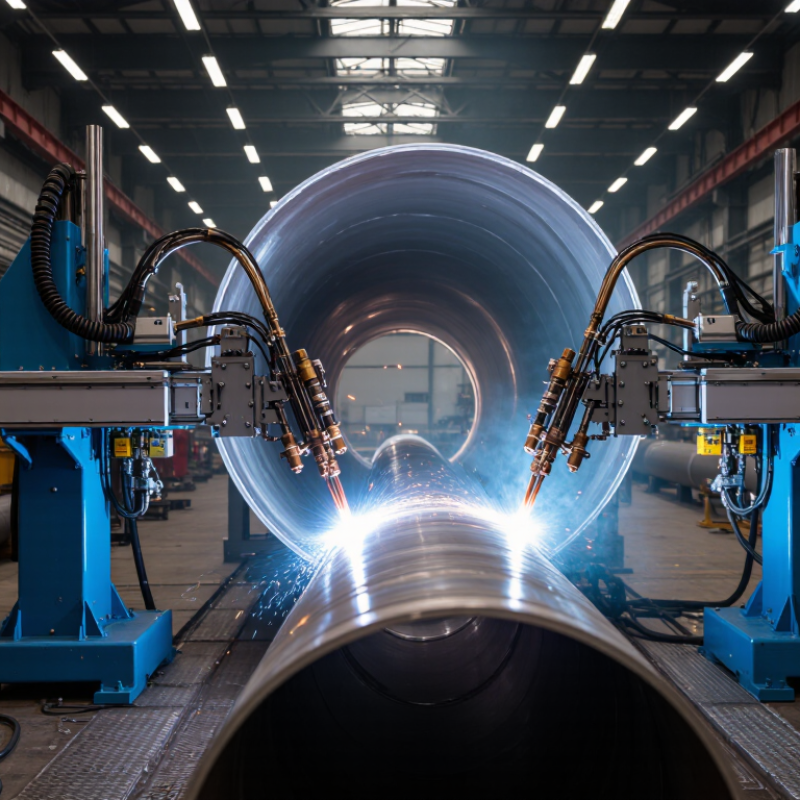
A dual torch pipeline welding machine uses two synchronized welding torches during pipeline fabrication. Each torch may work on opposite sides of a joint or on adjacent weld areas. The exact arrangement depends on pipe diameter, joint design, and production layout. This setup can increase deposition speed and reduce idle movement. It is not magic. Correct alignment remains essential.

Core functions include controlled torch travel, adjustable welding speed, wire feeding, and arc parameter management. The machine can maintain programmed current, voltage, torch angle, and oscillation width. Some systems also control shielding gas flow and cooling circulation. Operators can monitor travel stability through digital displays and recorded welding data. These records support quality checks and process traceability. They do not replace inspection.

In practical pipeline work, the machine must follow the joint consistently around the pipe circumference. Dual torches can share the workload, but they must remain properly synchronized. Poor fit-up may cause uneven penetration, excessive heat, or visible undercut. Small errors multiply. Experienced technicians check pipe bevels, root gaps, grounding, and consumable condition before welding. They also confirm that both torches suit the approved welding procedure. I have found that speed gains often disappear when setup time is ignored. A reliable machine should offer repeatable motion, accessible controls, stable power delivery, and clear fault alarms. Its performance depends on training, maintenance, and realistic production planning.

Key Features That Define a High-Performance Dual Torch System

A high-performance dual torch pipeline welding machine is defined by control, not simply by having two torches. Independent current and voltage adjustment lets operators balance heat input on both sides of the joint. Closed-loop arc monitoring helps maintain a stable bead when plate fit-up changes. This matters in field conditions, where wind, temperature, and uneven alignment can disrupt welding quality.

The system should include synchronized wire feeding, reliable water cooling, automatic seam tracking, and clear data logging. These features support repeatable welds and faster inspection. The International Energy Agency’s World Energy Investment 2024 report estimates global energy investment will exceed 3 trillion dollars, with more than 2 trillion directed to clean-energy projects. This expanding infrastructure still requires durable pipeline fabrication and repair equipment. However, higher speed is not always better. Excessive travel speed may reduce penetration and create costly rework.

Tips: Ask suppliers for recorded heat-input data, torch synchronization tests, and sample weld procedure qualification records. Check whether operators can adjust each torch separately while the carriage moves. A practical trial on curved pipe is valuable. Factory demonstrations can look perfect; real pipe rarely does. Also review ISO 3834 quality controls and API 1104 compatibility before purchasing. The equipment should make inspection easier, not merely make welding faster.

How Dual Torch Pipeline Welding Machines Operate Step by Step

How Dual Torch Pipeline Welding Machines Operate Step by Step

A dual torch pipeline welding machine begins with careful pipe preparation. Operators clean the joint, remove moisture, and check the bevel angle. A powered clamp then aligns both pipe sections. Even a small offset can create uneven penetration.

The controller loads approved welding parameters, including current, voltage, travel speed, wire feed, and shielding gas flow. After a test arc, two torches start on opposite sides of the joint. They move around the pipe at a controlled speed. One torch may lead slightly, depending on the joint design and heat balance. This arrangement distributes heat and can reduce welding time. Sensors monitor arc length and torch position. The operator still watches the puddle, sparks, and sound. Automation helps, but it does not replace judgment.

Tips: Keep the gas nozzle clean. Confirm both wire paths feed smoothly. Measure root gap before every joint. Stop if the arc becomes unstable. Record actual settings, not only programmed values. A trial run on similar pipe can expose problems early.

After the pass, the machine pauses for cooling or interpass cleaning. Inspectors check bead shape, undercut, overlap, and visible cracks. Non-destructive testing may follow the project specification. In practice, perfect symmetry is not guaranteed. Wind, contamination, or a worn liner can affect one torch first. That is why experienced teams verify each weld instead of trusting the display alone.

Selection Criteria for Global Pipeline Welding Applications

Top Dual Torch Pipeline Welding Machine for Global Buyers?

Selection Criteria for Global Pipeline Welding Applications

Choosing a dual torch pipeline welding machine requires more than comparing output ratings. Field experience shows that joint quality depends on fit-up, travel speed, heat control, and operator training. A powerful machine can still fail on uneven pipe alignment.

Check whether both torches maintain stable arc performance during continuous operation. Independent current control is valuable when wall thickness, bevel design, or welding position changes. Confirm the system supports approved welding procedures for the target project and local regulations. Documentation matters.

Look closely at pipe diameter range, torch spacing, carriage stability, and welding speed. A rigid carriage should resist vibration on outdoor sites. Remote monitoring can record current, voltage, travel speed, and error events. These records support inspection and later troubleshooting. Keep it practical.

Power compatibility is often overlooked. Verify voltage, frequency, grounding, and generator capacity before shipment. Coastal projects may require stronger corrosion protection. Cold regions need cables and controls rated for low temperatures. Dusty sites demand sealed electrical enclosures and simple cleaning access.

Ask about spare parts, technician response, software support, and operator instruction. Reliable suppliers should provide test procedures, maintenance intervals, and traceable quality records. Independent inspection remains important, even when automated welding appears consistent. Automation reduces variation, but it does not remove judgment.

One weakness deserves honest attention: dual torch systems can increase setup complexity. Poor synchronization may create uneven heat input or visible defects. Trial runs with representative pipe sections are wise. Real project conditions often expose assumptions that factory testing misses.

Top Dual Torch Pipeline Welding Machine for Global Buyers

Selection criteria for global pipeline welding applications should prioritize weld quality, productivity, process control, field reliability, and compliance with applicable welding procedures.

The 100-point benchmark reflects a practical, non-brand-specific procurement model for comparing dual-torch pipeline welding systems. Higher scores indicate greater importance during technical evaluation and total-cost-of-ownership analysis.

Safety, Maintenance, and International Purchasing Considerations

A dual torch pipeline welding machine can improve productivity, but safety must control every purchasing decision. Two torches may create overlapping heat zones and increase operator exposure. Use flame-resistant clothing, welding shields, gloves, and rated eye protection. Keep gas cylinders upright, secured, and separated from ignition sources. Good ventilation matters, especially inside trenches or enclosed work areas. Never trust a quiet regulator.

Before each shift, inspect hoses for cuts, cracked fittings, and loose connections. Check torch tips, cable insulation, grounding clamps, and emergency stops. Remove spatter from nozzles and confirm stable gas flow. A maintenance log should record cleaning, repairs, calibration dates, and operator observations. Small defects become expensive failures. I have seen teams focus on output while overlooking worn clamps.

International buyers should verify voltage, frequency, plug design, gas connections, and operating temperature limits. Request clear manuals, spare-parts lists, test reports, and documented machine specifications. Confirm that the equipment supports local electrical and workplace safety requirements. Certification names differ between markets, so a familiar label may not prove local acceptance. Ask about packaging, moisture protection, customs documents, warranty response, and technician training. Delivery terms also affect insurance and installation responsibility. A low purchase price can hide costly adapters, delayed parts, or unsuitable controls. The better choice is not always the fastest shipment.