
How Can We Help You?

China Top Corrosion Resistant Metal Cable Gland Suppliers

Choosing a Corrosion-Resistant Metal Cable Gland supplier in China takes more than comparing prices. These fittings protect cable entries from moisture, dust, vibration, and chemical exposure. In a coastal control cabinet, for example, salt spray can attack exposed threads and weaken a poor seal. Small details matter.

A reliable supplier should explain its material options, such as stainless steel, nickel-plated brass, or other specified alloys. Ask how the gland’s sealing components, thread type, clamping range, and ingress-protection rating match your cable and enclosure. Request current technical data and test records, then check that the stated conditions reflect your actual installation. A rating on a product sheet is useful, but it cannot replace correct installation.

Look beyond catalog claims. Review sample consistency, inspection procedures, production capacity, and communication during technical questions. Clear answers about material grades and tolerances are more useful than broad promises. If possible, evaluate a sample with the intended cable and enclosure before placing a large order. It is a practical step, though not every project has time for it.

This guide introduces China’s corrosion-resistant metal cable gland supplier landscape and the points buyers can verify. It does not assume that one material suits every environment. Sometimes the specification is incomplete; that deserves a second look. Careful comparison helps procurement teams balance durability, fit, documentation, and cost without treating any single claim as proof of long-term performance.
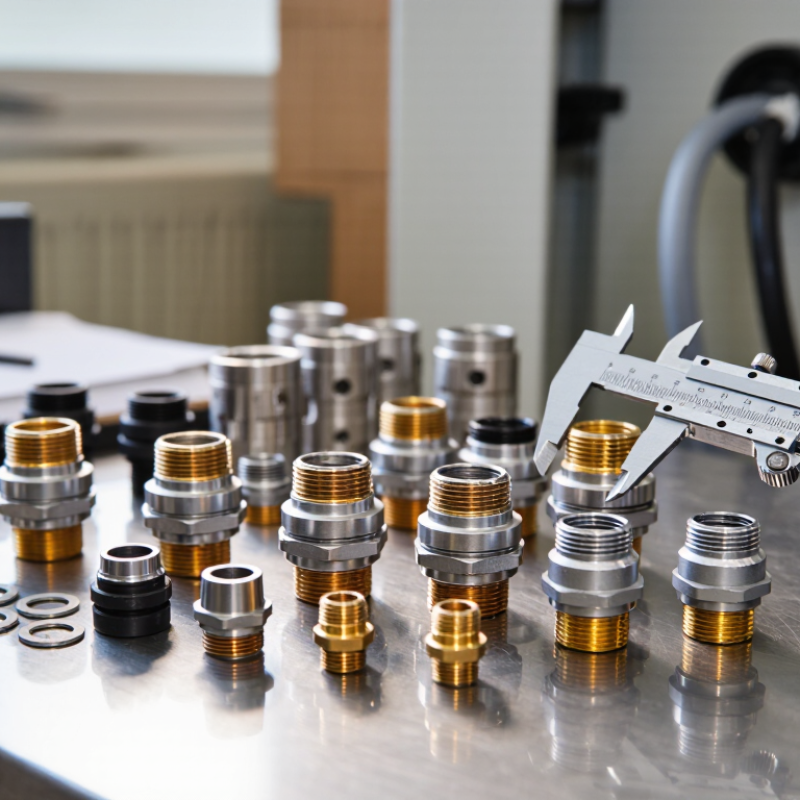
China Top Corrosion Resistant Metal Cable Gland Suppliers

What Corrosion-Resistant Metal Cable Glands Are

Corrosion-resistant metal cable glands are fittings that secure a cable where it enters an enclosure. They provide mechanical grip and help maintain a seal around the cable jacket. Unlike a simple drilled opening, a correctly selected gland can reduce exposure to water, dust, vibration, and corrosive substances. Small details matter.

Common construction materials include stainless steel and nickel-plated brass, though suitability depends on the setting. Stainless steel may perform well in damp or coastal areas, but its grade and surrounding conditions still matter. Nickel-plated brass can resist corrosion in many applications, yet damaged plating may expose the base metal. Contact between different metals can also create galvanic corrosion, so compatibility deserves attention. Salt spray is harsh.

Selection should consider the enclosure entry, cable diameter, thread type, and expected exposure. A seal that is too loose may let moisture pass; overtightening can deform the seal or cable jacket. During installation, check that threads engage cleanly and the sealing washer sits flat against the enclosure. A gland is not a cure for every weak point. Periodic inspection can reveal cracked seals, surface pitting, or loose fittings before they affect the cable entry.

China Top Corrosion Resistant Metal Cable Gland Suppliers - What Corrosion-Resistant Metal Cable Glands Are

Data Dimension Stainless Steel 316 / 316L Stainless Steel 304 Nickel-Plated Brass Aluminum Alloy
What it is A metal cable-entry fitting made from molybdenum-bearing austenitic stainless steel, typically selected for demanding corrosive environments. A metal cable-entry fitting made from a widely used austenitic stainless steel grade for general-purpose applications. A brass cable-entry fitting with a nickel coating; its corrosion performance depends partly on coating quality and condition. A lightweight metal cable-entry fitting made from an aluminum alloy, often used where low weight is important.
Relative corrosion behavior Generally offers better resistance to chloride-related pitting and crevice corrosion than 304. It is not immune to corrosion in every chemical or marine condition. Provides good resistance in many indoor and mild outdoor environments, but is generally less resistant than 316 to chloride exposure. The nickel layer can provide a protective surface. Scratches, wear, or poor plating may expose the brass beneath and reduce protection. Can perform well in many atmospheric environments, but suitability depends on the alloy, surface treatment, and exposure; chloride-rich conditions require careful evaluation.
Commonly considered environments Coastal installations, marine equipment, food-processing areas, and industrial locations where corrosion resistance is a priority. Indoor industrial equipment and outdoor locations with relatively mild exposure and limited contact with chlorides. Electrical enclosures and industrial installations where a plated brass fitting meets the environmental and mechanical requirements. Weight-sensitive equipment and installations where the selected alloy and any coating are compatible with the environment.
Important selection considerations Check the exact grade, cable range, thread type, seal material, temperature limits, and compatibility with cleaning chemicals or process fluids. For salt spray, sea air, or chloride-bearing cleaners, assess whether a more corrosion-resistant material is needed. Confirm plating specification and quality, and consider whether the fitting may be scratched or exposed to abrasion during installation or service. Check mechanical strength, galvanic compatibility with connected metals, and whether the surface finish is suitable for the exposure.
Sealing and ingress protection The metal body alone does not determine ingress protection. The IP rating depends on the complete gland design, correct cable diameter, seal, thread engagement, installation, and any required locknut or washer.
Standards and verification Confirm applicable product requirements and test documentation for the intended installation. Where required, verify the complete cable-gland assembly's IP rating and any hazardous-area approvals; do not infer certification from the material alone.

Selection note: Corrosion resistance varies with the exact material grade, manufacturing quality, surface condition, seal materials, and exposure. Confirm suitability against the actual site conditions and the product's technical documentation.

Metals and Protective Finishes Used in Cable Gland Production

China Top Corrosion Resistant Metal Cable Gland Suppliers

Metals and Protective Finishes Used in Cable Gland Production

A cable gland’s corrosion resistance begins with its base metal. Stainless steel 316 is commonly selected for damp, coastal, or chemically demanding settings. Its molybdenum content helps resist pitting, though exposure conditions still matter. Nickel-plated brass offers a useful balance of strength and corrosion protection in many installations. Carbon steel with a zinc finish may suit drier, less aggressive environments, but prolonged salt exposure can challenge the coating. Material choice should match the actual site, not just the product label.

Protective finishes add another layer, not a guarantee. Nickel plating can slow corrosion on brass, while passivation helps preserve stainless steel’s natural protective surface. Scratches, cut edges, and damaged threads may expose less-protected areas. No finish is permanent. Also consider contact with other metals: moisture between dissimilar metals can encourage galvanic corrosion. In practice, check the gland’s material, finish, sealing components, and compatibility with the enclosure and cable. I would not assume two products are compatible just because both are described as corrosion resistant.

Tips: Inspect threads and coating for damage before installation. Keep the gland clean, and avoid mixing metals without checking compatibility. For coastal sites, ask for material and finish details, then assess them against real exposure. A small scratch can matter. Regular inspection helps catch early discoloration or pitting.

Metals and Protective Finishes Used in Cable Gland Production

Bars show the midpoint of typical chromium-content ranges by weight for common base materials; brass is shown as 0% intentional chromium. This is a composition comparison, not a corrosion-resistance ranking. Actual protection also depends on the environment and finish, such as nickel plating on brass, passivation of stainless steel, anodizing of aluminum, or zinc plating of steel.

How Chinese Suppliers Manufacture and Test Cable Glands

China Top Corrosion Resistant Metal Cable Gland Suppliers

How Chinese Suppliers Manufacture and Test Cable Glands

Manufacturing reliable corrosion-resistant cable glands starts with material selection. Suppliers commonly machine stainless steel or nickel-plated brass, then check thread accuracy, sealing surfaces, and burrs. NACE International’s 2016 IMPACT study estimated corrosion costs the global economy US$2.5 trillion annually, or 3.4% of global GDP. That figure makes material control more than a cosmetic choice. Small defects matter.

In production, operators inspect incoming metal certificates and measure key dimensions with gauges or coordinate-measuring equipment. Stainless steel parts may undergo passivation to improve their protective surface. Seals are checked for fit and compression, since a sound metal body cannot compensate for a poorly seated gasket. The process is practical, but not flawless: batch variation and hurried assembly can still affect consistency.

Testing should match the intended installation. Suppliers may use ISO 9227 salt-spray exposure to assess corrosion resistance, and IEC 60529 methods to verify ingress protection on assembled samples. IEC 62444 also provides requirements for cable glands, including mechanical performance. Test duration and acceptance criteria should be stated clearly; salt-spray hours alone do not predict years of field service. Check the actual cable size, thread engagement, and sealing arrangement. One detail is easy to miss: lab results depend on correct installation.

Industries That Rely on Corrosion-Resistant Cable Glands

Corrosion-resistant cable glands matter wherever moisture, salt, chemicals, or heat can reach electrical connections.

NACE International’s 2016 IMPACT study estimated global corrosion costs at US$2.5 trillion annually, about 3.4% of world GDP. That figure covers corrosion broadly, not cable glands alone.

Small parts matter. At ports and offshore platforms, salt spray, condensation, and vibration can attack threads and seals. A compromised seal may let moisture reach conductors, even when the cable jacket looks intact.

Marine transport is a major exposure. UNCTAD’s Review of Maritime Transport 2023 reports that ships carry over 80% of world trade by volume. Chemical plants and wastewater facilities face different risks, including acidic vapors, washdown, and treatment chemicals. Food-processing lines add frequent cleaning.

Match gland material and sealing range to the cable, enclosure, and site chemicals. Stainless steel is not automatically the answer: chlorides can still cause pitting, and dissimilar metals may create galvanic corrosion. Inspect seals after maintenance, too. It is an easy step to miss.

How to Compare and Select a Chinese Cable Gland Supplier

Comparing Chinese cable gland suppliers starts with the operating environment, not the catalogue finish. A coastal junction box faces salt mist; a chemical plant may expose fittings to specific corrosive agents.

The NACE IMPACT study (2016) estimated corrosion costs at US$2.5 trillion globally, about 3.4% of global GDP, and reported potential savings of 15–35% through better corrosion-control practices. That figure is not a cable-gland performance rating. It does explain why material selection and documentation deserve careful review.

Ask suppliers to identify the exact alloy and provide traceable material certificates, dimensional drawings, and test records. Check whether the stated ingress protection was tested to IEC 60529, and whether corrosion testing follows a defined method such as ISO 9227.

Salt-spray hours alone do not predict service life. Look closely at threads, seals, and cable-range tolerances; small mismatches can compromise an otherwise sound installation. Request a sample for assembly checks, especially if the gland will meet an enclosure coating or bonding requirement.

Compare lead times, inspection procedures, and how the supplier handles nonconforming batches. Paperwork matters. So does repeatability. A polished sample is useful, but it cannot replace batch-level evidence or a clear technical response to your application details.