
How Can We Help You?

Top 10 Water Radiators for Buyers Worldwide?

Choosing a radiator starts with the room, not the product photo. A slim panel may suit a narrow hallway, while a cast-iron model can retain warmth in an older home. Looks matter. Heat output matters more. Water Radiators differ in material, dimensions, connection points, and rated output. Each detail can affect comfort, installation, and running costs. A well-finished unit may still disappoint if it is undersized for a large, draughty room. That is easy to miss.

This guide introduces ten options for buyers comparing products across different markets. It considers practical factors such as heat capacity, build quality, available sizes, control compatibility, and ease of cleaning. Product specifications are useful, but they do not tell the whole story. Room size, insulation, water temperature, and the existing heating system all shape performance. Local installation requirements can differ, too, so check the manufacturer’s documentation and consult a qualified heating professional before choosing a model. A radiator that works well in one home may be a poor fit elsewhere.

The list is a starting point, not a universal verdict. Some comparisons depend on preferences, and published ratings may not reflect every household’s experience. Look beyond a polished finish. Check the figures, measure the wall, and ask whether replacement parts are available. Small checks can prevent a costly mismatch.
Top 10 Water Radiators for Buyers Worldwide?

What Water Radiators Are and How They Work

A water radiator is a heat emitter in a hydronic heating system. It receives heated water through pipes and transfers warmth into a room. A boiler or heat pump warms the water, while a pump moves it through the circuit. After releasing heat, cooler water returns to be reheated. The process repeats when the thermostat calls for heat.

Water radiators warm rooms through both convection and radiant heat. Air beside the panel warms, rises, and draws cooler air toward the radiator. Meanwhile, its surface sends heat to nearby people and objects. The effect feels gradual, not like a gust from a fan. Quiet, steady heat. Room size, insulation, water temperature, and radiator placement all influence how much warmth reaches a space.

Many systems use valves to regulate water flow, and some have thermostatic controls. A balanced system should heat rooms evenly; persistent cold spots may indicate trapped air, poor flow, or incorrect sizing. Bleeding can help in some cases, but the cause is not always air. I would not assume a larger radiator is automatically better. Matching output to the room and heat source takes careful calculation, and older homes can complicate the estimate.

Top 10 Water Radiators for Buyers Worldwide? — What Water Radiators Are and How They Work

Estimated Heat Output at Different Heating-System Temperatures

Water radiators transfer heat from circulating hot water to a room. The chart compares estimated output for three flow/return temperature settings, assuming a 20°C room and a radiator rated at 100% output at ΔT50. Estimates use the illustrative relationship output ∝ ΔT1.3; actual output varies by radiator design and manufacturer.

Main Types of Water Radiators Available Worldwide

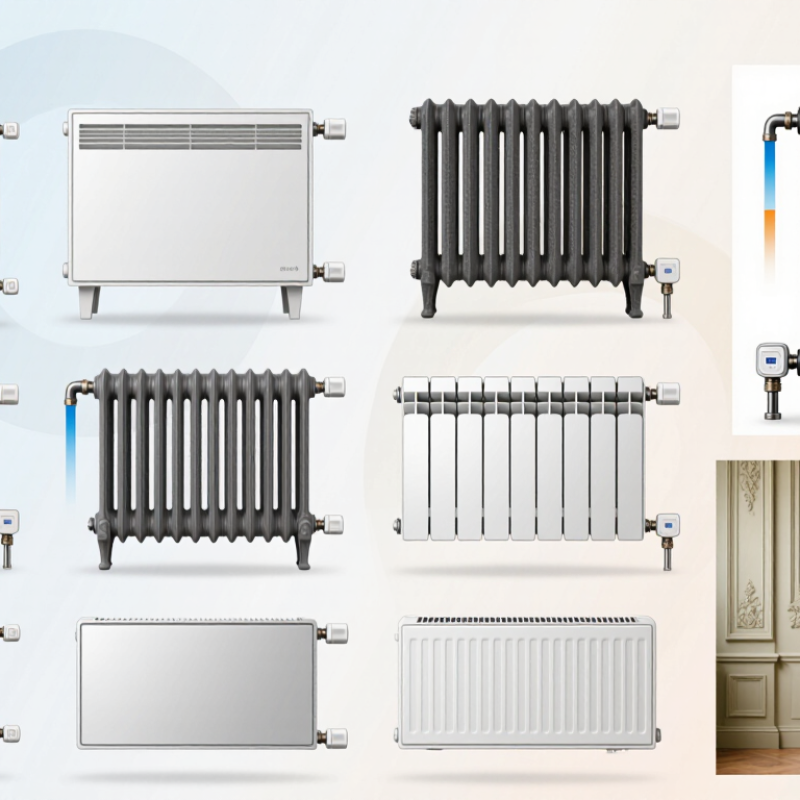
Water radiators distribute heat through hot water flowing inside metal panels, columns, or tubes. Steel panel radiators are common in homes because they heat quickly and fit neatly beneath windows. Their flat faces are easy to wipe, though dust can collect between layers. Cast-iron column radiators hold heat longer after the boiler stops, but they are heavy and may take longer to warm. Small details matter.

Aluminum radiators respond quickly and are relatively light, but system materials and water quality should be checked for compatibility. Towel radiators, often installed in bathrooms, combine room heating with rails for drying towels; their output may be modest in a large room. Some column and panel models are designed for low-temperature systems, including heat pumps, but performance depends on radiator size and water temperature. One awkward truth: the biggest unit is not automatically the best choice. Check the room’s heat loss, pipe connections, and available wall space before comparing styles. A local heating professional can confirm whether an existing system can support the change.

Top 10 Water Radiators for Buyers Worldwide? — Main Types of Water Radiators Available Worldwide
No. Radiator Type Typical Construction Heat Delivery Common Applications Key Advantages Buyer Considerations
1 Steel Panel Radiator Pressed steel panels, often with internal water channels and convector fins. Combines radiant heat from the panel with convection from the fins. Homes, apartments, offices, and other buildings with wet central-heating systems. Widely available in different sizes and panel configurations; generally quick to warm up. Check system pressure, water temperature, connection layout, dimensions, and corrosion protection.
2 Cast-Iron Sectional Radiator Individual cast-iron sections joined together to form a radiator. High thermal mass provides gradual heat-up and slow cooling. Older buildings, traditional interiors, and systems designed for substantial water content. Durable construction and steady heat release after the heat source switches off. Heavy weight may require suitable floor and wall support; confirm condition and system compatibility.
3 Aluminum Sectional Radiator Lightweight aluminum sections assembled into a chosen radiator length. Typically responds relatively quickly to changes in water temperature. Residential heating and installations where low weight or flexible sizing is useful. Low mass and modular construction can simplify handling and sizing. Check manufacturer limits for water chemistry, operating pressure, and compatibility with other system metals.
4 Steel Column Radiator Welded steel tubes or columns arranged in rows and joined into sections. Transfers heat through both exposed surfaces and natural air movement between columns. Homes, public buildings, and projects seeking a traditional column-style appearance. Available in varied heights, depths, and section counts; can suit both classic and modern interiors. Output depends on dimensions and water temperatures; allow for cleaning access between columns.
5 Steel Tubular Radiator Welded steel tubes formed into horizontal or vertical arrangements. Provides radiant and convective heating from its tube surfaces. Residential and commercial spaces where shape or visual design is important. Flexible forms and sizes can fit narrow walls or distinctive room layouts. Compare rated output, connection positions, pressure rating, and ease of cleaning.
6 Hydronic Towel-Rail Radiator Water-carrying horizontal bars connected to vertical headers, usually in a ladder-like form. Heats the room while warming towels placed on or near the bars. Bathrooms, en-suites, and utility rooms connected to a hot-water heating circuit. Combines room heating with towel warming and uses relatively little wall area. Check bathroom electrical-zone requirements if using a combined electric option; towel coverage can affect heat output.
7 Hydronic Baseboard Convector A low-profile enclosure containing a hot-water pipe and metal fins. Primarily heats by natural convection as room air moves through the enclosure. Residential rooms with clear perimeter wall space, including homes in North America. Low height can fit beneath windows and distribute heat along a wall. Keep the air inlet and outlet clear; furniture, curtains, and dust can reduce performance.
8 Fan-Assisted Hydronic Radiator A water-heated heat exchanger paired with one or more small fans. Fans move room air across the heat exchanger to increase air circulation. Rooms needing a compact emitter or faster heat delivery from lower-temperature water. Can provide substantial output from a smaller unit than a comparable natural-convection design. Requires electrical power and may produce fan noise; check controls, maintenance access, and system flow requirements.
9 Low-Surface-Temperature Radiator A hot-water radiator enclosed or guarded to limit access to its hot surfaces. Transfers heat through the enclosure and designed air openings. Schools, care settings, healthcare facilities, and other spaces where surface contact is a concern. Protective design can reduce direct access to the hot heating element. Compare certified surface-temperature details, output, cleaning access, and applicable local safety requirements.
10 Trench Hydronic Convector A hot-water coil installed in a floor trench beneath a grille; some models include fans. Warm air rises from the floor-level grille, creating a convective heat curtain. Spaces with large windows or glazed façades where wall-mounted radiators are impractical. Can preserve unobstructed walls and fit discreetly into the floor near glazing. Requires planned floor space, drainage or condensate provisions where applicable, and access for cleaning and servicing.

How to Compare Radiator Materials, Heat Output, and Efficiency

Choosing a water radiator starts with the room, not the catalogue photo. Measure its floor area, ceiling height, window size, and insulation quality. A chilly room with a large window may need more heat than its floor area suggests. Check the radiator’s rated output at the water temperatures your heating system actually uses. Ratings based on hotter water can mislead.

Material changes how a radiator responds. Aluminum heats quickly and is light, while steel offers many shapes and output options. Cast iron warms slowly but holds heat longer after the flow stops. None is automatically the most efficient choice. I once underestimated a drafty corner; the radiator looked large enough, but the room still felt cold. That was a useful correction.

Compare heat output in watts, using consistent test conditions and the same temperature difference. A thermostatic valve can reduce overheating, especially in rooms with changing sunlight. Lower water temperatures may suit a well-sized radiator, but the whole system must be configured for them. Check pipe connections, wall strength, and clearance before buying. Small details matter. A neat finish cannot compensate for a poor heat calculation, and published ratings rarely capture every home’s quirks. I would leave a little room for uncertainty.

Top 10 Water Radiators for Buyers Worldwide

The top 10 water radiators for buyers worldwide are best compared by heating needs, room layout, and system compatibility—not appearance alone. Panel radiators suit many everyday rooms, while column designs offer a traditional look and can provide substantial heat output. Vertical models save wall space; compact units may fit beneath windows. Towel radiators can warm bathrooms, but their output may not heat the whole room. Some low-temperature models work well with heat pumps, provided the system is designed for them. There is no single winner for every home.

Check each radiator’s rated output at your system’s water temperature. A rating measured under different conditions may overstate real-world performance. Confirm connection size, operating pressure, valve position, and wall strength before buying. Steel units are common, while aluminium can heat quickly; material alone does not guarantee efficiency. For older systems, ask a qualified heating professional to check water quality and compatibility. Small details matter. I have seen attractive choices become awkward when pipes emerge from the wrong side.

Tips: Measure the room and existing pipe centres before ordering. Compare heat output in watts, not just dimensions. Leave clearance for curtains and furniture, and verify delivery access. If uncertain, get a heat-loss assessment; rough estimates can miss cold corners.

How to Choose and Install the Right Water Radiator

Choose a water radiator by room heat loss, not floor area alone. Record each room’s dimensions, window size, insulation, and coldest outdoor design temperature. Then compare the required output with the radiator’s rating at your system’s actual water temperature. Catalog ratings may assume hotter water, so a radiator can underperform when paired with a low-temperature boiler or heat pump. Measure twice. The U.S. Energy Information Administration’s 2020 Residential Energy Consumption Survey found that space heating used 42% of household energy in U.S. homes. That makes accurate sizing more than a comfort issue.

For installation, place the radiator where it can circulate warm air freely, often beneath a window. Keep curtains and furniture clear of the valve. Fit the unit level, secure it to suitable wall supports, and have a qualified heating professional check pipe connections and system pressure. Bleed trapped air, then balance the radiators so distant rooms heat evenly. Small detail, big impact. The U.S. Department of Energy says setting a thermostat back 7–10°F for eight hours daily can save up to 10% a year on heating and cooling. That estimate depends on the home and usage; it is not a guaranteed radiator-specific saving. Even careful calculations can miss a drafty corner. Recheck room temperatures after the system runs.