
How Can We Help You?

Top 10 CNC Spring Machine Manufacturers for Global Buyers

Choosing a Cnc Spring Machine is a practical decision, not a simple brand comparison. Global buyers must examine production speed, wire diameter range, forming accuracy, servo control, tooling flexibility, and after-sales support. A machine may look impressive in a showroom. Its real value appears beside an operator, during a twelve-hour production shift.

Shigeo Shingo, a respected manufacturing engineer, said, “The most dangerous kind of waste is the waste we do not recognize.” That warning fits spring production closely. Hidden waste can come from slow setup changes, unstable feeding, excessive scrap, or delayed spare parts. This guide reviews ten leading Cnc Spring Machine manufacturers through those measurable details. It considers machine capability, factory experience, automation, technical service, training, and total ownership cost. Certifications and export experience also matter, especially when equipment crosses regions and support time zones.

No ranking is perfect. Buyer priorities differ. A small workshop may value compact design and easy programming, while an automotive supplier may require repeatability, high output, and integrated inspection. Some manufacturers publish strong specifications but provide limited application evidence. That gap deserves attention. We recommend requesting sample production, wire trials, reference customers, and a clear maintenance plan before purchase. The following manufacturers represent credible options for global buyers, but the best choice still depends on your products, operators, budget, and expected growth. Measure twice. Then decide.
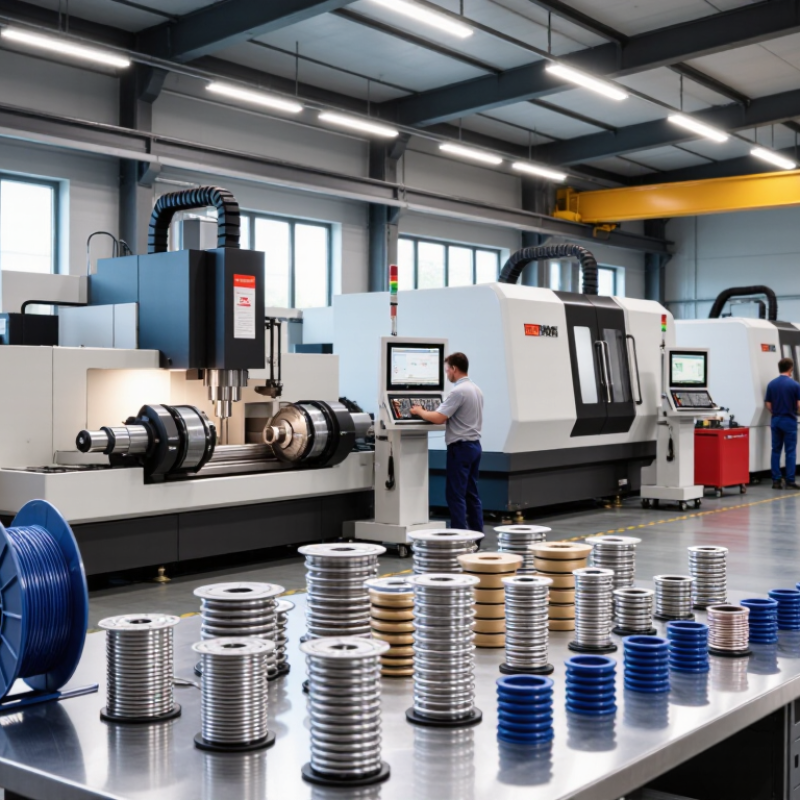
Top 10 CNC Spring Machine Manufacturers for Global Buyers

What CNC Spring Machines Are and How They Work

CNC spring machines are automated forming systems designed to produce consistent springs from coiled wire.

CNC means computer numerical control. A programmed controller guides feeding, cutting, bending, and forming operations. The wire passes through precision rollers before reaching forming tools. These tools shape the coil, hook, leg, or special end. A cutting unit then separates each finished spring.

The machine follows digital instructions, but setup still requires skilled judgment. Operators adjust wire tension, feed length, forming angles, tool position, and production speed. Sensors may detect wire movement and dimensional errors during operation.

In practice, the first setup is rarely perfect. Small changes in material hardness can alter the spring diameter or free length. Experienced technicians measure samples with calipers and load-testing equipment before approving production.

I have seen minor tool alignment errors create visible gaps between coils. That detail is easy to miss during a fast inspection.

Tips:

Confirm the required wire diameter, spring rate, coil direction, and end style before selecting equipment. Ask for sample testing with your actual material. Check software functions, tooling access, maintenance support, and operator training.

Do not judge a machine only by its maximum speed. Stable feeding and repeatable accuracy usually matter more. Keep inspection records for each batch.

This habit helps reveal gradual wear, although it may feel unnecessary during small orders.

Criteria for Evaluating CNC Spring Machine Manufacturers

When evaluating CNC spring machine manufacturers, begin with proven production experience. Ask how long their machines have run in comparable factories. Request videos, sample parts, and measurable production data. A polished showroom proves very little.

Check forming accuracy, wire-size range, cycle stability, and changeover time. Ask for a factory acceptance test using your actual spring drawings. Inspect pitch, diameter, end shape, and surface marks under consistent lighting. Control software should record alarms, settings, and maintenance events. Clear manuals matter. Operators need practical instructions, not translated fragments.

Reliability depends on support after delivery. Verify technician response times, spare-part availability, training, and remote diagnostic methods. Review warranty terms carefully, including excluded components and travel costs. Independent certifications can support credibility, but they should match the machine’s actual application. Contact recent users and ask about downtime after twelve months. Their answers may be less flattering, but more useful. Compare total ownership cost, not only the purchase price. Include tooling, electricity, calibration, software updates, and operator training. Some suppliers provide impressive tolerances on paper, yet struggle with mixed production lots. This is where evaluation can become imperfect. Keep a scoring sheet and record evidence for every claim. A second technical reviewer can challenge optimistic assumptions before a contract is signed.

Top 10 CNC Spring Machine Manufacturers for Global Buyers

Choosing among the top 10 CNC spring machine manufacturers for global buyers requires more than comparing catalog prices. Experienced buyers inspect forming accuracy, wire-feeding stability, software control, and after-sales response. A reliable manufacturer should provide test samples using the buyer’s actual wire diameter and spring design.

During factory evaluations, examine machine frames, servo systems, tooling access, and safety controls. Ask for production videos, inspection records, and references from similar industries. Strong manufacturers explain setup tolerances clearly. They also provide manuals, remote support, spare parts, and operator training in practical language. Small details matter.

Performance is not always perfect. Some machines achieve excellent speed but require frequent calibration. Others offer flexible programming but have a slower learning curve. That trade-off deserves honest discussion. Buyers should compare output consistency, changeover time, energy use, and maintenance costs over several years. A low purchase price can become expensive when tooling delays production. I would also request a live demonstration, because polished brochures cannot reveal vibration, feeding noise, or software limitations. Regional service coverage, export documentation, and electrical compatibility should be verified before payment. Good manufacturers welcome technical questions and record agreed specifications in writing. Metrics matter. Feedback from actual operators can reveal issues that sales teams overlook.

Comparing Machine Capabilities, Quality Standards, and Support

Choosing among the top 10 CNC spring machine manufacturers requires more than comparing prices. Buyers should examine wire diameter ranges, forming speed, axis control, and production stability. A capable machine should produce consistent coils during long runs, not only during demonstrations. Ask for sample springs made from your actual material and specifications. Small pitch changes can expose weak programming or poor servo response.

Quality standards also deserve close attention. Reliable manufacturers provide inspection records, calibration methods, electrical safety documentation, and clear acceptance criteria. ISO-based quality systems may indicate process discipline, but certification alone cannot guarantee performance. Check spindle noise, tooling fit, software usability, and repeatability across several batches. A polished brochure can still hide practical limitations. That is where careful factory evaluation matters.

Tips: Request a written test report before ordering. Confirm installation training, spare-part availability, and remote troubleshooting procedures. Ask how quickly technical teams normally respond across time zones. Review warranty exclusions in detail, especially for consumable tooling and control components. Experienced buyers should also calculate total ownership cost, including maintenance, operator training, energy use, and production downtime. I have found that support quality often becomes more important after the first year. Yet this can be difficult to measure before purchase. Speaking with existing users may reveal delays that formal documents never mention.

Top 10 CNC Spring Machine Manufacturers for Global Buyers

Comparing Machine Capabilities, Quality Standards, and Support

This anonymous procurement benchmark uses a 100-point evaluation framework rather than displaying company or brand data. Machine capabilities receive the highest weighting because wire-diameter range, forming axes, production speed, repeatability, and automation directly affect output. Quality standards and after-sales support are also essential for reliable international purchasing, installation, training, spare parts, and long-term maintenance.

How Global Buyers Can Choose the Right Manufacturer

Choosing a CNC spring machine manufacturer starts with evidence, not catalogue photos. Ask for trial runs using your actual wire grades, diameters, spring rates, and tolerances. Record cycle time, first-pass yield, changeover minutes, and scrap. A polished demonstration may hide difficult setups. Require dimensional reports, calibration records, and a clear acceptance test. The ISO Survey 2022 lists more than 1.26 million ISO 9001 certificates worldwide, but certification alone cannot prove machine capability. Inspect the process controls behind the certificate.

Reliability needs measurable proof. Request three years of uptime data, mean time between failures, service response times, and spare-part lead times. Check electrical standards, guarding, documentation, and operator training for each destination. The International Federation of Robotics reported 553,052 industrial robots installed globally in 2022, a 5% annual increase. This growth shows why automation support matters. Yet a spring machine loses value when technicians wait weeks for a sensor or servo drive. Confirm remote diagnostics, local support, and software update procedures before ordering.

Compare total cost, not only machine price. Include tooling, energy, consumables, freight, installation, training, maintenance, and rejected springs. Ask for references from plants making similar products. Speak with production engineers, not only sales staff. A supplier should explain accuracy limits honestly. That matters. The wrong manufacturer may promise every specification while excluding difficult materials or long runs. Use a weighted scorecard, but leave room for engineering judgment. No checklist is perfect; a witnessed factory acceptance test can expose assumptions before payment and shipment.

Top 10 CNC Spring Machine Manufacturers for Global Buyers - How Global Buyers Can Choose the Right Manufacturer

No. Evaluation Dimension What Global Buyers Should Verify Reliable Evidence or Benchmark Why It Matters in Supplier Selection
1 Machine Configuration Confirm whether the CNC spring machine supports the required number of axes, wire-feeding arrangement, tooling layout, and forming operations. Request a detailed machine configuration, axis description, tooling diagram, and sample parts made from the buyer’s drawings. Different spring geometries may require different forming capabilities. A suitable configuration reduces the need for secondary operations.
2 Wire Diameter Range Compare the manufacturer’s specified wire diameter range with the buyer’s actual production range and material types. Check the official technical specification and validate the range through a production trial using the intended wire material. A machine designed for a narrow range may not provide stable feeding, forming, or dimensional control at the limits of production.
3 Material Compatibility Verify compatibility with common spring materials such as carbon steel, stainless steel, alloy steel, and other approved wire grades. Ask for material-specific trial results, recommended tooling materials, lubrication requirements, and operating parameters. Material hardness, tensile strength, and surface condition directly affect tool wear, feeding stability, and finished-part quality.
4 Dimensional Accuracy Review achievable tolerances for coil diameter, free length, pitch, leg angle, and other drawing-critical dimensions. Require inspection reports based on a controlled sample batch and identify the measurement equipment used. Documented measurement results are more meaningful than general claims about precision and help confirm suitability for demanding applications.
5 Production Stability Assess repeatability during continuous production, including feeding consistency, forming stability, alarm frequency, and changeover performance. Use a witnessed acceptance test with defined batch quantity, cycle conditions, product tolerances, and acceptable rejection rate. Stable output is essential for reducing scrap, protecting delivery schedules, and maintaining predictable production costs.
6 Control System and Software Check program storage, recipe management, parameter editing, fault diagnosis, data backup, language options, and operator access levels. Request a live software demonstration and confirm controller availability, cybersecurity practices, and replacement arrangements. Clear controls and reliable data management shorten setup time and make global operation and troubleshooting easier.
7 Tooling and Spare Parts Evaluate the availability, service life, interchangeability, and cost of forming tools, guides, cutters, sensors, and wear components. Obtain a recommended spare-parts list, tooling price schedule, estimated service intervals, and part-number documentation. Tooling availability has a direct effect on uptime, maintenance planning, and the total cost of ownership.
8 Quality and Compliance Review the manufacturer’s quality-control process, machine inspection records, electrical documentation, and applicable safety conformity. Request quality certificates, factory acceptance records, risk-assessment documents, wiring diagrams, and region-specific compliance documentation. Proper documentation supports import clearance, workplace safety, internal audits, and customer approval processes.
9 Technical Support and Training Confirm installation support, operator training, remote diagnostics, response times, service languages, and escalation procedures. Include support scope, working hours, response targets, training format, and travel responsibilities in the commercial quotation. Effective support reduces downtime and helps operators achieve the expected performance after installation.
10 Total Cost of Ownership Compare purchase price together with shipping, installation, tooling, energy use, maintenance, software, training, and spare parts. Request a five-year ownership estimate with clearly separated one-time costs, recurring costs, warranty coverage, and exclusions. The lowest initial quotation is not always the most economical choice when operating and maintenance costs are included.