Why Are Manufacturing Process Control Systems Essential for Efficiency?
In today’s competitive landscape, efficiency is paramount. Manufacturing process control systems play a crucial role in achieving operational excellence. These systems help streamline production, reduce waste, and enhance quality. With real-time monitoring, they can identify problems before they escalate.
Imagine a factory that struggles with delays and poor-quality products. Without manufacturing process control systems, it might take weeks to find the source of inefficiency. By implementing these systems, manufacturers can analyze data quickly. They gain insights that drive better decisions and improved processes. Yet, not every implementation is perfect. Sometimes, systems may become overly complex or misaligned with the workforce.
The journey toward efficiency is ongoing. Companies need continuous reflection on their use of manufacturing process control systems. Embracing feedback and adapting accordingly can transform challenges into opportunities. This proactive approach fosters a culture of constant improvement. It highlights the importance of not just technology, but also the people who use it.

Importance of Manufacturing Process Control Systems in Modern Industry
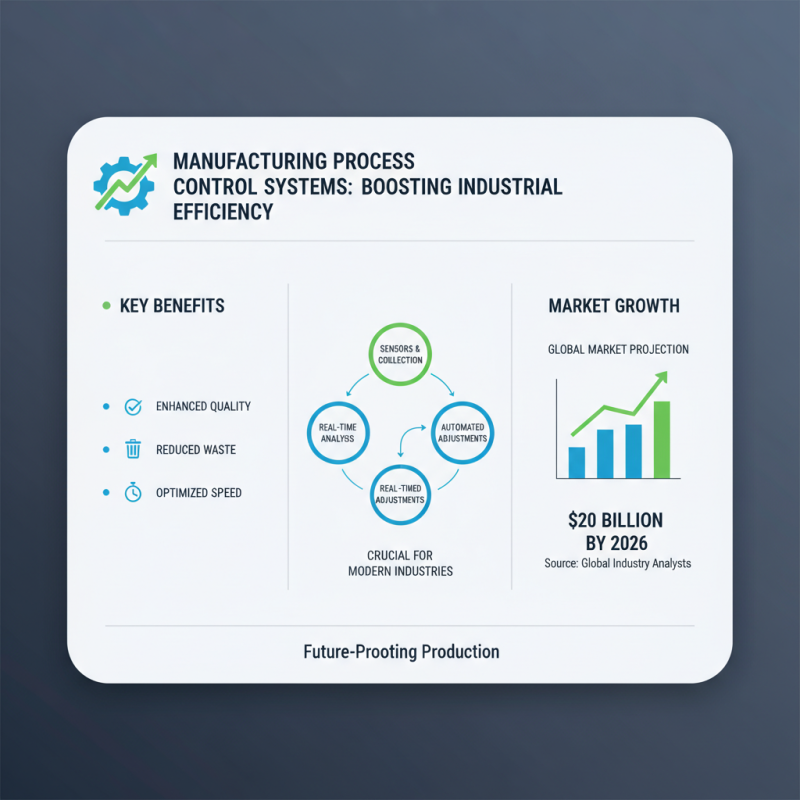
Manufacturing process control systems play a pivotal role in enhancing efficiency within modern industries. These systems are crucial for ensuring quality, reducing waste, and optimizing production speed. According to a recent report by the Global Industry Analysts, the global market for manufacturing process control systems is expected to reach $20 billion by 2026, highlighting their growing importance.
Effective control systems enable real-time monitoring of production processes. This leads to quicker adjustments when issues arise. For example, data collected from machine sensors can help predict equipment failures before they occur. This proactive approach minimizes downtime and keeps operations running smoothly. However, it’s essential to remember that implementing these systems can be complex and requires ongoing training for staff.
Tips: Regular training sessions for employees can improve system usage. Involve team members in process reviews to identify areas for improvement. This not only fosters accountability but also enhances engagement.
Adopting the latest manufacturing process control systems can also create challenges. Some companies report difficulties in integration with existing workflows. Moreover, without proper data analysis, the value of collected information can be minimal. Striking a balance between technology and human insight is crucial for maximizing benefits.
Key Benefits of Implementing Control Systems for Operational Efficiency
Manufacturing process control systems are vital for enhancing operational efficiency. These systems streamline workflows and minimize errors. When implemented correctly, they reduce waste and save time. Employees can focus on tasks that add value. Communication improves when data is shared in real-time across departments.
Integrating control systems can be challenging. Mistakes can happen during setup. Resistance from staff might slow down adoption. However, the benefits outweigh these issues. Workers become more engaged when they can see the results of their efforts. Control systems also enable better decision-making through accurate data analysis. Companies can quickly identify bottlenecks and address them effectively.
Moreover, having precise monitoring in place leads to fewer quality issues. Real-time feedback on production processes helps maintain high standards. Still, it’s crucial to regularly review system performance. Continuous improvement is necessary for long-term success. Embracing these challenges can lead to significant advancements in manufacturing efficiency.
Why Are Manufacturing Process Control Systems Essential for Efficiency?
This bar chart illustrates the key benefits of implementing manufacturing process control systems to enhance operational efficiency. The data reflects different benefits and their perceived impact on efficiency in a manufacturing context.
Impact of Process Control on Reducing Production Costs and Waste
In manufacturing, process control systems play a crucial role in efficiency. They help monitor every aspect of production. When properly implemented, these systems can significantly lower costs and reduce waste. For example, a simple adjustment in temperature or pressure can lead to more consistent product quality.
Controlling processes also means greater precision. It minimizes errors that often lead to scrap and rework. In one case, a factory improved efficiency by 15% after adjusting its workflow. These refinements can mean substantial savings. However, not all companies fully utilize these systems. Some overlook the importance of routine adjustments and monitoring.
There’s always room for improvement. Sometimes, teams may rush decisions, overlooking valuable data. Regular training can address this gap. By fostering a culture of analysis and responsiveness, manufacturers can optimize their processes even further. Implementing feedback loops and regular reviews can uncover hidden issues in production. Thus, in a competitive landscape, continuous improvement must remain a priority.
Role of Real-Time Data and Analytics in Continuous Improvement
Manufacturing process control systems are vital for operational efficiency. They integrate real-time data and analytics to drive continuous improvement. With instant access to performance metrics, companies can quickly identify bottlenecks and inefficiencies. This immediate feedback loop supports timely adjustments, enabling optimized production flows.
Data analytics transforms raw information into actionable insights. By analyzing trends, manufacturers can forecast potential issues and prevent downtime. However, reliance on data can lead to overconfidence. Sometimes, the numbers may mask underlying problems that need human attention. It’s crucial to balance data-driven decisions with intuition and experience.
Moreover, while automation enhances precision, it can create complacency. Workers might overlook subtle signs of irregularities. The blend of technology and human oversight is essential. Real-time analytics should serve as a tool, not a crutch. Organizations need to foster a culture where data is a guide, not the only answer.
Why Are Manufacturing Process Control Systems Essential for Efficiency? - Role of Real-Time Data and Analytics in Continuous Improvement
| Key Aspect |
Before Implementation |
After Implementation |
Improvement (%) |
| Overall Equipment Efficiency (OEE) |
65% |
80% |
23.08% |
| Production Downtime |
20 hours/week |
10 hours/week |
50% |
| Defect Rate |
5% |
2% |
60% |
| Production Yield |
85% |
95% |
11.76% |
| Lead Time |
14 days |
7 days |
50% |
Case Studies: Successful Manufacturing Efficiency Improvements Through Control Systems
Control systems in manufacturing play a vital role in enhancing efficiency. Many companies have successfully improved their processes through smart control systems. For instance, one company faced long downtimes due to inconsistent machinery performance. By integrating a control system, they monitored machines in real time. Downtime reduced significantly, yet fluctuations still occurred, prompting further analysis.
Another case involved a factory that produced electronic components. They struggled with quality control issues. With a new process control system, they gathered data on defect rates. It was an improvement, but variances stubbornly persisted in certain batches. Regular reviews of the system led to better calibration, but challenges remained, revealing the complexity of manufacturing environments.
These case studies show that implementing control systems can drive efficiency. However, it’s crucial to recognize that no system is flawless. Continuous refinement is necessary. Each case demonstrates a journey of trial and error. Embracing setbacks allows manufacturers to evolve and gradually enhance their operations, ensuring lasting success.