How to Automate Your Manufacturing Process?
Manufacturers often begin automation with a practical problem: a conveyor stops, an operator misses a label, or production data arrives too late. Manufacturing process automation connects equipment, software, and people to reduce these avoidable interruptions. It can include programmable logic controllers, robotic handling, barcode scanners, sensors, and real-time dashboards. The goal is not to remove human judgment. It is to make routine work more consistent and visible.
Automation is not magic. A poorly designed system can repeat mistakes faster. Experienced engineering teams first map the current workflow, measure cycle times, and identify safety risks. They then select technologies that fit the product, facility, workforce, and maintenance capabilities. For example, a temperature sensor may protect a curing process, while a vision camera checks package alignment before shipment. Small pilot projects often reveal integration problems that brochures overlook. That lesson deserves attention.
Reliable implementation also depends on clean data, documented procedures, staff training, and planned maintenance. Operators should understand how to respond when a sensor fails or a network connection drops. Managers should track measurable results, such as changeover time, scrap rate, unplanned downtime, and energy use. Independent testing and clear acceptance criteria can prevent expensive assumptions. Regulatory requirements and recognized safety practices must guide equipment selection and system design. This article outlines a practical path from process assessment to deployment, while acknowledging that every factory has different constraints. Careful automation improves performance, but thoughtful decisions protect people, quality, and long-term business value.
Define Manufacturing Automation Goals and Process Requirements
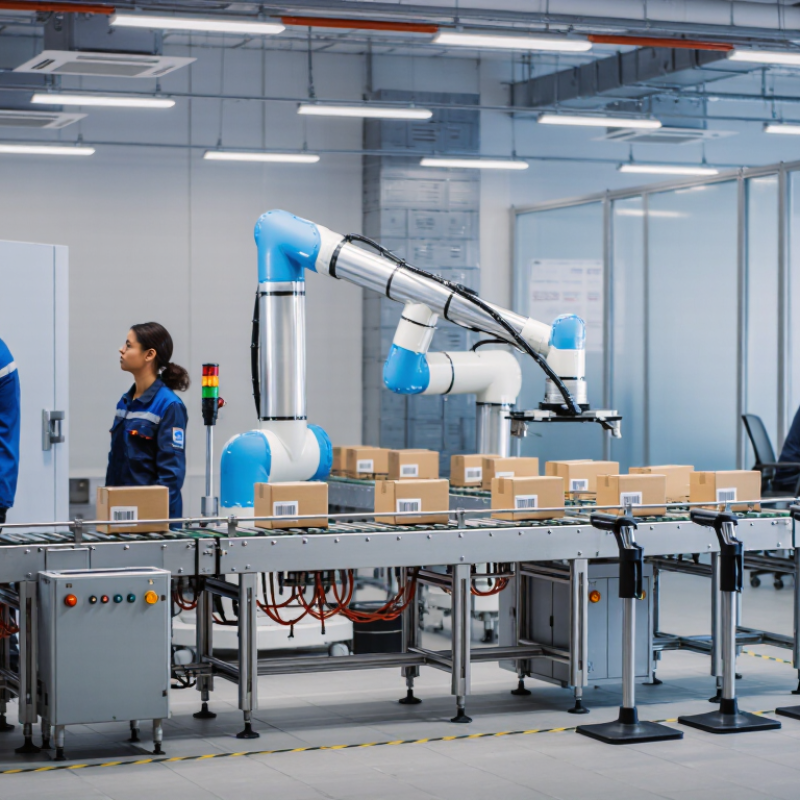
Manufacturing automation should begin with measurable goals, not equipment selection. Define the problem on the factory floor. Is the target fewer changeover minutes, lower scrap, safer material handling, or steadier output? Each goal needs a baseline, owner, and deadline. For example, a packaging line may target a 15% reduction in unplanned downtime within six months.
Requirements must describe the real process. Record cycle time, product variation, operator movements, temperature, humidity, and inspection points. Include awkward details. A robot may meet its speed target but fail when cartons arrive misaligned. Experienced engineering teams also check data quality, maintenance skills, floor space, and cybersecurity controls before approving automation. A perfect specification rarely exists.
Industry data supports disciplined planning. The International Federation of Robotics reported 541,302 industrial robots were installed worldwide in 2023, while the global operational stock reached about 4.28 million units. Deloitte’s 2024 Smart Manufacturing and Operations Survey found that 92% of surveyed manufacturers considered smart manufacturing important for competitiveness within three years. These figures show momentum, not guaranteed returns. Start with a contained pilot and define failure conditions. A pilot may expose weak sensors, incomplete work instructions, or unrealistic labor assumptions. That is useful evidence. Revise the requirements before scaling. Measure quality, throughput, downtime, training hours, and worker feedback together. Cost savings alone can hide new bottlenecks.
Map Current Workflows and Identify Automation Opportunities
How to Automate Your Manufacturing Process?
Map the current workflow before buying automation equipment. Walk the production line with operators, supervisors, and maintenance staff. Record each handoff, delay, inspection, rework event, and manual data entry. A simple time study often reveals hidden losses near changeovers and material staging.
Use a process map with real timestamps, not assumptions. Mark value-adding steps in green and repeated friction points in red. Compare planned cycle time with actual cycle time across several shifts. The 2023 Smart Manufacturing and Operations Survey reported that 86% of manufacturers expect smart manufacturing to drive competitiveness within three years. Yet automation without process evidence can simply accelerate waste.
Start with opportunities that are frequent, measurable, and safe to test. Suitable candidates include barcode-based tracking, machine-status collection, repetitive material movement, and visual inspection support. The International Federation of Robotics reported 541,302 industrial robots were installed worldwide in 2023. That figure signals strong adoption, but adoption alone does not prove business value. A poorly mapped workflow may create faster bottlenecks.
Pilot one cell. Define baseline measures for throughput, first-pass yield, downtime, and operator walking distance. Review results after two or three production cycles. Some maps will be wrong. Good teams correct them openly. Worker feedback matters, especially when the documented process differs from the real one.
Select Machines, Software, Sensors, and Control Systems
How to Automate Your Manufacturing Process?
Automation starts with a clear production problem, not a shopping list. Measure cycle time, changeover losses, defect rates, and operator movement before choosing equipment. A faster machine can still create bottlenecks. Select machines that match product tolerances, material behavior, floor space, and future volume. Include manual loading, cleaning access, and maintenance clearance. That detail is often missed.
Software should connect production planning, machine data, quality records, and maintenance alerts. Choose systems with clear dashboards, controlled user access, and reliable data backups. Avoid collecting data without a decision attached. It creates noise. Select sensors based on the variable you must control, such as temperature, pressure, position, vibration, or flow. Check their measuring range and response time. Mounting matters as much as the sensor itself. A poorly positioned sensor can produce confident but misleading readings.
Control systems should support safe stops, fault messages, manual overrides, and simple recovery steps. Test every alarm with operators before production begins. Document wiring, settings, calibration dates, and software changes. My early assumption was that more automation always improved output. Actual results can differ when training, maintenance, or material variation is ignored. Run a limited pilot, review the failures, and adjust the design before expanding. Reliable automation is built through evidence, not optimism.
Test, Monitor, and Continuously Improve the Automated Process
How to Automate Your Manufacturing Process?
Test, Monitor, and Continuously Improve the Automated Process
Automation should be tested like a production system, not treated like a finished purchase. The International Federation of Robotics reported about 541,000 industrial robots were installed worldwide in 2023. Each installation adds pressure to maintain stable performance. Test sensors, safety stops, cycle times, and product tolerances before full deployment. Then repeat these checks after software updates, tooling changes, and unusual stoppages.
Monitoring must connect machine data with real production outcomes. Track cycle time, first-pass yield, energy use, downtime, and rejected units. A dashboard may show 98% availability, while operators still lose hours clearing small jams. Walk the line. Listen to operators. Their observations often reveal problems that data misses. Deloitte’s 2023 Global Smart Manufacturing Survey found that 86% of manufacturing leaders expect smart factory initiatives to support competitiveness within five years. That expectation requires disciplined measurement, not attractive screens.
Continuous improvement works best through short, documented experiments. Change one variable, such as gripper pressure or inspection timing, and compare results across several shifts. Record the baseline first. Otherwise, improvement becomes guesswork. Some tests will fail. That is useful evidence, but only when teams examine the cause honestly. A poorly tuned alert system can create alarm fatigue. We have also seen teams optimize speed and accidentally increase defects. Review the process weekly, retrain staff when needed, and keep human approval for uncertain decisions. Automation should become more reliable through learning, not merely more complicated.
How to Automate Your Manufacturing Process: Test, Monitor, and Continuously Improve
The chart tracks two standard manufacturing KPIs across six production months:
throughput and first-pass yield. Testing establishes a baseline, monitoring reveals
performance changes, and continuous improvement increases output while reducing rework.