
How Can We Help You?

How to Choose the Right Intalox Saddle in 2026?

Choosing the right Intalox Saddle in 2026 starts with the conditions inside your tower, not a product label. Gas and liquid flow rates, operating temperature, pressure, and the process fluid all shape performance. A packing that looks suitable in a catalog may behave differently under actual plant conditions. Small details matter.

This guide explains how to compare saddle size, material, and design using practical operating data. Start with the required capacity and acceptable pressure drop. Then review liquid distribution, fouling risk, and the space available for installation. A larger size may reduce resistance to flow, but it can also affect surface area and mass transfer. The balance depends on your process.

Material selection deserves equal care. Check chemical compatibility and temperature limits against the manufacturer’s technical data, rather than relying on a generic description. Ask suppliers for dimensions, performance information, and clear limits for their recommendations. Compare like with like. A supplier’s estimate can help, but it is not a substitute for verified process data.

Even a careful comparison can leave uncertainty, especially when operating conditions change over time. Pilot results or relevant experience from a similar service can help test assumptions. There is no single best choice for every tower. The aim is a dependable fit for your operating range, maintenance needs, and performance targets—with the trade-offs understood before purchase.
How to Choose the Right Intalox Saddle in 2026?

What an Intalox Saddle Is and How It Works

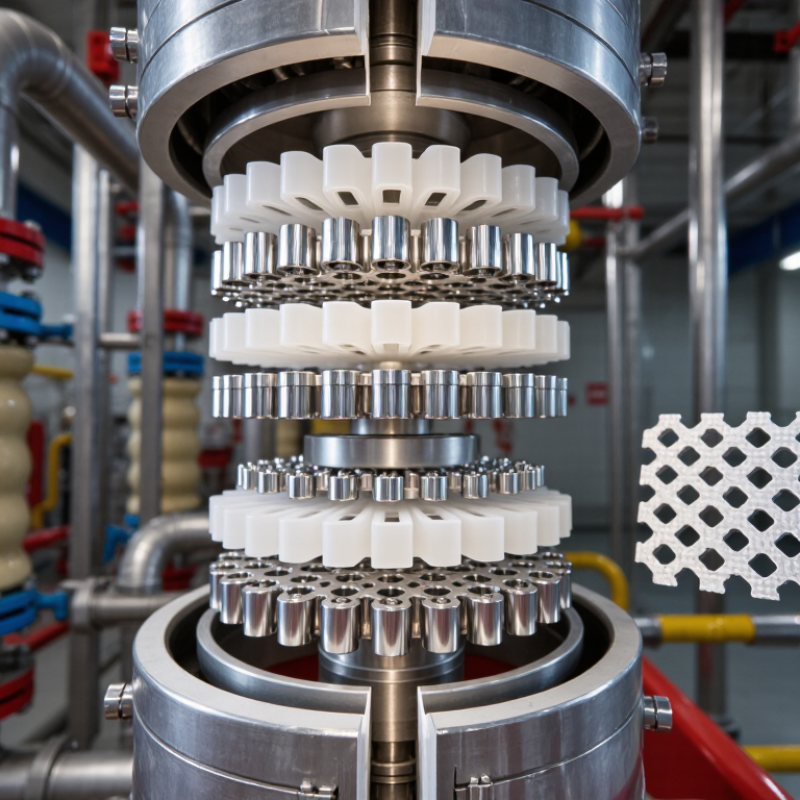
An Intalox saddle is a random tower packing: small, shaped pieces loaded loosely into a column. Its curved surfaces and open passages give rising gas and descending liquid many chances to contact. Liquid spreads across the saddle, forming thin films; gas moves through the gaps and transfers heat or material to the liquid. The geometry helps limit nesting, which can block flow. Not magic.

Perry’s Chemical Engineers’ Handbook, 9th edition (2019), presents random-packing surface areas across a broad range—roughly 45–250 m²/m³, depending on size and shape. Treat that as a screening range, not a performance promise for every saddle. Greater area may improve contact, but it can also raise resistance to gas flow if the column is poorly loaded or wetted. Pressure drop and flooding capacity matter too.

In practice, engineers assess the fluid properties, column diameter, liquid distribution, and operating rates before choosing a size or material. A small saddle may provide more surface area, yet its narrower voids can be less forgiving at high gas flow. A quick field check of wetting and pressure drop can reveal problems that a catalogue figure misses. Imperfect data, sometimes—but real operating conditions deserve the final say.

Identify Process Conditions and Separation Requirements

Start with the feed. Record gas and liquid flow rates across normal operation and expected turndown, not just at the design point. Note temperature, pressure, viscosity, surface tension, foaming, and any suspended solids. These details affect wetting, pressure drop, and fouling risk. EPA’s packed-bed scrubber guidance gives screening ranges of about 2–5 ft/s for gas velocity and 3–20 gallons of liquid per 1,000 actual cubic feet of gas. These are reference ranges for scrubbers, not universal limits for every separation column.

Translate the separation duty into measurable targets: required purity, recovery, and allowable pressure drop. A tighter separation may favor smaller saddles, which can offer more surface area but may increase pressure drop and become less forgiving with solids or poor liquid distribution. Larger saddles may suit higher-capacity service, but check whether the available height can meet the required separation. Then verify material compatibility against operating temperature and fluid chemistry. The EPA ranges help frame early checks; they cannot replace column-specific hydraulic calculations. A spreadsheet can miss maldistribution. I would revisit assumptions against operating data before choosing a size. Industry reference: U.S. EPA, Air Pollution Control Cost Manual, “Packed-Bed/Packed-Tower Scrubber.”

How to Choose the Right Intalox Saddle in 2026? - Identify Process Conditions and Separation Requirements
Process Situation Key Operating Conditions Selection Priorities Common Material Direction Checks Before Final Selection
Vacuum distillation or other pressure-sensitive service Low operating pressure; vapor load and allowable pressure drop strongly affect capacity. Favor high void space and low pressure drop while maintaining the required mass-transfer performance. Evaluate packing size against column diameter and turndown needs. Metal or plastic may be considered where temperature and chemical compatibility permit; ceramic may suit compatible services where its weight and mechanical characteristics are acceptable. Use a hydraulic rating at the actual pressure, vapor and liquid rates, and fluid properties. Confirm flooding margin, pressure drop, and liquid-distribution requirements.
Corrosive absorption or stripping Composition, concentration, temperature, contaminants, and possible changes in chemistry determine corrosion exposure. Prioritize verified chemical compatibility and service life. Check both the packing material and any support or retaining components. Ceramic or selected plastics may be suitable in some corrosive environments; material choice must be checked against the specific chemicals and operating temperature. Review compatibility data for the complete process mixture, including cleaning agents and upset conditions. Confirm mechanical strength and thermal-shock limitations where relevant.
High-temperature process service Elevated or fluctuating temperatures; possible thermal cycling and hot liquid exposure. Confirm continuous and upset temperature limits, dimensional stability, and resistance to thermal cycling before optimizing capacity. Ceramic or metal may be evaluated for higher-temperature duties; plastic selection is limited by the specific polymer’s temperature rating. Check the material’s temperature rating and chemical compatibility together. Assess start-up, shutdown, and thermal-expansion effects on the packed bed.
Fouling, solids, or polymerizing service Suspended solids, precipitates, viscous liquid, or deposits can obstruct packing passages and reduce effective area. Favor open geometry and passages that are accessible to the process liquid. Consider whether a structured packing or a different contacting device is more appropriate for severe fouling. Material depends on chemistry and temperature; robust ceramic or metal options may be considered where suitable. Assess solids size and concentration, cleaning method, filtration, liquid distribution, and the risk of plugging. Do not rely on packing geometry alone to prevent fouling.
High liquid load or operation near hydraulic limits Large liquid flow, high vapor load, or a narrow operating window between normal load and flooding. Prioritize capacity, pressure drop, and stable liquid distribution. Compare alternative packing sizes and verify the complete column hydraulics. Select material based on process compatibility, temperature, weight limits, and installation requirements rather than hydraulic performance alone. Check liquid and vapor rates over the full operating range, including turndown and peak cases. Verify distributor capacity, support design, and entrainment risk.
High separation duty or limited column height Strict product specifications, close-boiling components, or limited space for packed height. Prioritize mass-transfer performance and effective wetting. Confirm that the packing can be paired with suitable liquid distribution and adequate bed height. Material is selected according to chemistry, temperature, and mechanical constraints; material alone does not determine separation efficiency. Establish the required separation, feed condition, and operating pressure. Use a validated design method or pilot data to estimate packing height and operating margin.
Small-diameter column or constrained installation Limited column diameter, restricted access, or a retrofit with existing internals. Check packing size relative to column diameter, wall effects, bed installation, and the ability to distribute liquid uniformly. Choose a material that meets the installation load and handling requirements as well as process compatibility. Confirm column dimensions, support-grid openings, access routes, bed depth, and installation sequence. Review scale effects in the hydraulic design.
Selection note: These are general screening guidelines, not guaranteed performance ratings. Final selection should be based on the actual fluid properties, operating envelope, column geometry, distributor design, mechanical requirements, and a documented hydraulic and mass-transfer assessment.

Compare Saddle Materials, Sizes, and Structural Designs

Choosing an Intalox saddle starts with the process fluid, temperature, and cleaning needs. Ceramic resists many corrosive services and handles heat, but it can chip during loading. Metal tolerates mechanical stress and higher temperatures; plastic is lighter and often suits lower-temperature service. Check the material’s chemical compatibility against the actual liquid, not a generic chart. Small details matter: a sharp edge or damaged piece can affect how liquid spreads.

Size changes the balance between capacity and separation. Smaller saddles usually provide more contact area, while larger pieces often allow higher vapor flow with less resistance. The U.S. EPA’s 2003 Packed-Bed/Packed-Tower Scrubber fact sheet reports typical pressure drops of 0.5–1.0 inches of water per foot of packing. That is a scrubber benchmark, not a universal design limit. Treat it carefully.

Structural details matter, too. Open windows, curved surfaces, and ribs influence liquid distribution and vapor passage. Billet and Schultes’ 1999 packed-column model uses packing geometry alongside vapor and liquid loads to predict performance. Ask suppliers for geometry-specific data, then check it against your operating range. A paper rating can look reassuring. Real columns are less tidy. A pilot test may expose maldistribution that calculations miss.

How to Choose the Right Intalox Saddle in 2026?

Compare common nominal packing sizes. Actual availability and performance depend on material and saddle design.

Choosing a size: Smaller saddles generally provide more packing pieces and wetted surface per volume, but can increase pressure drop. Larger saddles often reduce pressure drop, though they may be less suitable for narrow columns. Ceramic, plastic, and metal saddles differ in chemical resistance, temperature suitability, and mechanical strength; confirm selection against the process conditions and the specific product data.

Assess Capacity, Efficiency, Pressure Drop, and Fouling Risk

How to Choose the Right Intalox Saddle in 2026?

A suitable Intalox saddle balances capacity, separation efficiency, pressure drop, and fouling risk. Start with the process data: vapor and liquid flow rates, operating temperatures, and feed composition. Peak flow matters. A packing that performs well at average throughput may flood during short production surges. Check the required separation, too; maximum capacity alone does not guarantee the desired product quality.

Compare pressure drop at the expected operating range, not just at one design point. Excessive resistance can raise energy use and limit throughput. At the same time, a very open packing may not provide enough contact between vapor and liquid. Review test data under conditions close to your own. Small details matter. Look at liquid distribution, column diameter, and bed depth, since each can affect real-world efficiency.

Fouling risk deserves equal attention when feeds contain suspended solids, sticky residues, or materials that can crystallize. Open passages may help, but they cannot fix poor upstream filtration or uneven liquid distribution. Ask how the packing is cleaned and inspected, and consider maintenance access before finalizing the design. The estimate is imperfect; feed variation can overturn a tidy calculation. I would compare several operating scenarios, then verify the selection with a qualified process engineer before specifying the bed.

Verify Quality Standards, Compatibility, and Supplier Specifications

An Intalox saddle is not a drop-in choice based on shape alone. Before comparing offers, confirm the required material, nominal size, and operating temperature. Check that the material suits the process liquid, cleaning chemicals, and likely contaminants. Small details matter. Ask for documented dimensions, bulk density, void fraction, and measurement tolerances. Compare these values with the column design and distributor layout, not just a catalog image. Acceptance criteria may differ for ceramic, metal, and plastic packing. Ask which quality standard applies and how each batch is inspected.

Request a current technical data sheet, inspection records, and test conditions for pressure drop and capacity. A number without test conditions is difficult to use. Confirm that the quoted specifications match the exact size and material being supplied. Ask how breakage, dimensional variation, and shipping are controlled. Verify compatibility with existing supports, hold-downs, and liquid distributors. A saddle can meet its datasheet limits yet perform poorly if bed depth or liquid distribution changes. A low price alone proves little; compare evidence, lead time, and replacement consistency. Some uncertainty remains until the packing is operating in the column. If a supplier cannot explain a specification clearly, request written clarification before ordering.

Article Source: