How to Choose the Right Component Terminal Block in 2026?
Choosing a Component Terminal Block in 2026 is not a catalog exercise. It is a decision about current, wiring, temperature, vibration, and the person who will service the panel later. A block that fits the drawing may still fail the real installation. That detail matters.
For transparency, the quotation below is an original editorial line from a fictional composite specialist, not a verified statement by a real expert. “Choose for the conditions at the terminal, not just the numbers on the label,” says Mara Ellis, composite electrical-design specialist. Use that principle to compare rated current and voltage with conductor size, insulation type, ambient temperature, and expected load. Then check mounting style, pitch, wire-entry access, and whether the connection method suits the available tools. Small details count.
A practical selection also considers short-circuit conditions, vibration, enclosure space, labeling, and future maintenance. Verify product data and applicable certification requirements for the intended application; never assume similar-looking blocks are interchangeable. A few minutes with the datasheet can prevent a crowded panel, awkward rework, or a loose connection. But the datasheet is not the whole story. Real installations can expose assumptions that a clean drawing hides. This guide’s outline will help readers assess those trade-offs, compare common terminal-block designs, and build a shortlist that fits the application—not merely the purchasing spreadsheet.
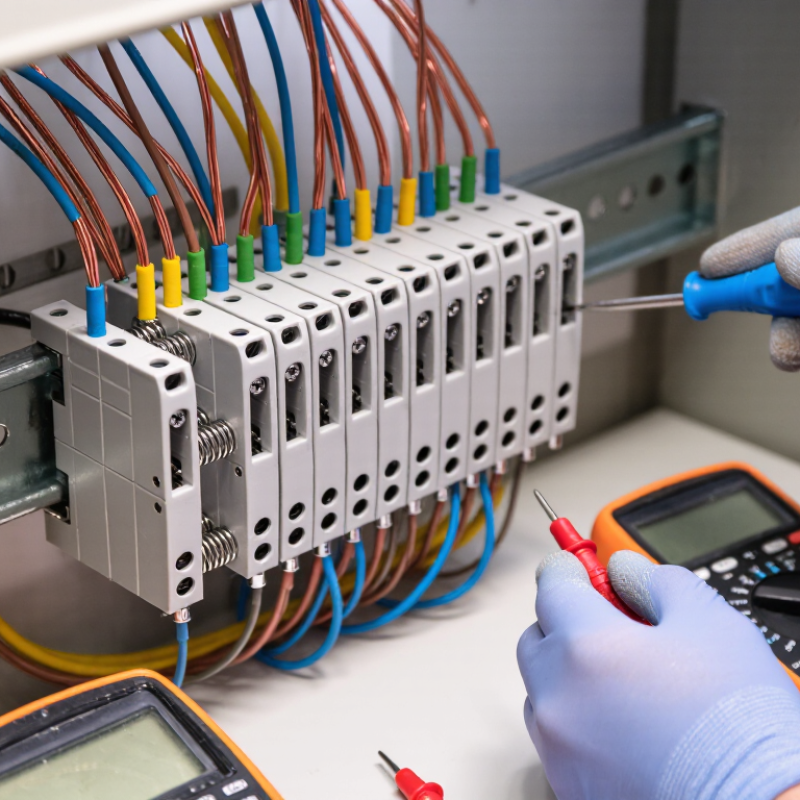
Understand the Role and Types of Component Terminal Blocks
How to Choose the Right Component Terminal Block in 2026?
A component terminal block joins field wiring to a circuit while adding a useful function at the connection point. Depending on its design, it may protect, indicate, or condition a signal. On a crowded DIN rail, combining these jobs can save space and make wiring easier to inspect. But a compact layout is not automatically a better one.
Common types include fuse terminal blocks, which hold a replaceable fuse; disconnect blocks, which let technicians isolate a circuit; and grounding blocks, which connect conductors to the mounting rail. Blocks with LEDs can show circuit status, while diode or resistor versions support specific signal tasks. Check the internal schematic: two blocks with similar shapes may behave very differently. Details matter.
Choose a type by matching its function to the circuit, then check rated voltage, current, wire range, and required accessories. Allow for heat buildup when several loaded blocks sit side by side; the published rating may depend on spacing or ambient temperature. Verify conductor size and stripping length against the product data, too. A wire that looks secure can still be poorly clamped. Finally, consider labeling, test access, and how often the circuit may need maintenance. These practical details are easy to overlook in a drawing, and they deserve a second look before installation.
Define Electrical and Mechanical Requirements for the Application
Start with the electrical conditions the terminal block must handle. Record the system voltage, continuous current, peak load, and expected fault conditions. Check the manufacturer’s ratings at the actual operating temperature; a printed current rating may need derating inside a warm, crowded enclosure. Match the terminal block to the conductor material and wire size, then confirm the permitted strip length and tightening torque. Small details matter.
Mechanical fit is just as important. Measure the available rail or panel space, including wire-bend clearance and room for a screwdriver. Check mounting style, pitch, number of poles, and how conductors enter the block. In a vibrating machine, consider how wires will be supported and whether the connection can be inspected later. A part that fits the drawing can still be awkward to install. It is easy to overlook.
Tips: Bring a sample wire and a panel layout to the design review. Verify that the selected block accepts the wire’s actual strand class, not just its nominal gauge. Check the datasheet and relevant test documentation, then confirm the choice in a representative assembly. If access is tight, revise the layout before production; this step can feel fussy, but it often exposes assumptions worth questioning.
How to Choose the Right Component Terminal Block in 2026?
Define Electrical and Mechanical Requirements for the Application
Illustrative application design inputs—not terminal block ratings. The bars show example circuit currents; hover over a bar for example voltage and conductor size. Select a terminal block with suitable voltage and current ratings, allowing for applicable derating and installation conditions. Also check conductor type and range, temperature, vibration, mounting method, and required clearances against the product specifications and applicable standards.
Compare Wiring Methods, Mounting Options, and Space Constraints
How to Choose the Right Component Terminal Block in 2026?
The wiring method affects installation time, inspection, and long-term reliability. Screw-clamp terminals offer adjustable clamping force, but they need tool access and careful tightening. Spring-clamp designs can speed up repeated wiring and resist loosening under vibration. Push-in connections work well with compatible solid conductors or ferruled wires. Check the terminal’s approved wire range and conductor types; never assume a familiar-looking wire will fit. That detail matters.
Mounting and available space narrow the choices. DIN-rail blocks suit organized control panels, while panel-mount or PCB terminals may fit equipment with different layouts. Measure the usable rail or board area, including end plates, jumpers, and labels. A narrow block saves width, but crowded wiring can make tools awkward and inspection difficult. Leave room for the wire’s bend radius and for fingers to reach release buttons or screws. Measure twice. Heat also needs space: dense groups of high-current terminals may require separation or airflow, according to the equipment design. I have seen compact layouts become frustrating after the first maintenance visit. A paper layout helps, though it cannot reveal every installation snag. Check clearances with the actual wire size and enclosure before settling on a part.
Check Safety Standards, Materials, and Operating Conditions
How to Choose the Right Component Terminal Block in 2026?
Check Safety Standards, Materials, and Operating Conditions
A terminal block must match the equipment, not just the wire size. Check its rated voltage and current against the actual circuit, including expected startup loads. Confirm which safety standards and approvals apply to the finished equipment and its installation. A rating alone is not a substitute for checking clearances, wire ranges, and installation instructions. Small details matter.
Material choices affect performance over time. Conductive parts commonly use copper alloys, sometimes with a protective finish to limit oxidation. The housing should tolerate the temperatures and exposure expected in service. Heat changes everything. A block near a warm motor may need more margin than one inside a cool control cabinet. Do not assume two parts with similar dimensions use equivalent materials.
Consider vibration, humidity, dust, and chemical exposure at the installation site. Check the manufacturer’s datasheet for temperature limits, conductor types, tightening torque, and any derating guidance. Then inspect a sample using the wire and tools planned for assembly. A connection that feels secure on a clean workbench may behave differently in a vibrating enclosure. This step is easy to skip, and that is worth questioning. When conditions are uncertain, ask a qualified engineer to review the selection before production.