
How Can We Help You?

How to Choose a Double Micro Switch for Global Sourcing?

Choosing the right Double Micro Switch for global sourcing requires more than comparing unit prices. The switch must match the equipment’s force, travel, current, voltage, and operating environment. A small mismatch can cause intermittent signals, contact welding, or premature failure. These problems often appear after installation, not during a quick sample check.

Experienced sourcing teams begin with a clear technical specification. Define the actuator type, terminal style, contact arrangement, switching speed, and expected service life. Confirm whether the product uses a double-circuit design or another configuration. Request datasheets, dimensional drawings, material details, and test reports from each supplier. Samples should be tested under realistic conditions, including vibration, dust, humidity, and repeated mechanical cycles.

Look beyond the catalogue.

Supplier evaluation also matters. Review manufacturing experience, quality controls, traceability, inspection records, and change-management procedures. Check relevant IEC requirements and verify whether additional regional certifications apply to the finished equipment. Independent laboratory testing can strengthen confidence, especially for safety-critical applications. Still, paperwork is not proof by itself. A factory audit may reveal inconsistent assembly, weak terminal crimping, or poorly controlled contact materials. No audit is perfect.

Cost remains important, but the cheapest Double Micro Switch may create higher replacement and warranty expenses. Compare total ownership costs, minimum order quantities, lead times, packaging, and production capacity. Keep approved samples and signed specifications as reference points. Global supply chains change quickly. A reliable sourcing decision combines verified evidence, practical testing, and a willingness to question assumptions.
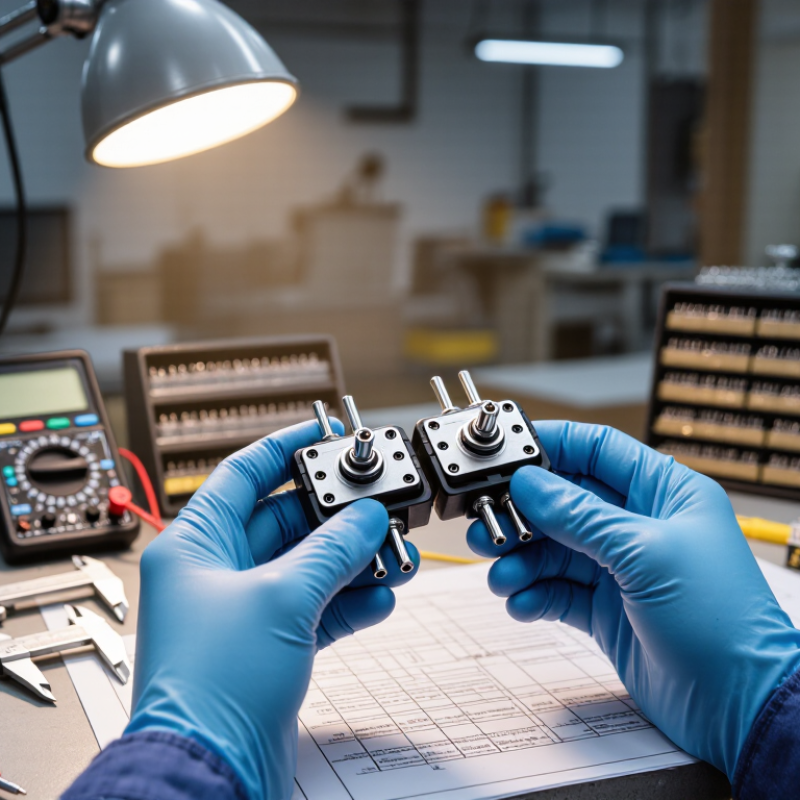
How to Choose a Double Micro Switch for Global Sourcing?

Understanding the Structure and Function of a Double Micro Switch

A double micro switch usually contains two switching circuits in one compact housing. Its structure includes an actuator, return spring, movable contact, fixed contacts, and terminal block. The actuator may be a pin, roller, or hinged lever. When pressed, it changes the contact path between common, normally open, and normally closed terminals. Some designs switch both circuits together. Others allow independent operation. Confirm the supplier’s definition before comparing quotations.

This mechanism supports position sensing in appliances, control panels, safety interlocks, and automated equipment. The contact gap is tiny, but timing matters. A slow actuator may create unstable switching. Electrical ratings also need careful checking. A higher current rating is not automatically better. According to Grand View Research, the global micro switch market was valued at about USD 1.1 billion in 2023, with projected growth near 5.3% annually through 2030. This growth reflects demand from industrial automation and transport equipment. For global sourcing, request endurance data, operating-force tolerance, contact resistance, and test conditions. Compliance with IEC 61058-1 or relevant regional standards improves supplier evaluation.

Tips: Ask for a cross-sectional drawing and a sample batch. Measure actuation travel with a force gauge. Check whether both circuits switch simultaneously. IP protection can weaken after repeated cable movement. That detail is easy to miss. Also, report figures vary by research method, so treat forecasts as guidance, not proof. A supplier’s real test records matter more than a polished catalogue.

Identifying Electrical Ratings and Switching Requirements

How to Choose a Double Micro Switch for Global Sourcing?

Electrical ratings should lead the selection. Confirm whether “double” means double-pole, double-throw, or two linked switches. These designs are not interchangeable. Check rated voltage, continuous current, and load type. Resistive loads differ from motors, solenoids, and capacitive circuits. Inductive loads can create damaging voltage spikes. A 5 A rating may apply only to resistive AC loads. It may be much lower for DC switching. The 2024 Micro Switch Market report by Fortune Business Insights estimates market growth from about USD 1.1 billion in 2023 to over USD 1.6 billion by 2030. This expansion increases supplier choices, but also creates inconsistent rating claims.

Switching requirements need practical testing. Record inrush current, operating frequency, contact bounce, and expected service life. Compare the supplier’s test conditions with your application. IEC 61058-1 provides useful guidance for switch safety and endurance evaluation. However, certification alone does not prove suitability for every load.

I have seen purchasing teams select by maximum current only. That is a weak assumption.

Temperature, humidity, vibration, terminal construction, and insulation distance also matter. Global sourcing adds another concern: identical-looking drawings may use different rating conventions.

Tips: Ask for AC and DC load tables, not one headline rating. Request endurance-test conditions and sample data. Test the switch with the real actuator and load. Check failures after cold starts. A datasheet can still mislead. Keep a small engineering margin, but avoid excessive overspecification, which raises cost and force.

Comparing Actuator Types, Terminals, and Mounting Options

How to Choose a Double Micro Switch for Global Sourcing?

A double micro switch may mean two synchronized circuits or two switches in one housing. Confirm this definition before comparing suppliers. A 2024 MarketsandMarkets report projects the global switches market to reach approximately USD 18 billion by 2029. That growth increases choice, but also creates specification risks. I once focused on operating force and overlooked cable routing. That mistake caused installation delays.

Actuator selection should match the machine’s movement, not just the catalog drawing. A short plunger suits direct, vertical contact. A roller lever handles sliding cams and reduces side friction. A hinge lever offers broader tolerance for uneven movement. Test the actuator at its real travel speed. Static tests can hide bounce, wear, and accidental over-travel. Keep this simple.

Terminal design affects assembly time and field reliability. Quick-connect terminals support faster wiring, while solder terminals suit compact, controlled production. PCB pins reduce harness space but demand accurate board alignment.

The Mounting options also deserve equal attention. Screw mounting tolerates vibration and service replacement. Snap-in mounting speeds assembly, but loose panel tolerances can create movement.

IEC 61058-1 provides a recognized framework for switch safety and endurance testing. A 2023 Future Market Insights report identifies industrial automation as a major demand area for microswitches, making repeatability increasingly important. Still, reports describe markets, not your machine. Validate samples under dust, temperature changes, and repeated cycling before placing a global order.

Checking Safety Standards and Global Sourcing Compatibility

How to Choose a Double Micro Switch for Global Sourcing?

A double micro switch should match the equipment’s real electrical load, not only its advertised current. Check whether both circuits operate independently or share a common terminal. Then verify voltage, inrush current, insulation resistance, and mechanical life.

IEC 61058-1 covers switches for appliances, while IEC 60669-1 may apply to certain fixed installations. The correct standard depends on the final product. That detail is often missed.

Request complete test reports from an accredited laboratory. Look for dielectric-strength testing, temperature-rise results, contact spacing, and endurance cycles. Confirm the report matches the exact switch structure, terminal material, and rated load.

A certificate for a similar model is weak evidence. I have seen sourcing teams approve samples before checking the actual report number. That creates avoidable risk.

Also review RoHS and REACH declarations, especially when selling across several markets.

Global compatibility includes logistics and documentation. The WTO’s Global Trade Outlook and Statistics, April 2024, reported a 1.2% decline in world merchandise trade volume during 2023. Delays and substitutions remain realistic concerns.

Ask suppliers for stable packaging, traceable lot codes, multilingual markings, and change-notification procedures. Check whether the switch survives your shipping route, such as humid sea freight or repeated warehouse temperature changes.

A small terminal crack may pass visual inspection. It can still fail during installation. The specification should leave room for honest uncertainty, because laboratory performance may not fully represent field conditions.

Evaluating Suppliers, Quality Control, and Total Purchase Cost

When sourcing a double micro switch globally, supplier evaluation should begin with evidence, not a polished catalog. Ask for drawings, material specifications, rated loads, operating temperature, and verified cycle-test data. Samples should match the proposed production parts, including actuator force and terminal plating. Request a traceable lot number. Confirm whether both circuits must switch together, and document the required contact arrangement. An experienced supplier can explain failure modes, not merely repeat marketing claims. During a factory review, check incoming inspection, calibration records, assembly controls, and change-notification procedures. Small gaps matter.

Quality control needs measurable acceptance criteria. Check contact resistance, insulation performance, switching consistency, dimensions, and mechanical endurance. Use a pre-shipment sample plan with defined defect limits. Independent inspection can expose bent terminals, uneven housings, or inconsistent actuation before shipment. Ask how nonconforming units are isolated and reported. Compliance documents should match the actual material and destination market requirements. Do not accept recycled certificates. That shortcut can create expensive delays. One weak point deserves reflection: laboratory results may not represent rough installation conditions. Test samples after vibration, temperature changes, or repeated manual operation when the application demands it.

Total purchase cost is more than the unit price. Calculate tooling, minimum order quantities, packaging, freight, duties, inspection, payment fees, and expected replacement rates. A cheaper switch may lose its advantage through higher rejects or slower delivery. Include downtime risk when the component controls equipment used every day. Compare quotes using the same electrical ratings, tolerances, packaging, and delivery terms. Keep a written approval sample. It reduces later arguments. Still, forecasts are imperfect. Recheck costs when volume, regulations, or shipping routes change.