Choosing an automation machinery manufacturer affects far more than the price of a production line. It influences output consistency, operator safety, maintenance costs, and the time needed to recover from unexpected downtime. Details matter. A machine that performs well during a short demonstration may struggle with variable materials or repeated product changeovers. Reliable automation machinery manufacturing requires documented engineering processes, practical application knowledge, and evidence that equipment can meet your actual operating conditions.
A useful evaluation starts with your own production requirements: target cycle time, acceptable defect rates, available floor space, and the skills of your maintenance team. Ask potential suppliers to explain how their proposed design addresses each requirement, including what happens when a sensor fails or material jams. Request sample inspection records, relevant project references, and a clear factory acceptance test plan. Check the details. A quoted cycle time means little without defined test conditions, representative materials, and an agreed method for measuring performance. Even a strong supplier may have limited experience with your specific process.
The difficult part is weighing technical capability against delivery pressure, budget limits, and long-term support. A polished presentation cannot resolve those tradeoffs, and the cheapest quotation may leave important integration work outside the agreed scope. Your requirements may need revision, too. An ambitious throughput target can hide unrealistic assumptions about loading, inspection, or changeover time. This guide examines the evidence worth checking, the questions worth asking, and the compromises worth discussing before you commit to a manufacturing partner.
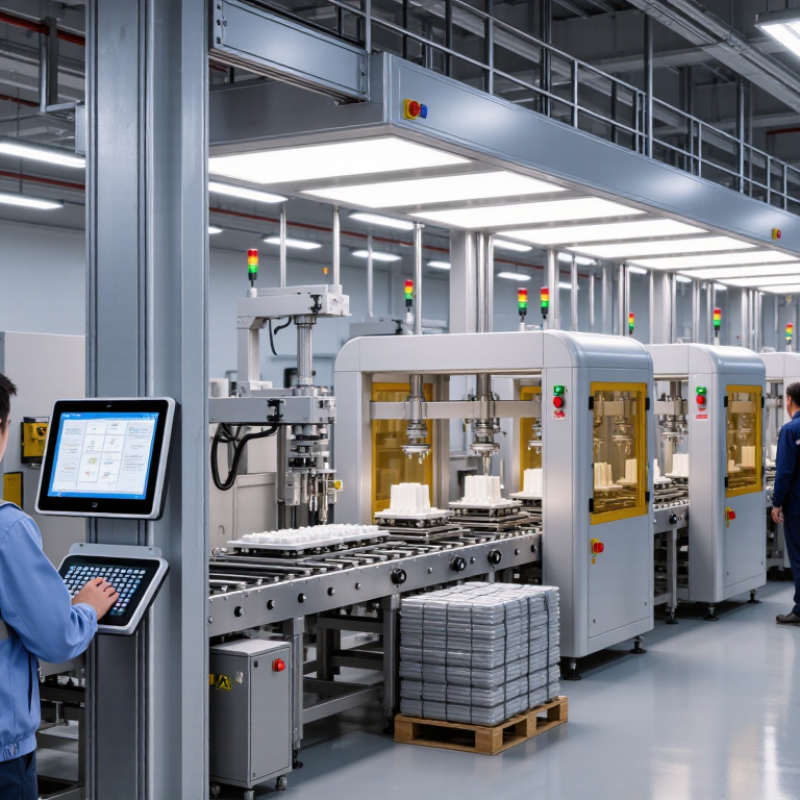
A reliable automation machinery manufacturer needs a clear brief before proposing equipment. Define the product, process, and production target in measurable terms. For example, specify 40 finished parts per minute, dimensional tolerances of ±0.2 mm, and an eight-hour operating shift. Include material properties, part drawings, and acceptable defect limits, because these details influence feeding, gripping, inspection, and rejection methods. Measure the available floor space, including access for maintenance and material loading. Small details matter. A machine that fits your layout may still obstruct an operator’s normal working route.
Tips: Build a one-page requirements checklist using actual production data. Record current cycle times, scrap rates, and frequent stoppages. Bring representative samples, including imperfect ones. Perfect samples can hide problems.
Separate essential capabilities from features that could wait. Automatic loading may be essential, while remote monitoring might offer limited value for a small production team. Ask manufacturers to explain their assumptions about changeover time, staffing, utilities, and integration with existing equipment. Request a proposed acceptance test using your materials and agreed performance thresholds. Leave room for revision. Your initial output target may be too optimistic, especially if upstream processes already struggle to supply consistent parts. Document that uncertainty before requesting quotations, and identify which measurements or trials could resolve it.
| Requirement Area | What to Define | Illustrative Requirement | Evidence to Request from the Manufacturer | Acceptance Method |
|---|---|---|---|---|
| Process Scope | Incoming materials, required operations, process sequence, and the condition of finished output. | Automatically feed, orient, assemble, inspect, and discharge one product family; segregate rejected units. | A process flow diagram, equipment layout, and responsibility matrix covering upstream and downstream interfaces. | Review every process step against an approved user requirements specification. |
| Production Capacity | Required good output, scheduled production time, product mix, and operating assumptions. | Produce 3,600 accepted units during 7.5 scheduled production hours. At an assumed overall equipment effectiveness of 80%, the ideal cycle time must be 6 seconds per unit or faster. | A capacity calculation, station timing breakdown, bottleneck analysis, and the assumptions used for availability, performance, and quality. | Measure good output over an agreed production run and calculate overall equipment effectiveness using agreed definitions. |
| Product Compatibility | Part dimensions, tolerances, materials, mass, surface condition, and permitted handling forces. | Handle three approved product variants, each weighing up to 0.5 kg, without damage to designated cosmetic surfaces. | A product compatibility matrix, tooling drawings, and trials using representative parts across the specified tolerance range. | Run each approved variant and inspect handling reliability, assembly quality, and surface condition. |
| Process Accuracy | Required process tolerances, measurement locations, test conditions, and measurement uncertainty. | Maintain the specified assembled dimension at 25.00 ± 0.10 mm, measured with a suitable calibrated measurement system. | A measurement plan, calibration records, measurement system analysis, and process capability results where applicable. | Measure an agreed sample under defined operating conditions; assess capability only after checking process stability and measurement suitability. |
| Inspection and Reject Control | Defect categories, inspection coverage, decision thresholds, and rejected-product handling. | Inspect every unit for a missing component and incorrect orientation; confirm reject diversion and stop production if the reject bin is full. | An inspection specification, representative defect samples, reject tracking logic, and challenge-test results. | Introduce known good and defective samples; record false accepts, false rejects, and reject-routing failures against agreed limits. |
| Changeover and Flexibility | Supported variants, change parts, recipe settings, staffing, and the start and end points of changeover timing. | Change between approved variants within 20 minutes using one trained operator, measured from the last accepted unit of the previous variant to the first accepted unit of the next variant. | A changeover procedure, change-part list, recipe controls, and a demonstration using production tooling. | Time a complete changeover and verify the first accepted unit against the product specification. |
| Machine Safety | Hazards, access needs, operating modes, applicable legal requirements, and required safety functions. | Provide a documented risk assessment following ISO 12100; determine required performance levels for relevant safety-related control functions using ISO 13849-1 where applicable. | A risk assessment, safety function specification, electrical documentation, and validation records appropriate to the destination market. | Verify guards, interlocks, emergency stops, restart prevention, and other specified safety functions against an approved validation plan. |
| Utilities and Installation | Electrical supply, compressed air, extraction, floor loading, access clearance, and environmental limits. | Design for a confirmed site supply of 400 V AC, three-phase, 50 Hz, and 6 bar compressed air at the machine inlet; declare electrical demand and air consumption. | A utility schedule, installation drawing, connection specifications, and operating limits. | Check compatibility with site utilities and measure supply conditions and consumption during representative operation. |
| Controls and Data | Machine interfaces, data fields, communication protocols, user permissions, and recovery behavior. | Record production counts, reject counts, active recipes, and timestamped alarms; provide CSV export and a documented OPC UA interface if required by the site. | A data dictionary, interface specification, access-control matrix, software backup, and restoration instructions. | Test exported records, communication loss and recovery, user permissions, and restoration from an approved backup. |
| Maintenance and Serviceability | Preventive maintenance tasks, service access, wear parts, spare-parts availability, and support response expectations. | Supply a preventive maintenance schedule, an illustrated spare-parts list, and a priced package of recommended spares for the first 12 months. | Maintenance manuals, service-access drawings, spare-parts lead times, and written support terms. | Demonstrate routine maintenance and representative component replacement; verify that service access follows the specified isolation procedure. |
| Factory and Site Acceptance | Test materials, run duration, sampling rules, performance limits, responsibilities, and issue-resolution procedures. | Complete a factory acceptance test before shipment and a site acceptance test after installation, using approved products and predefined pass/fail criteria. | Proposed acceptance protocols, calibrated instrument records, test reports, and a documented list of outstanding issues. | Execute signed protocols and record results, deviations, corrective actions, and any required retests. |
| Total Cost of Ownership | Purchase cost, installation, tooling, labor, utilities, maintenance, consumables, software fees, and evaluation period. | Compare proposals over five years using the same production volume, labor rate, utility prices, maintenance assumptions, and treatment of downtime. | An itemized quotation, consumption estimates, maintenance costs, license terms, warranty terms, and stated exclusions. | Evaluate all proposals with a common cost model and check how changes in utilization, labor, and downtime affect the result. |
Data basis: Numerical targets are illustrative buyer-defined requirements, not manufacturer performance claims or industry benchmarks. Capacity example: 7.5 × 3,600 × 0.80 ÷ 3,600 = 6 seconds per unit. Overall equipment effectiveness equals availability × performance × quality. Final requirements, applicable standards and editions, and acceptance criteria must be established for the actual product, process, installation site, and destination market.