
Choosing the right Cable Lug manufacturer affects electrical safety, installation speed, and long-term system reliability. Global buyers need more than attractive prices. They need verified conductivity, consistent dimensions, traceable materials, and dependable production control.
The International Energy Agency’s Electricity 2024 report describes continued expansion in global electricity demand and grid investment. That growth increases demand for reliable low-voltage and medium-voltage connection components. MarketsandMarkets also identifies cable accessories as a growing segment, driven by renewable energy, industrial upgrades, and infrastructure expansion. These trends create opportunity, but they also expose a weakness: not every factory offering a Cable Lug has the same engineering discipline.
Dr. John J. Shea, an IEEE electrical-safety specialist, states, “The best protection is to eliminate the hazard.” His principle applies directly to crimped and bolted cable connections. A loose lug can create heat at a small contact point, often hidden inside a crowded cabinet. A serious manufacturer therefore checks copper purity, barrel thickness, plating quality, crimp performance, and thermal behavior. Relevant requirements may include IEC 61238-1, alongside customer-specific testing and documentation.
The best supplier is not always the largest supplier. That assumption needs reconsideration. Experience with export packaging, tooling maintenance, inspection records, and technical communication matters just as much. A reliable China Cable Lug manufacturer should provide clear test evidence, stable batch quality, and practical support before shipment. Buyers should still verify every claim independently. Even a polished factory presentation cannot replace samples, audits, and measurable results.
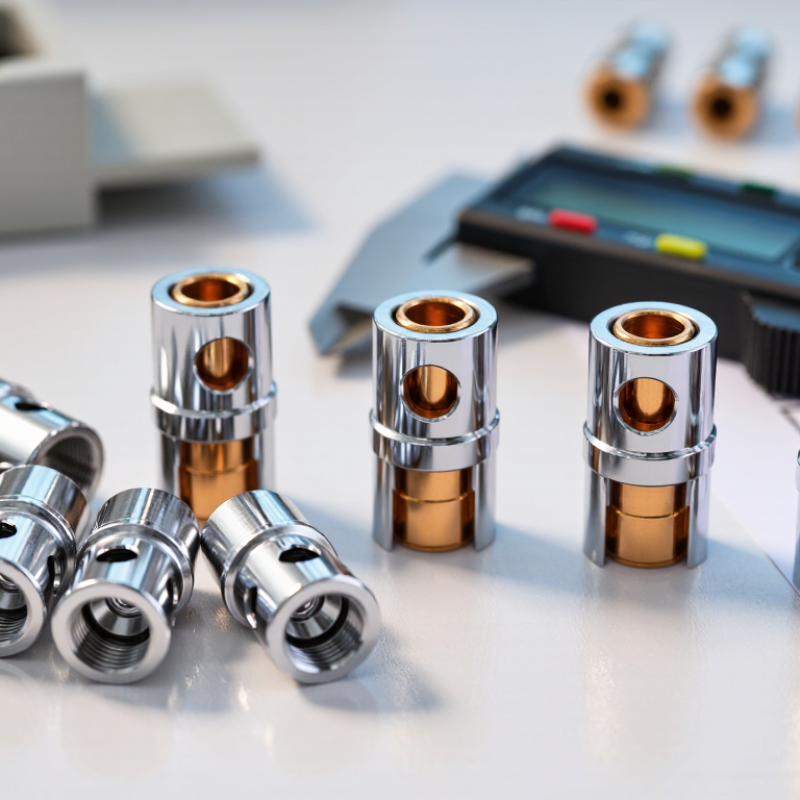
China Best Cable Lug Manufacturer for Global Buyers?
What Is a Cable Lug and Why Does Manufacturer Selection Matter?
A cable lug is a metal connector fitted to a cable end. It creates a secure path between the conductor and electrical equipment. Common types include copper, aluminum, and tinned copper lugs. Each type suits different conductors, environments, and connection methods.
Manufacturer selection matters because a lug must handle heat, vibration, moisture, and electrical load. A reliable supplier controls material purity, barrel dimensions, plating thickness, and crimp consistency. These details are easy to overlook. During installation, a slightly loose crimp can create resistance and heat at the joint. Over time, that heat may damage insulation or interrupt service.
Experienced manufacturers normally provide dimensional drawings, conductor ranges, crimping guidance, and inspection records. They should also test conductivity, pull-out strength, corrosion resistance, and temperature performance against applicable electrical standards. Traceable batches add confidence when buyers manage large projects across different regions. Packaging also deserves attention. Dry, sealed packages help prevent surface oxidation before installation.
A low price can look attractive. It deserves a second check. Does the supplier understand your cable material, tool profile, and operating environment? Some products look identical but perform differently under repeated thermal cycling. A manufacturer with technical support can review samples before mass production, although even a careful review cannot replace correct field installation. That is where many failures begin.
| Evaluation Dimension | Cable Lug Facts or Typical Data | Why It Matters to Global Buyers | Recommended Manufacturer Verification |
|---|---|---|---|
| Definition | A cable lug is a terminal connector used to join a cable conductor to equipment such as a busbar, circuit breaker, switchgear, transformer, or grounding point. | The lug forms part of the electrical and mechanical connection, so its design directly affects safety, resistance, and service life. | Request technical drawings showing conductor entry, palm dimensions, mounting-hole details, and applicable cable sizes. |
| Copper Compression Lug | Made from copper tube or formed copper and installed by crimping. Commonly used with copper conductors in low- and medium-voltage systems. | Provides a permanent connection when the lug, cable size, die, and crimping procedure are correctly matched. | Confirm copper grade, barrel wall thickness, crimp profile, recommended die code, and crimping sequence. |
| Aluminum Compression Lug | Designed for aluminum conductors. Aluminum has lower conductivity than copper and requires suitable joint design and installation practices. | Using an unsuitable lug can increase contact resistance or create compatibility problems at the conductor interface. | Verify conductor compatibility, oxide-inhibiting compound requirements, surface treatment, and tested installation instructions. |
| Bi-Metallic Lug | Combines an aluminum cable barrel with a copper palm, normally joined by a permanent manufacturing process. | Helps connect aluminum conductors to copper equipment while reducing the risk of unsuitable direct material contact. | Check the aluminum-to-copper joint integrity, palm material, conductor range, and evidence of thermal-cycle testing. |
| Mechanical or Shear-Bolt Lug | Uses bolts to secure the conductor and may be installed without a hydraulic crimping tool. Many designs support a specified range of conductor sizes. | Useful for field installation, maintenance, and projects where crimping equipment is limited. | Verify torque values, bolt-head shear behavior, conductor range, installation clearance, and reusability limitations. |
| Conductor Cross-Section | Cable lugs are selected by conductor cross-sectional area, commonly specified in mm². Available product ranges vary by design; representative ranges may extend from about 1.5 mm² to 1,000 mm² or more. | A lug that is too small or too large can prevent correct insertion, crimping, or electrical contact. | Match the lug to the exact conductor class, stranded-wire construction, insulation diameter, and manufacturer-approved range. |
| Mounting-Hole Diameter | Common metric mounting-hole sizes include approximately 6.4 mm, 8.4 mm, 10.5 mm, 13 mm, 17 mm, and 21 mm, depending on the terminal and bolt size. | The hole must match the equipment stud or bolt while maintaining adequate contact area and mechanical strength. | Request dimensional drawings with hole diameter, palm width, palm thickness, and center-to-edge distance. |
| Material and Surface Finish | Copper lugs may be supplied bare or tin-plated. Tin plating is commonly used to improve corrosion resistance and compatibility in many environments. | Material selection affects conductivity, corrosion behavior, appearance, and long-term maintenance requirements. | Ask for material specifications, plating thickness requirements, salt-spray or corrosion-test data, and surface-inspection criteria. |
| Electrical Performance | Performance depends on conductor material, contact area, crimp quality, contact resistance, current rating, and operating temperature. | Low and stable contact resistance helps limit voltage drop, localized heating, and energy loss. | Request resistance measurements, temperature-rise results, current-cycle data, and test conditions rather than relying only on catalog claims. |
| Applicable Standards | Relevant requirements may include IEC 61238-1 for compression and mechanical connectors, UL 486A-486B for wire connectors, and regional installation standards. | Standards help define electrical, mechanical, thermal, and installation performance for the intended application. | Confirm the exact standard edition, product scope, test report identification, and whether the evidence applies to the quoted product range. |
| Crimping Compatibility | Compression lugs require a compatible tool and die. Hexagonal, indent, and other crimp profiles are not automatically interchangeable. | Incorrect tooling can produce insufficient compression, conductor damage, or an unreliable electrical joint. | Require a tool-and-die compatibility chart, crimp location markings, sample installation instructions, and first-article approval. |
| Environmental Suitability | Selection may depend on humidity, salt exposure, chemicals, vibration, ultraviolet exposure, indoor or outdoor installation, and temperature cycling. | The correct material and finish reduce the risk of corrosion, loosening, and premature failure. | Provide the installation environment and request corrosion, vibration, thermal-cycle, and ingress-related test information where applicable. |
| Quality-Control Capability | Important controls include incoming material inspection, dimensional checks, plating inspection, crimp-performance testing, and batch traceability. | Consistent production quality is essential when lugs are purchased for large projects or repeated global shipments. | Review inspection plans, sampling methods, calibration records, nonconformance procedures, and lot-level traceability. |
| Customization and Tooling | Custom options may include conductor size, palm dimensions, hole pattern, barrel length, inspection windows, marking, and packaging. | Customization can improve equipment fit and reduce installation time, but it requires controlled drawings and approval samples. | Use approved drawings, written change-control procedures, prototype samples, and pre-production inspection before mass production. |
| Packaging and Export Logistics | Lugs should be protected from moisture, contamination, deformation, and mixed-part identification errors during storage and transport. | Reliable packaging helps preserve surface condition and simplifies receiving inspection at the destination. | Confirm carton labeling, part-number control, quantity tolerance, moisture protection, pallet specifications, and export documentation. |
| Total Cost of Ownership | Purchase price is only one cost. Tooling, installation labor, rejected parts, freight, testing, maintenance, and failure risk also affect total cost. | A lower unit price may not provide the lowest project cost if installation or quality risks are higher. | Compare landed cost, approved-tool requirements, warranty terms, lead time, inspection cost, and documented performance. |
Note: Dimensions, conductor ranges, current ratings, temperature limits, and testing requirements vary by product design and application. Always confirm the final selection against the approved technical drawing, installation instructions, and applicable local standards.