
How Can We Help You?

Who Are the Best Progressive Lens Manufacturers in 2026?

Choosing among Progressive Lens Manufacturers in 2026 is not simply a matter of comparing brand names. Progressive lenses must balance near, intermediate, and distance vision within one lens, while managing peripheral distortion and fitting requirements. Small differences matter: the frame’s tilt, the wearer’s working distance, and the exact placement of the fitting cross can affect everyday comfort. The fit matters.

The need is substantial. The World Health Organization’s World Report on Vision (2019) estimated that at least 2.2 billion people worldwide have near or distance vision impairment; at least 1 billion cases were preventable or remain unaddressed. Grand View Research’s Eyewear Market Size, Share & Trends Analysis Report estimated the broader global eyewear market at $183.36 billion in 2023 and forecast growth through 2030. That figure covers eyewear overall, not progressive lenses alone. A large market does not prove a lens is better.

This guide compares manufacturers through practical criteria: optical design, personalization options, material and coating choices, fitting tools, professional support, and product availability. It also considers what independent market data can—and cannot—tell buyers about lens performance. Rankings deserve caution. Published specifications rarely predict every wearer’s experience, and fitting quality can vary between practices. There is no single best lens for every prescription, face shape, or daily routine. The aim is a grounded comparison, not a universal verdict.
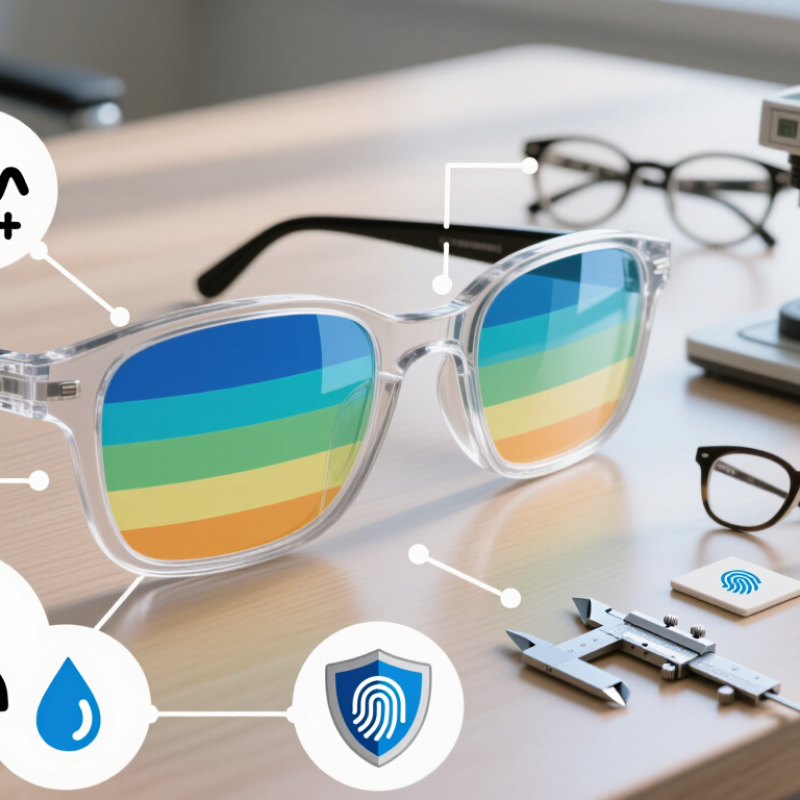
Who Are the Best Progressive Lens Manufacturers in 2026?

What Progressive Lenses Are and How Their Designs Work

Progressive lenses combine distance, intermediate, and near prescriptions in one lens, with power changing gradually from top to bottom. The upper zone supports distance vision; the lower zone helps with reading. Between them, a corridor serves tasks such as checking a dashboard or computer screen. There are no visible dividing lines. Small differences matter. Lens designers shape this corridor and manage peripheral blur, which can make side vision feel less clear. Wider viewing zones may require trade-offs elsewhere, so no design removes every compromise.

The World Health Organization’s 2019 World Report on Vision estimated that at least 2.2 billion people have near or distance vision impairment globally; at least 1 billion cases were preventable or unaddressed. That figure is not a measure of progressive-lens demand, but it shows why accessible vision correction matters. A wearer’s experience also depends on accurate measurements, frame fit, prescription, and daily visual habits. Even a carefully designed lens may feel unusual during early use. That does not automatically mean the lens is wrong, but persistent discomfort deserves a qualified optician’s review. Fitting height and frame position are easy to overlook. And they matter.

How to Evaluate Progressive Lens Manufacturers in 2026

When evaluating progressive lens manufacturers in 2026, look beyond corridor options and brochure claims. The World Health Organization’s World Report on Vision estimates that at least 2.2 billion people have near or distance vision impairment; at least 1 billion cases are preventable or unaddressed. That scale makes dependable access and consistent production important. Ask manufacturers for documented quality controls, prescription-range performance data, remake rates, and realistic delivery times. ISO 8980-2:2022 sets requirements for progressive power lenses, so check whether a supplier can explain how its inspection process aligns with the standard. Fit matters.

Request sample lenses across different prescriptions, not just an easy, low-power example. Confirm how the manufacturer uses monocular pupillary distance, fitting height, and frame measurements. Ask how it accounts for pantoscopic tilt, wrap, and vertex distance when those measurements are available. A clear explanation is more useful than a broad claim of “customization.” One showroom demonstration can flatter; patient adaptation and repeat-order records offer a fuller, if imperfect, picture.

Tips: Compare written specifications, not sales language. Ask for anonymized remake data by prescription range, and clarify how complaints are investigated. Test a few common frame shapes before committing to larger orders. Keep records of fitting measurements and wearer feedback; small errors can be hard to trace later.

Who Are the Best Progressive Lens Manufacturers in 2026? - How to Evaluate Progressive Lens Manufacturers in 2026
Evaluation Dimension What to Compare Evidence to Request How to Assess It
Progressive Design Range Availability of designs for different prescriptions, frame shapes, fitting needs, and wearer priorities. Current design catalogue, fitting guides, and a product matrix showing intended use and limitations. Look for clearly differentiated options and documented selection guidance rather than relying on design names alone.
Personalization Whether the design can account for relevant measurements such as monocular pupillary distance, fitting height, frame position, and wearing posture. Measurement requirements, ordering workflow, and documentation explaining which parameters are used. Check that required measurements are practical to collect and are consistently included in order processing.
Prescription Coverage Supported sphere, cylinder, addition, prism, and blank or finished-lens options for each design and material. A current prescription-range chart broken down by design, material, lens form, and relevant restrictions. Do not assume one range applies to every lens. Confirm the exact prescription and frame combination before ordering.
Corridor and Frame Compatibility Available corridor lengths and minimum fitting requirements, including compatibility with smaller or shallow frames. Technical fitting charts, minimum fitting-height information, and frame-selection guidance. Compare the documented fitting requirements with the frames commonly selected by intended wearers.
Digital Surfacing Availability of digitally surfaced designs and the manufacturing controls used to produce the ordered prescription. Process descriptions, order specifications, and quality-control records relevant to surfaced lenses. Confirm how prescription data and fitting parameters move from the order to production and final inspection.
Materials and Treatments Choice of lens materials, refractive indices, photochromic options, and hard, anti-reflective, or other surface treatments. Material and treatment specifications, care instructions, and compatibility information. Assess suitability for the prescription, frame, use conditions, and wearer preferences; avoid choosing by index alone.
Optical Quality Assurance Inspection procedures for prescription accuracy, lens markings, surface defects, and order conformity. Written inspection procedures, sample job records, and applicable test or tolerance documentation. Ask how nonconforming lenses are identified, documented, and corrected. Verify tolerances against applicable standards and local requirements.
Standards and Traceability Documented quality-management practices, product traceability, and compliance information relevant to the market served. Current certificates where applicable, declarations or technical documentation, and traceability procedures. Check certificate scope and validity directly. A quality certificate alone does not establish that a lens design is suitable for every wearer.
Delivery and Order Support Published production and shipping estimates, order-status visibility, remake handling, and technical assistance. Service terms, escalation contacts, delivery-performance reports, and written remake policies. Compare documented service levels with actual order history; distinguish production time from shipping time.
Clinical and Fitting Support Availability of fitting resources, troubleshooting guidance, and educational support for dispensing professionals. Fitting manuals, adjustment guidance, training materials, and procedures for investigating adaptation issues. Prefer clear, practical support that helps identify measurement, frame-fit, prescription, and adaptation factors.
Overall Evaluation Consistency across design choice, prescription suitability, production quality, service, and documented support. A completed scorecard using the same questions, sample orders, and evidence requirements for every candidate. There is no universal “best” choice for every prescription or wearer. Select based on verified specifications and the needs of the practice and its customers.

Leading Progressive Lens Manufacturers and Their Key Strengths

Progressive lens manufacturers differ less by a single “best” design than by how well they balance clear vision, comfort, and reliable production.

The World Health Organization’s World Report on Vision (2019) estimates that at least 2.2 billion people have near or distance vision impairment. That figure covers many conditions, not just presbyopia, so it should not be read as a measure of progressive-lens demand.

Still, it shows why accessible, well-fitted vision correction matters.

Leading manufacturers typically invest in lens-surface design, accurate prescription processing, durable coatings, and fitting support. Better personalization can account for frame position, eye movement, and how a wearer uses near and far vision.

Manufacturing consistency matters, too: small errors in lens alignment can make a corridor feel uncomfortable. Fit matters most. Yet public health reports do not rank manufacturers, and direct, independent comparisons across their products are limited. Claims about “the best” therefore deserve scrutiny.

For buyers and opticians, useful evidence includes clear fitting instructions, documented quality controls, and practical remake support. Ask how the design handles tasks such as reading a phone, checking a dashboard, and scanning a shop aisle. These details expose trade-offs more clearly than broad performance claims.

A sophisticated design may still feel wrong in a poorly adjusted frame. That part is easy to overlook.

How Lens Technologies Differ Across Manufacturers

Progressive lens technologies differ in how they calculate power across the lens, manage peripheral distortion, and use wearer measurements. Freeform surfacing can place complex optical calculations on the lens surface rather than relying only on a standard design. Some designs also account for frame tilt, wrap, vertex distance, and pupil position. Tiny errors matter. A precise design cannot compensate for inaccurate measurements or poor frame adjustment.

Design choices involve trade-offs. A wider intermediate zone may help with computer work, while a shorter corridor can suit compact frames but may require more precise eye movements. These effects vary by prescription and wearer; no single layout works best for every face. The World Health Organization’s 2019 World Report on Vision estimated that at least 2.2 billion people have near or distance vision impairment. That figure signals the scale of vision needs, not the superiority of any lens technology.

When comparing manufacturers in 2026, ask how designs are customized, what measurements are used, and how fitting accuracy is checked. ISO 8980-2 specifies requirements for progressive power lenses, but compliance alone does not establish comfort for an individual wearer. Real-world adaptation still matters. A useful assessment includes the frame, prescription, daily tasks, and a follow-up if the reading zone feels awkward.

Who Are the Best Progressive Lens Manufacturers in 2026? — How Lens Technologies Differ Across Manufacturers

This chart shows a commonly used range of near-add prescriptions, not a ranking of manufacturers or a measure of lens quality. Manufacturers differ in how they distribute the prescribed power through the progressive corridor, as well as in personalization and fitting options. The appropriate prescription and lens design depend on the wearer’s vision needs and frame fit.

How to Choose a Progressive Lens Manufacturer for Your Needs

Who Are the Best Progressive Lens Manufacturers in 2026?

How to Choose a Progressive Lens Manufacturer for Your Needs

Choosing a progressive lens manufacturer starts with the wearer, not a catalog. Share typical tasks, prescription details, frame dimensions, and preferred working distances. A person who reads at a desk may need different corridor behavior from someone who drives often. Ask how the manufacturer uses fitting measurements, such as monocular pupillary distance and fitting height. Clear measurement instructions can reduce avoidable remakes. Request sample lenses or a small trial order, if available, and compare edge clarity, adaptation, and production consistency.

Check the available designs, material options, coatings, and prescription range against your practice or business needs. Ask for written specifications and realistic production times. Also clarify how the supplier handles remakes, defects, and technical questions. A low price can look appealing, but it may not reflect the full cost of delays or inconsistent results. No specification sheet predicts every wearer’s experience; fit and frame choice still matter. That part is easy to underestimate.

Tips: Compare the same prescription and frame parameters across samples. Keep notes on fitting data, delivery time, and wearer feedback. Ask who reviews unusual prescriptions before production. Small details matter. If a manufacturer cannot explain its measurement process plainly, pause and ask again.