2026 Best Manufacturing Process Automation Trends to Watch?
The landscape of manufacturing process automation is rapidly evolving. In 2026, businesses must stay informed to remain competitive. Various trends are shaping the future of automation, bringing new opportunities for efficiency and productivity.
As industries embrace advanced technologies, the focus is on integration and flexibility. Automation is not just about machines. It includes software, real-time data, and adaptable systems. Companies must evaluate their unique needs and adapt to these innovations. This requires a thoughtful approach.
Manufacturing process automation is not without challenges. Organizations may face resistance from employees or struggle with implementation. Reflecting on these obstacles is crucial for success. A balanced strategy can guide companies through the complexities of this transformation. Understanding these trends is essential for future growth and innovation in the manufacturing sector.
Emerging Technologies in Manufacturing Process Automation for 2026
As we look toward 2026, several emerging technologies are set to reshape manufacturing process automation. Robotics continues to evolve, now offering advanced mobility and flexibility. Cobots, or collaborative robots, are becoming more intuitive. They interact seamlessly with human workers, enhancing productivity. The aim is not just automation but also collaboration.
Artificial intelligence (AI) is another key player. AI algorithms analyze real-time data to optimize production lines. They identify inefficiencies faster than ever. However, reliance on AI raises concerns over job displacement. Workers may need new skills to adapt. This transition requires careful planning and training efforts to minimize disruption.
Internet of Things (IoT) technology is crucial too. Connected devices enable better monitoring and maintenance schedules. Predictive maintenance can foresee equipment failures before they happen. But, the challenge lies in data security. Manufacturers must ensure robust systems to protect sensitive information. Balancing innovation with security will be integral to future success.
2026 Best Manufacturing Process Automation Trends to Watch
| Trend |
Description |
Expected Impact |
Implementation Timeframe |
| AI-Powered Robotics |
Integration of AI to enhance robotic processes and decision-making. |
Increased efficiency and reduced labor costs. |
2024-2026 |
| IoT Sensors |
Utilizing IoT sensors for real-time monitoring and process optimization. |
Enhanced data collection leads to better decision-making. |
2025 |
| Predictive Maintenance |
Using data analytics to predict equipment failures before they occur. |
Significantly reduced downtime and maintenance costs. |
2025-2026 |
| Digital Twins |
Creating virtual models of physical processes for simulation and analysis. |
Improved quality control and process optimization. |
2024-2025 |
| Blockchain for Supply Chain |
Implementing blockchain technology to enhance transparency and traceability in supply chains. |
Greater accountability and reduced fraud. |
2025 |
Impact of Artificial Intelligence on Manufacturing Automation Trends
The integration of artificial intelligence (AI) in manufacturing automation is transforming the industry. AI enhances efficiency by analyzing data in real-time. It predicts equipment failures before they occur, saving downtime and costs. This proactive approach reshapes maintenance strategies. Companies are now focusing on predictive maintenance, relying on data-driven insights rather than traditional schedules.
Tips for Implementation: Start with small AI projects. Test and gradually expand. Ensure all staff are trained. Cultivating an adaptable workforce is vital for successful AI integration.
In addition, AI improves production quality. Machine learning algorithms detect anomalies in products. They ensure consistency and reduce waste. However, the reliance on AI also introduces challenges. What if the data is flawed? The consequences could impact overall quality. Reflect on the importance of accurate data collection.
Tips for Monitoring: Employ regular audits of AI systems. Inspect data integrity continuously. Collaboration between teams is essential for maintaining a seamless workflow during this transition into automation. The journey toward AI-driven manufacturing is complex but rewarding.
2026 Best Manufacturing Process Automation Trends
This chart represents the impact levels of key manufacturing process automation trends expected in 2026. The data illustrates how artificial intelligence is poised to dominate the landscape, followed by IoT integration and RPA adoption.
The Role of IoT in Enhancing Automation Efficiency
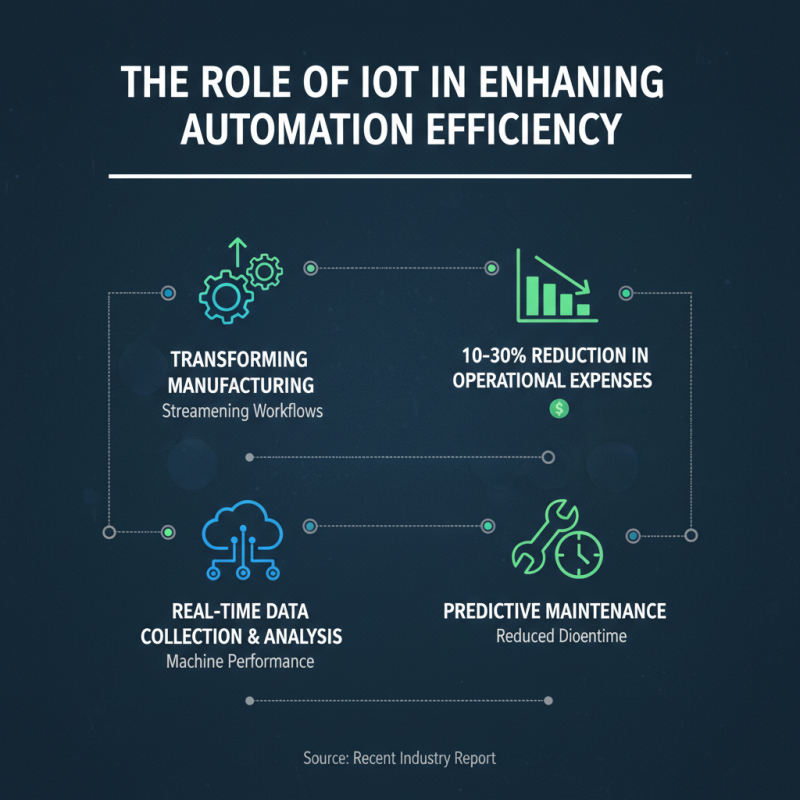
The Internet of Things (IoT) is transforming manufacturing processes, enhancing automation efficiency significantly. A recent report indicates that IoT can reduce operational expenses by 10-30%. This is mainly due to real-time data collection and analysis, which streamline workflows. Devices connected through IoT collect valuable information on machine performance. This data helps in predicting maintenance needs, reducing downtime.
Implementing IoT solutions requires careful planning. Manufacturers should assess existing infrastructure and identify key areas for improvement. A well-structured IoT strategy is crucial for success. Regular analysis can reveal trends and issues that need attention. This proactive approach often results in better resource allocation and increased productivity.
IoT also empowers workers. They gain access to real-time metrics, enabling smarter decision-making. Engaging employees in this technological shift fosters adaptability. However, many manufacturers struggle with implementation. Integrating new technologies can be overwhelming. It is essential to provide adequate training and support to ensure everyone is on board. Embracing these challenges will lead to greater efficiency in the long run.
Sustainable Manufacturing Practices Shaping Future Automation
Sustainable manufacturing practices are transforming automation in 2026. Companies are adopting green technologies to reduce waste and energy consumption. Many organizations are shifting toward renewable energy sources. This change not only helps the environment but also boosts efficiency. Automation now emphasizes minimizing the carbon footprint of production processes.
Data-driven approaches play a crucial role in this evolution. Manufacturers use sensors to monitor resource use in real-time. This allows them to identify areas where they can save energy. However, not all systems are efficient. Some older models still waste resources despite being automated. Continuous improvement is needed to ensure these systems perform optimally.
Investing in sustainable automation is complex. It requires upfront costs and changes to existing processes. Workers may resist adopting new technologies, fearing job loss. However, when done right, these practices can create jobs focused on innovation. Embracing sustainability in manufacturing not only meets regulatory demands but also appeals to eco-conscious consumers. This trend signifies a shift toward a responsible production model.
Integrating Robotics into Manufacturing Processes for Increased Productivity
Integrating robotics into manufacturing processes is becoming essential for enhancing productivity. Robotics can automate repetitive tasks, which reduces human error and speeds up production. They are particularly efficient in assembly lines, where precision is crucial. The use of robots can free up human workers for more complex tasks that require problem-solving skills.
However, the transition to robotic systems is not without challenges. Manufacturers must invest in training for their staff to work alongside robots. This requires time and resources, which can be a barrier for some companies. Businesses need to assess the costs versus the benefits carefully. Additionally, maintaining the balance between automation and human input is vital. Over-reliance on robots can lead to issues if systems fail or need repairs.
Robotic technology continues to evolve, bringing new opportunities. Yet, companies must remain adaptable. The integration process should include regular reviews and updates. By doing so, manufacturers can ensure they are maximizing the potential of robotics without losing the human touch that drives innovation. The road to full automation might not be perfect, but the benefits of integrating robotics are clear.