Top Benefits of Switching Power Supply in Modern Electronics?
The modern electronics landscape is continuously evolving. Among the many innovations, the Switching Power Supply stands out. This technology offers significant advantages that enhance device performance and efficiency.
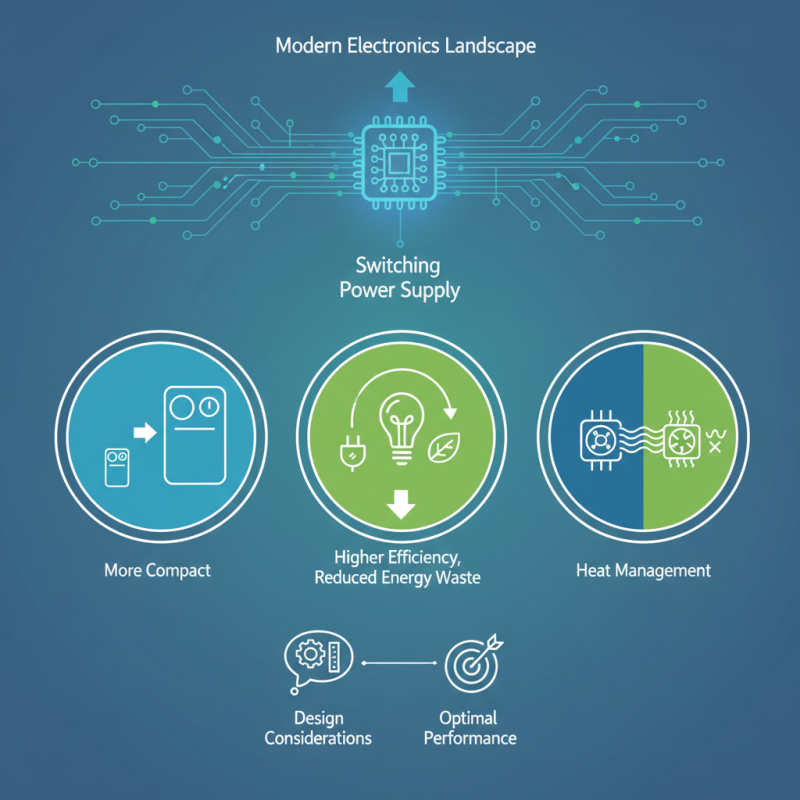
Switching Power Supplies are more compact than traditional options. This makes them ideal for portable devices. They also operate with higher efficiency, reducing energy waste. This can lead to lower electricity bills and smaller environmental impacts. However, the process of switching can introduce electromagnetic interference. This is a concern that designers must address carefully.
Another aspect to consider is heat management. While Switching Power Supplies generate less heat than linear power supplies, they still require adequate cooling solutions. Ignoring this can lead to reliability issues. Choosing a Switching Power Supply involves understanding both the benefits and challenges. It requires careful thought about design and application needs. Balancing these factors is crucial for optimal performance.
Advantages of Enhanced Energy Efficiency in Power Supply Systems
In modern electronics, switching power supplies are becoming vital due to their enhanced energy efficiency. Research shows that these systems can achieve efficiency rates between 85% to 95%. This high efficiency minimizes energy waste, making devices more sustainable.
Energy efficiency not only reduces operational costs but also lowers the carbon footprint. For instance, using a switching power supply in a typical electronic device may save up to 30% more energy compared to linear regulators. This improvement is significant as it leads to less heat generation, which enhances device longevity and reliability.
Tips: Regular maintenance can optimize energy performance. Ensure that power supplies are clean and free of dust. Poor ventilation can also impact efficiency. Remember, a hot power supply performs poorly.
Despite the benefits, it’s essential to consider that designing these systems can be complex. Engineers must balance various factors like size, cost, and thermal performance. A small design flaw can lead to substantial energy loss. Evaluating the overall system performance is crucial to harness the full potential of switching power supplies.
Top Benefits of Switching Power Supply in Modern Electronics
| Benefit | Description | Impact on Energy Efficiency | Typical Efficiency (%) |
| Reduced Energy Consumption | Switching power supplies convert power more effectively, reducing wasted energy. | Significant reduction in operational costs and environmental impact. | 85-95% |
| Compact Design | They are smaller and lighter compared to linear power supplies, allowing for design flexibility. | Enables more efficient use of space in electronic devices. | N/A |
| Wide Input Voltage Range | Can operate under a wide range of input voltages, enhancing compatibility. | Improves adaptability to different power sources. | N/A |
| Improved Heat Dissipation | More efficient at converting power reduces heat generation. | Less reliance on cooling systems, leading to greater reliability. | N/A |
| Enhanced Reliability | Fewer components are stressed, leading to longer operational lifetimes. | Reduces frequency of maintenance and replacement. | N/A |
Impact of Size and Weight Reduction on Electronic Device Design
The shift toward switching power supplies has significant implications for electronic device design. The reduction in size and weight enabled by these power supplies allows for sleeker, more portable devices. According to a report by the International Electrotechnical Commission (IEC), devices using switching power supplies can see size reductions by up to 70% compared to traditional power sources. This helps in developing gadgets that fit more comfortably in users' hands or pockets.
Lighter devices also impact user experience positively. A study by the Consumer Electronics Association (CEA) noted that users prefer devices that are not only powerful but also easy to carry. However, the trade-off is sometimes in thermal management and efficiency. Smaller power supplies can lead to heat dissipation challenges, requiring innovative cooling solutions. The design must balance compactness with airflow, which adds complexity.
Moreover, while these advancements are exciting, they raise questions about reliability. Smaller components can be more susceptible to failure over time. Recent findings from the Journal of Electronic Materials suggest that miniaturization, while beneficial, may inadvertently lead to durability issues. Designers must continually evaluate and refine these systems to ensure they meet consumer expectations without compromising performance.
Versatility of Power Supply Solutions in Diverse Applications
The versatility of switching power supplies greatly enhances modern electronics. According to a report by Market Research Future, the global market for switching power supplies is projected to reach over $50 billion by 2025. This growth is evident in diverse applications, from consumer electronics to industrial machinery. These power supplies adapt efficiently to varying loads, making them ideal for multiple sectors.
One notable application is in renewable energy systems. Switching power supplies can optimize energy conversion in solar panels and wind turbines. This adaptability allows for significant reductions in energy waste. Industry studies show that these systems can improve efficiency by up to 95%. Yet, implementing these technologies can pose challenges, such as thermal management and electromagnetic interference. Addressing these issues requires innovation and diligent design work.
Another area of application is telecommunications. The demand for higher frequencies and compact size drives the need for advanced power supply solutions. A report by Grand View Research shows that the telecommunication industry is shifting toward smaller, integrated power supplies. This shift necessitates a delicate balance between performance and size. It's crucial to keep refining these designs to meet growing energy needs while ensuring safety standards are maintained. Compromises may emerge as engineers grapple with these competing realities.
Improved Thermal Management in Modern Switching Power Supplies
Switching power supplies have become essential in modern electronics. One key advantage is their improved thermal management. Traditional power supplies generate heat, which can damage components. In contrast, modern switching designs efficiently convert electricity, minimizing heat loss. This results in cooler operation and longer device lifespans.
Efficient thermal management also allows for compact designs. Many devices now can be smaller while still delivering high performance. Enhanced cooling techniques keep temperatures in check without bulky heatsinks. However, it's important to ensure proper airflow in your setup. Poor placement can still cause overheating.
Tips for maintaining optimal thermal performance: regularly check for dust buildup in vents. Keep a watchful eye on component temperatures. Consider using thermal paste on critical components. Evaluating your design’s thermal strategy is crucial. Small adjustments can lead to significant improvements.
Cost-Effectiveness and Long-Term Savings from Switching Power Supplies
Switching power supplies (SMPS) offer significant cost-effectiveness in modern electronics. A recent report by MarketsandMarkets highlighted that the global SMPS market is projected to grow at a compound annual growth rate (CAGR) of around 6.7% over the next five years. This growth correlates with the switch of industries to more efficient power solutions. The efficiency rate of switching power supplies can exceed 90%. This means less energy waste and lower electricity bills.
Long-term savings from SMPS are compelling. A study by IHS Markit indicates that using SMPS can save businesses up to 30% in energy costs compared to traditional linear power supplies. These savings can add up quickly, especially for large-scale operations. However, the initial investment can be higher for switching supplies. Many companies hesitate to switch due to upfront costs. It raises the question: is the long-term value being ignored for short-term budget constraints?
Moreover, the design complexity of switching power supplies can pose challenges. Engineers must ensure proper heat dissipation and filter noise effectively. A poorly designed SMPS might lead to unreliable performance. This downside needs careful consideration before transitioning. Balancing cost against potential long-term benefits requires strategic thinking from manufacturers. Focusing solely on immediate savings might compromise future performance.
Top Benefits of Switching Power Supply in Modern Electronics