The manufacturing landscape is rapidly evolving. Advanced process control (APC) is now crucial for operational efficiency. According to a 2022 report by McKinsey, companies utilizing APC can improve their productivity by 15-30%. This remarkable gain is not merely theoretical; many industries have experienced real-world success due to enhanced process stability and quality.
However, the adoption of advanced process control is not without its challenges. Many organizations struggle with implementation. A report from the International Society for Automation highlighted that around 40% of companies encounter integration issues with existing systems. This gap often leads to underwhelming results. Despite the promise APC holds, it requires careful planning and commitment.
Furthermore, data from ARC Advisory Group indicates that less than 20% of manufacturers utilize APC to its full potential. This statistic underscores an important reflection: while interest is high, execution often falls short. Organizations must recognize these pitfalls and address them proactively. Harnessing the full capabilities of advanced process control can lead to industrial transformation. Embracing APC could define the future of manufacturing efficiency.

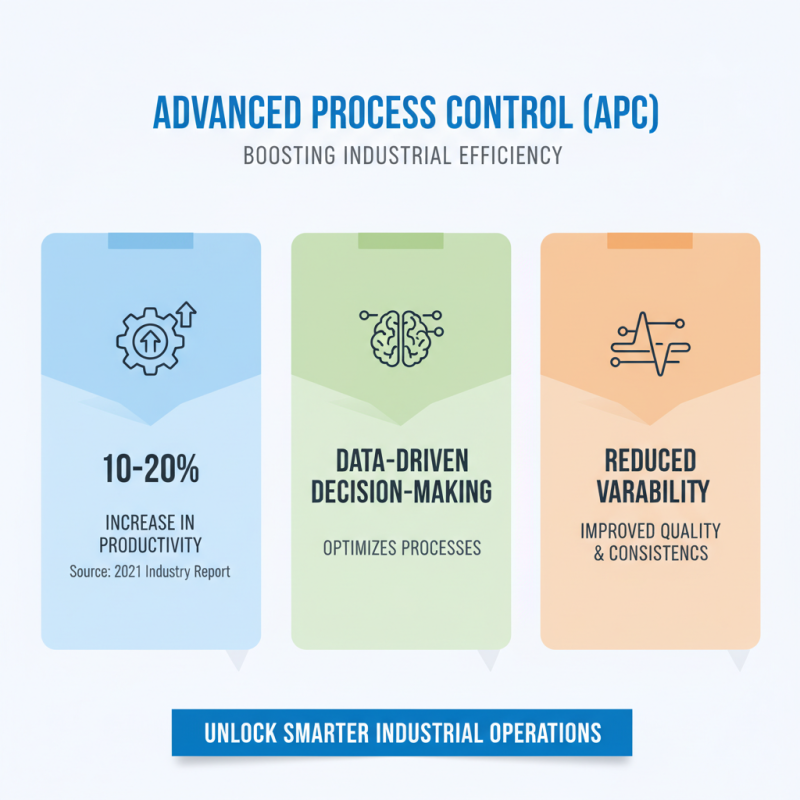
Advanced Process Control (APC) plays a crucial role in enhancing industrial efficiency. Industries today are increasingly reliant on data-driven decision-making. A 2021 industry report highlighted that companies implementing APC saw a 10% to 20% increase in productivity. These improvements often come from optimizing processes and reducing variability.
For instance, real-time data analysis helps manufacturers tune their operations dynamically. This reduces downtime and waste, contributing to sustainability efforts. A recent study indicated that industries adopting APC could lower their operational costs by approximately 15% over five years. Yet, not all organizations embrace these technologies fully. Many face challenges with integration and training. These hurdles can limit potential gains.
Tip: Invest in staff training to maximize the benefits of advanced technologies. Equip teams with necessary skills. A well-informed workforce adapts better to new systems.
Additionally, monitoring and refining control strategies is essential. Continuous evaluation leads to better performance. However, organizations often overlook this step. It's crucial to revisit APC frameworks regularly to ensure they meet changing demands. Neglecting updates can lead to inefficiencies.
Tip: Schedule regular audits of your control systems. Identify gaps and areas for improvement. Staying proactive is key to long-term success.
Advanced process control (APC) is crucial for enhancing industrial efficiency. Effective techniques can significantly optimize production. One key technique is real-time data analysis. Gathering data during operations helps identify inefficiencies quickly. Adjustments can be made on the fly, leading to reduced waste. However, relying too heavily on data can lead to oversight. Human intuition is still essential.
Another important method is predictive maintenance. By analyzing equipment performance, companies can foresee potential failures. This approach minimizes unexpected downtimes and helps maintain consistent output. Over time, this technique proves its worth. Yet, it demands constant monitoring and adjustment. A lack of flexibility can stymie progress.
Lastly, model predictive control (MPC) stands out. This technique uses mathematical models to predict future outcomes. It can optimize complex processes with multiple variables. Nevertheless, creating accurate models takes effort and time. If the model is flawed, it can lead to adverse results. Balancing technology and human insight remains a challenge. This requires ongoing reflection and improvement in practices.
| Technique | Description | Benefits | Application Areas |
|---|---|---|---|
| Model Predictive Control (MPC) | A control strategy that uses a model of the process to predict future outcomes and optimize performance. | Increased efficiency, reduced waste, and improved product quality. | Chemical processing, oil refining, and food production. |
| Fuzzy Logic Control | A technique that deals with uncertainty and imprecision in control systems using fuzzy set theory. | Higher flexibility, better handling of complex processes, and improved robustness. | HVAC systems, automotive, and robotics. |
| Adaptive Control | A control approach that adjusts itself based on changes in the process dynamics. | Enhanced performance under varying conditions and improved stability. | Aerospace, manufacturing, and chemical processes. |
| Neural Networks | A computational model inspired by the human brain, used for pattern recognition and predictive modeling. | Ability to learn from data, handle non-linearities, and improve decision-making. | Power generation, financial forecasting, and production systems. |
| Statistical Process Control (SPC) | A method of monitoring and controlling processes through statistical methods. | Reduction in process variation, improved quality, and enhanced consistency. | Manufacturing, healthcare, and service industries. |
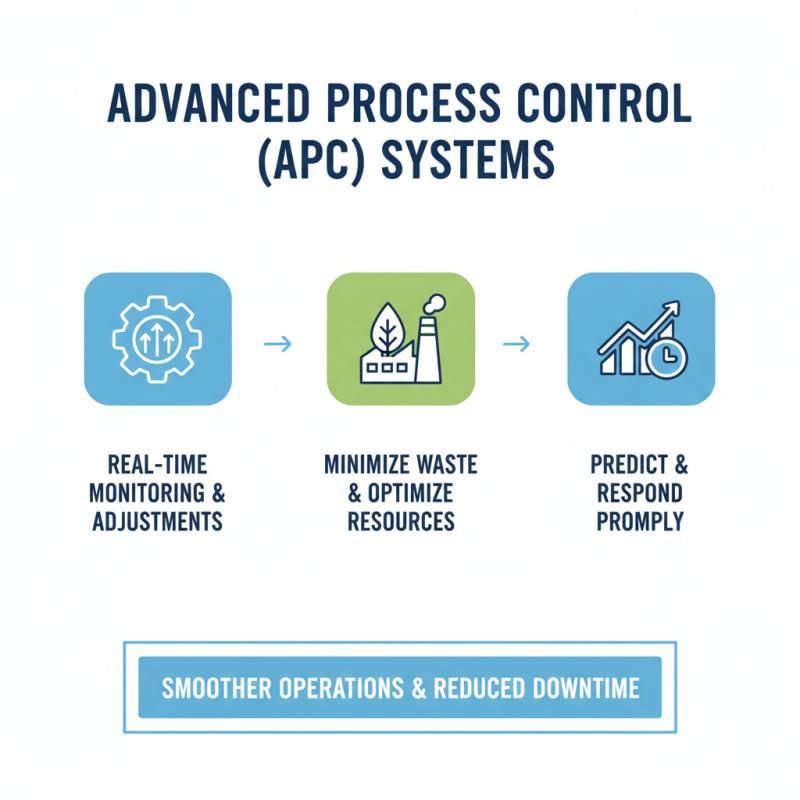
Implementing advanced process control (APC) systems can significantly enhance industrial efficiency. These systems provide real-time monitoring and adjustments. They allow plants to minimize waste and optimize resource usage. With accurate data analysis, companies can predict and respond to changes promptly. This leads to smoother operations and decreased downtime.
Moreover, the benefits of APC systems extend beyond mere efficiency. They foster a culture of continuous improvement within the organization. Teams become more engaged when they see the impact of their actions. However, not all implementations are perfect. Some may struggle with integration challenges. This can disrupt existing workflows and require careful planning.
Companies often need to reflect on their current processes. Are they ready for such changes? Resistance to new technology can hinder success. Organizations must invest in training their teams. This ensures everyone understands how to leverage these systems effectively. The potential for improved performance is immense, but it requires commitment and adaptation.
Advanced Process Control (APC) has become vital in boosting industrial efficiency. However, implementing these techniques presents several challenges. Data from the ARC Advisory Group showed that over 60% of companies struggle with integration into existing systems. Many lack the necessary infrastructure to support advanced algorithms. This gap can hinder performance and lead to frustration among operators.
Moreover, human factors play a significant role. A report by the International Society of Automation highlighted that errors in data interpretation can lead to a 30% increase in operational costs. Operators need training to effectively use APC systems. Many workers are not fully equipped to leverage the technology's potential. This disconnect creates challenges in achieving desired outcomes.
Despite the difficulties, solutions are emerging. Regular training sessions and workshops can bridge the skill gap. Additionally, software tools that simplify data visualization help operators interpret results. Enhancing communication between IT and operations teams can foster a more cohesive environment. As industries continue to adapt, these approaches could help address the hurdles associated with advanced process control, ultimately leading to improved efficiency.
This bar chart illustrates the percentage of efficiency improvement associated with various advanced process control techniques used in industrial applications. Model Predictive Control emerges as the leading technique, showcasing a significant 35% improvement in efficiency.
The landscape of process control technologies is evolving rapidly. Industry reports indicate that advanced automation is projected to grow by 14% annually through 2026. Industries are investing significantly in smart sensors and data analytics. These technologies promise real-time monitoring and optimization capabilities. Enhanced data integration can lead to significant energy savings.
However, challenges remain. Many companies struggle with outdated systems. Resistance to change can slow implementation. Cybersecurity risks also loom large. A report from a major consultancy shows that up to 60% of firms lack a robust cybersecurity framework for their control systems. This is alarming, considering the rising number of cyber threats targeting industrial operations.
Emerging techniques like machine learning and digital twins are gaining traction. They allow for predictive maintenance and improved decision-making. Studies suggest these technologies can reduce operating costs by 20%. Yet, the learning curve for teams can hinder adoption. Continuous training is essential, as many technicians need upskilling to manage these advanced systems effectively. The future is bright, but a cautious approach is necessary to navigate the complexities ahead.